 EZGOGO
Conference Interpretation Vietnam: 10 Essential Checklist Items
Running a multilingual conference in Vietnam demands precision planning beyond speaker logistics. This essential checklist covers interpreter selection, simultaneous interpretation technology, briefing protocols, and contingency planning—ensuring your international delegates hear every word without costly miscommunications. Learn what separates seamless conference interpretation Vietnam events from chaotic translation failures.
Planning Multilingual Events: Why Conference Interpretation Matters
Vietnam's rapid expansion as a regional business hub means international conferences are increasingly common. With delegates from Asia-Pacific, Europe, and North America converging in Ho Chi Minh City and Hanoi, professional conference interpretation Vietnam is no longer optional—it is essential.
According to the Vietnam Investment Review, Vietnam attracted over 29.5 billion USD in foreign direct investment in 2023, driving a surge in cross-border business events and trade conferences. When your audience spans multiple languages, a single miscommunication can derail negotiations, damage relationships, or undermine the entire event's credibility.
The Cost of Inadequate Interpretation
Poor interpretation can lead to lost deals, confused delegates, and reputational damage. International business leaders expect professional conference interpretation Vietnam that delivers accuracy and real-time fluency. Cutting corners on interpreter quality or technical setup signals lack of preparation to your attendees.
Why a Checklist Approach Matters
Conference interpretation Vietnam involves coordination across multiple domains: personnel, technology, content, and logistics. A pre-event checklist prevents last-minute scrambles, ensures interpreters arrive prepared, and confirms all equipment functions correctly before delegates arrive.
Question 1: How do I select qualified interpreters for conference interpretation Vietnam?
Choose interpreters with subject-matter expertise in your industry, verified credentials (ISO 13611 or equivalent), and minimum 5+ years conference experience. Request references from similar past events and conduct pre-event interviews to assess fluency, accent clarity, and professionalism.
Credential Verification and Experience Matching
Not all interpreters are equally qualified for specialized conferences. Medical, financial, legal, and technology conferences each demand interpreters familiar with domain-specific terminology and cultural nuances. Verify credentials through professional interpreter associations and request portfolios of past conference work.
- ISO 13611 Certification: This international standard certifies professional interpreters and is widely recognized across Asia-Pacific conference venues.
- Subject Specialization: An interpreter fluent in English-Vietnamese may still struggle with pharmaceutical or engineering terminology without prior experience.
- Conference Track Record: Ask candidates for references from at least two similar events held within the past two years.
Team Composition and Professional Hiring
For full-day conferences with simultaneous interpretation, plan for at least two qualified interpreters per language pair to allow rotation breaks (interpreters typically rotate every 20-30 minutes to maintain accuracy). Professional interpreter hiring in Vietnam should include backup interpreters in case of illness or no-show.
Question 2: What simultaneous interpretation equipment do I need?
You need audio consoles, wireless headsets for delegates, soundproof interpreter booths, microphones, and reliable wireless distribution systems. Budget 15,000–25,000 USD for a full simultaneous interpretation setup serving 200–400 delegates in a conference interpretation Vietnam event.
Interpretation Booth and Soundproofing
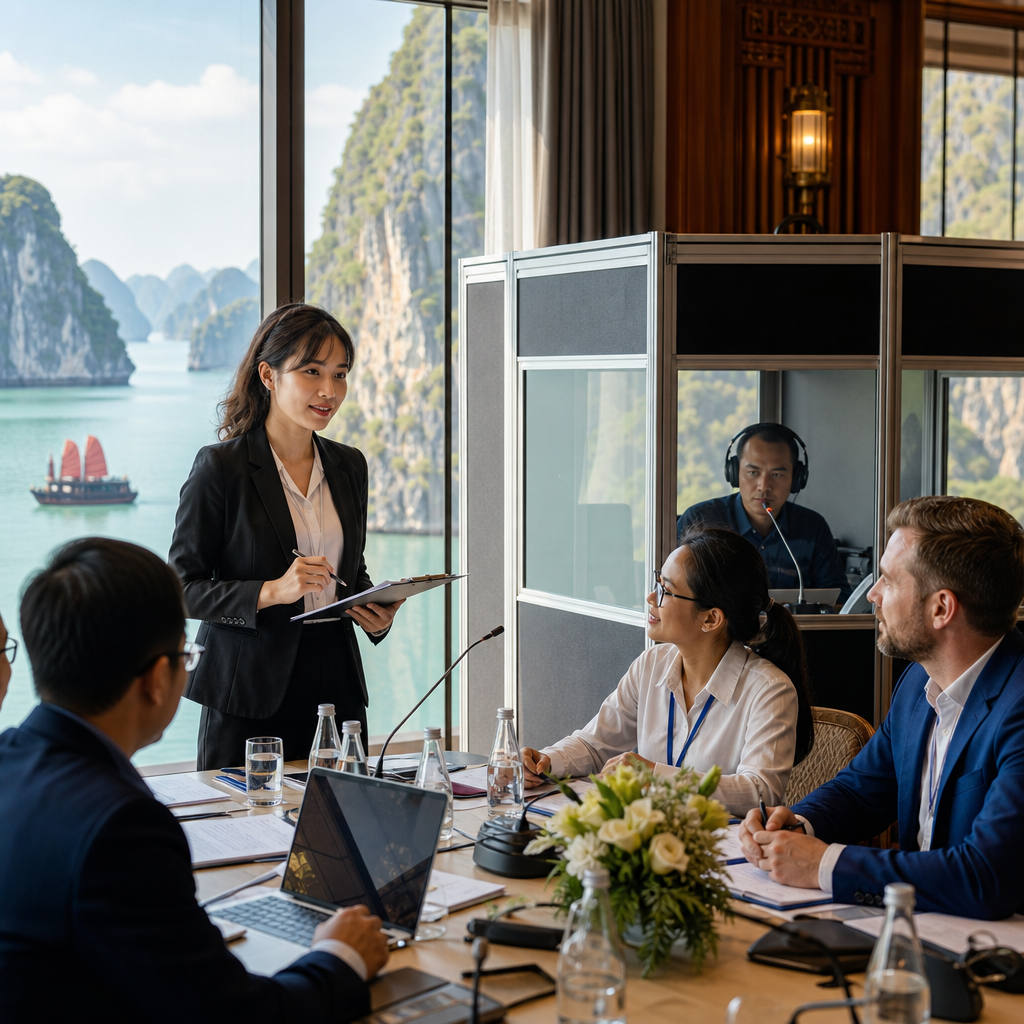
Simultaneous interpretation requires a dedicated, acoustically isolated booth positioned where interpreters can see all speakers and visual aids without participant distractions. The booth must accommodate two interpreters working side-by-side, with independent headset channels and microphone controls for each language pair.
- Booth Acoustics: Poor soundproofing forces interpreters to shout, causing vocal fatigue and increased error rates.
- Speaker Visibility: Interpreters must see lip movement, body language, and any slides or visual references speakers use.
- Ventilation: Booths must have adequate airflow to prevent interpreter fatigue during long events.
Wireless Headset Distribution and Quality Assurance
Modern conference interpretation Vietnam events use digital wireless systems that allow delegates to select their preferred language channel via personal receivers. Test all equipment 24 hours before the event to identify dead zones, interference, or battery failures. Budget for a technical support operator on-site throughout the conference.
Question 3: How should I brief interpreters on industry-specific terminology?
Provide interpreters with a glossary of technical terms, speaker names, organization acronyms, and cultural context at least one week before the event. Schedule a 60-90 minute pre-conference briefing session where speakers review key concepts and interpreters ask clarifying questions.
Glossary Preparation and Speaker Briefing
Most interpretation errors stem not from language fluency but from unfamiliar terminology. Professional interpreter briefing checklists should include subject-specific vocabulary lists, pronunciation guides for speaker names and company acronyms, and background documents on the conference topic. This reduces real-time cognitive load and allows interpreters to focus on nuance and delivery.
- Technical Glossary: Create a bilingual document with industry jargon, including accepted Vietnamese equivalents or transliterations.
- Speaker Materials: Collect speaker bios, presentation slides, and abstracts and distribute them to interpreters no later than five business days before the event.
- Pronunciation Guide: For speakers with uncommon names or complex acronyms, provide phonetic guidance.
Pre-Event Interpreter Briefing Session
Schedule a dedicated briefing 1-2 days before the conference where interpreters meet with key speakers, event organizers, and content experts. This session allows interpreters to hear accent, pacing, and emphasis directly from speakers and ask questions about ambiguous terminology or cultural references that may not translate literally.
Question 4: What contingency plans must I establish before the event?
Designate backup interpreters for each language pair, arrange emergency interpreter hotline numbers, test all equipment failover systems, and prepare a protocol for continuing the conference if equipment fails during a session.
Backup Interpreter Assignment and Emergency Protocols
Professional interpreter hiring in Vietnam should always include at least one backup interpreter per language pair, briefed on the same materials and ready to step in with minimal notice. Maintain a standby list of vetted interpreters and confirm their availability 48 hours before the event. Document emergency contact numbers for all interpreters and the equipment rental company.
- Backup Roster: Brief a second qualified interpreter on all pre-event materials; they need not attend the full briefing but must review glossaries and speaker notes.
- Equipment Failover: Test backup wireless systems, audio cables, and microphone redundancy to ensure continuity if primary systems fail.
- Contingency Communication: Brief speakers on a non-interpretation backup plan (e.g., speaking slower, providing written summaries) in case interpretation becomes unavailable mid-session.
Technical Troubleshooting and Vendor Coordination
Maintain contact with your equipment rental vendor throughout the conference. Assign a dedicated technical liaison on-site who can troubleshoot wireless issues, headset failures, and audio feedback in real-time. Have spare headsets, batteries, and cables in abundance; plan for 15-20% equipment failure during multi-day events.
Question 5: How do I coordinate interpretation logistics on event day?
Arrive 90 minutes early to test all equipment, confirm interpreter arrival, conduct final sound checks, and brief speakers on microphone technique and pacing. Assign a dedicated event coordinator to monitor interpretation quality and manage interpreter breaks throughout the day.
Pre-Event Technical Setup and Interpreter Verification
On the morning of the conference, conduct a full end-to-end test of the simultaneous interpretation setup. Check all microphones, headset channels, booth audio levels, and speaker visual aids. Confirm all interpreters have arrived, are properly oriented to their booth, and have access to water, tissues, and any last-minute speaker notes or slide updates.
- 90-Minute Lead Time: Begin setup and testing at least 90 minutes before the first speaker takes the stage to resolve any issues without rushing.
- Channel Testing: Have attendees sample each language channel from different seating zones to verify coverage and signal strength.
- Interpreter Comfort Check: Ensure booths are at comfortable temperature, interpreters have restroom access, and breaks are scheduled every 20-30 minutes.
Real-Time Monitoring and Quality Assurance
Designate a roaming monitor who listens to each interpretation channel discreetly (via a receiver in the audience) and watches for accuracy, pacing, and clarity issues. If a delegate reports interpretation problems, address them immediately. For ezgogo.app, professional interpreter companions can provide this real-time feedback and liaison support, ensuring your conference interpretation Vietnam runs without surprises.
Conclusion
Mastering conference interpretation Vietnam requires attention to interpreter credentials, technical infrastructure, terminology preparation, contingency planning, and on-site coordination. Each element of this ten-point checklist prevents costly failures and demonstrates professionalism to your international delegates. The investment in proper preparation pays dividends in seamless communication and positive event reputation.
When coordinating multilingual conferences in Vietnam, remember that interpreters are your frontline representatives to international attendees. Prioritize their preparation, support their real-time needs, and invest in backup systems. If you need additional logistical support or professional on-site coordination for your next business conference, explore how ezgogo.app connects you with experienced interpreter-companions who understand Vietnam's event landscape.
Sources
- Vietnam Investment Review — Vietnam Foreign Direct Investment Hits Record High in 2023
- VnExpress Business — Foreign Investment Rebounds in Vietnam
- General Statistics Office of Vietnam — Foreign Direct Investment Data
- International Association of Conference Interpreters — Professional Standards and Certification
- International Organization for Standardization — ISO 13611 Conference Interpreting Service Delivery Standard
Frequently Asked Questions
Question 1: How do I select qualified interpreters for conference interpretation Vietnam?
Choose interpreters with subject-matter expertise in your industry, verified credentials (ISO 13611 or equivalent), and minimum 5+ years conference experience. Request references from similar past events and conduct pre-event interviews to assess fluency, accent clarity, and professionalism.
Question 2: What simultaneous interpretation equipment do I need?
You need audio consoles, wireless headsets for delegates, soundproof interpreter booths, microphones, and reliable wireless distribution systems. Budget 15,000–25,000 USD for a full simultaneous interpretation setup serving 200–400 delegates in a conference interpretation Vietnam event.
Question 3: How should I brief interpreters on industry-specific terminology?
Provide interpreters with a glossary of technical terms, speaker names, organization acronyms, and cultural context at least one week before the event. Schedule a 60-90 minute pre-conference briefing session where speakers review key concepts and interpreters ask clarifying questions.
Question 4: What contingency plans must I establish before the event?
Designate backup interpreters for each language pair, arrange emergency interpreter hotline numbers, test all equipment failover systems, and prepare a protocol for continuing the conference if equipment fails during a session.
Question 5: How do I coordinate interpretation logistics on event day?
Arrive 90 minutes early to test all equipment, confirm interpreter arrival, conduct final sound checks, and brief speakers on microphone technique and pacing. Assign a dedicated event coordinator to monitor interpretation quality and manage interpreter breaks throughout the day.
Need a local companion or interpreter in Vietnam?
Browse verified companions for language support, factory visits, and authentic local experiences.
Find a Companion →