 EZGOGO
Conference Interpretation Vietnam: Complete Preparation Guide
Hosting or attending a conference in Vietnam requires seamless communication across languages and technical domains. Conference interpretation Vietnam demands meticulous planning—from interpreter briefings and glossary preparation to audio-visual coordination and live troubleshooting. This guide walks you through every critical step to ensure your team delivers clarity, confidence, and professionalism throughout every session.
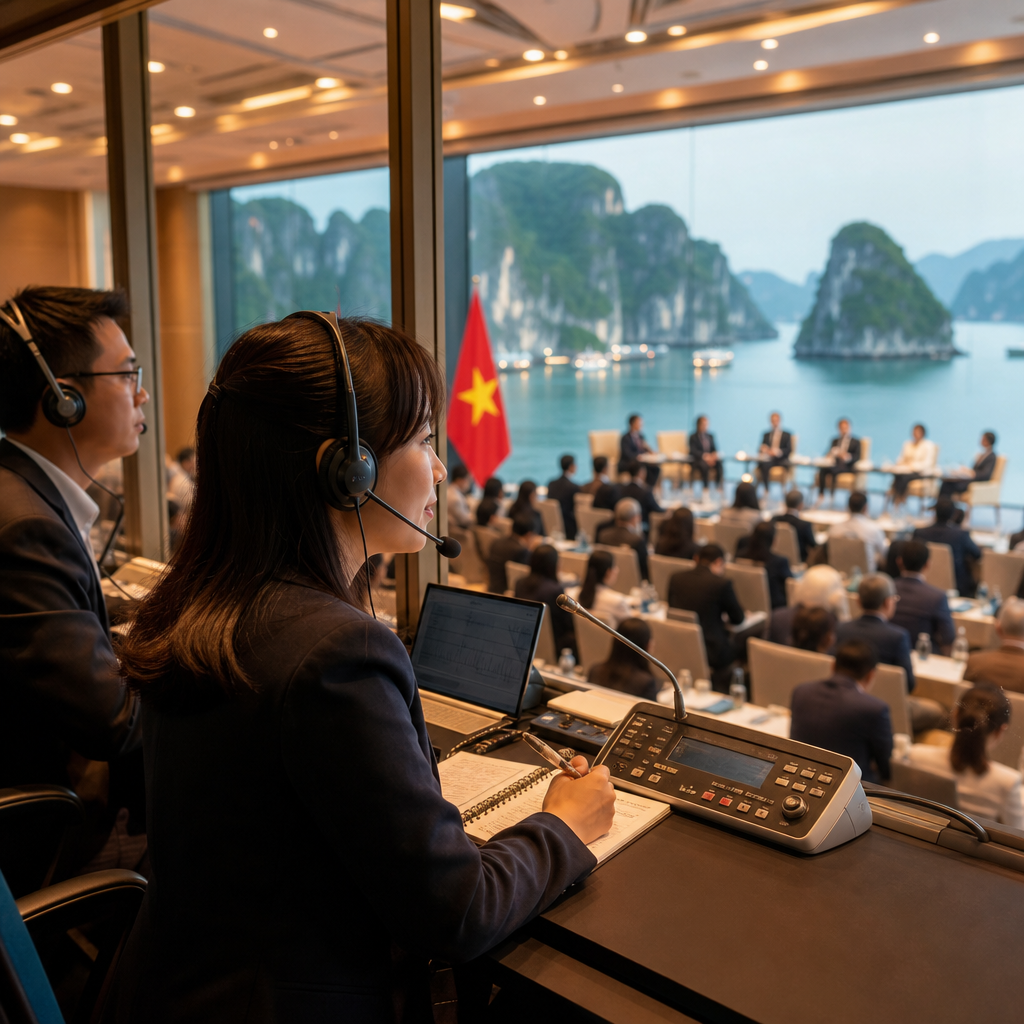
Why Conference Interpretation Vietnam Matters for Global Business
Vietnam has emerged as a critical hub for multinational conferences, trade summits, and technical symposia. According to the General Statistics Office of Vietnam, the country hosted over 500 international conferences annually pre-pandemic, with numbers rebounding sharply as business travel normalizes.
Professional conference interpretation Vietnam is no longer optional—it's essential infrastructure. Whether your event focuses on manufacturing, software development, pharmaceuticals, or supply-chain logistics, miscommunication cascades into lost deals, regulatory confusion, and damaged credibility.
Vietnam's Growing Conference Economy
Ho Chi Minh City and Hanoi have invested heavily in world-class venues equipped with simultaneous interpretation booths. The Vietnam Investment Review reported in 2023 that business-to-business conferences in Vietnam generated over $1.2 billion in direct economic impact. Professional interpretation directly enables this growth.
Why Generic Translation Falls Short
Conference interpretation Vietnam demands real-time linguistic precision, cultural nuance, and subject-matter expertise that generic translation cannot deliver. Live speakers change pace, use colloquialisms, reference unpublished data—and your interpreters must bridge those gaps instantaneously without compromising accuracy or tone.
Question 1: How do you prepare interpreters before a conference begins?
Prepare interpreters at least 2–4 weeks before the conference through structured briefings that cover speaker profiles, presentation slides, Q&A protocols, and industry context relevant to your event.
The Pre-Conference Interpreter Briefing
A dedicated briefing session is your first line of defense. Supply interpreters with speaker bios, presentation outlines, and any available slide decks. Allow interpreters to ask clarifying questions about speaker accents, delivery pace, or specialized content they may encounter.
- Slide review: Interpreters study visuals and text in advance to anticipate terminology and logical flow.
- Speaker context: Background on each presenter's field, experience, and typical speaking style reduces cognitive load during live delivery.
- Audience profile: Understanding attendee expertise (engineers vs. executives) helps interpreters pitch register and depth appropriately.
Building Rapport and Clarifying Expectations
Meet interpreters in person when feasible, or arrange a video call to discuss logistics, audience size, room layout, and contingency signals. Clear expectations about breaks, shift rotations (for multi-day events), and emergency communication protocols reduce friction during the live event.
Question 2: What role does terminology glossary play in technical conferences?
A shared terminology glossary—created collaboratively with subject-matter experts and interpreters—ensures consistent translation of industry-specific jargon, acronyms, and branded terms across all sessions.
Building a Conference-Specific Glossary
Work with your technical team and conference interpreters to compile a glossary 3–4 weeks prior. Include product names, regulatory terms, internal jargon, and equivalent expressions in the target language. A pharmaceutical conference, for instance, must align on translations for chemical compounds, dosage protocols, and regulatory frameworks.
- Format: Excel or shared document with source term, target language equivalent, definition, and usage context.
- Expert validation: Have native-speaker interpreters and in-country technical specialists review and approve entries.
- Accessibility: Provide interpreters with both digital and printed copies in their booth during the event.
Managing Multi-Speaker Events with Unified Terminology
In large conferences with multiple speakers across different sessions, terminology drift is common. Assign one person as the "terminology custodian" to track new terms that emerge during sessions and communicate changes to all interpretation teams in real time via written updates or quick briefings between sessions.
Question 3: How should audio-visual systems be tested for simultaneous interpretation?
Conduct full audio-visual system tests 48 hours before the conference, including headset audio quality, interpreter booth isolation, speaker microphone levels, and backup equipment validation to eliminate technical failures during live delivery.
Pre-Conference Technical Checklist
Your AV team and interpreters must work together to validate every component. Test headsets in each language channel, confirm microphone feedback loops are silent, and verify that speaker voice levels are consistent across the main hall and interpretation booths.
- Booth audio isolation: Ensure interpreters hear only the speaker and not audience chatter or ambient noise that would degrade their concentration.
- Headset comfort and function: Check that microphones pick up interpreter voice clearly and that earpiece audio is crisp at safe volume levels.
- Backup booth setup: Have a second fully functional interpretation booth with all equipment ready, in case primary equipment fails.
Simultaneous Interpretation Booth Configuration
Booths should be soundproofed, positioned with clear sightlines to the speaker, and equipped with real-time text feeds or speaker notes if available. Interpreters need water, climate control, and a panic button to signal the AV operator if technical problems arise.
Question 4: What contingency plans protect against real-time interpretation breakdowns?
Deploy contingency protocols including backup interpreters, silent-mode fallback, written summary distribution, and live chat support to minimize disruption if interpretation audio fails or an interpreter becomes unavailable mid-event.
Backup Interpreter and Equipment Strategy
Always schedule a backup interpreter for each language channel. If your primary interpreter becomes ill or the booth audio fails, the backup is immediately ready to step in without halting the session. Similarly, keep backup headsets, microphones, and audio cables available at the booth in case equipment malfunctions.
- On-site backup staff: Hire one additional interpreter per language who attends the conference but sits in the audience; they can be called to the booth within minutes.
- Equipment redundancy: Position spare audio cables, power supplies, and headsets in the booth or at the AV command center.
- Escalation protocol: Designate one person as the real-time troubleshooting lead with authority to pause a session if technical recovery takes more than 2–3 minutes.
Communication Failsafes During Live Sessions
If audio fails completely, the moderator should be ready to slow down, speak clearly, and allow brief pauses for attendees to take notes. Distribute a written summary of key points to all participants via email immediately after the session so non-native speakers have a reference document.
Question 5: How do you measure and optimize interpretation quality during live events?
Capture feedback through real-time audience polls, post-session surveys, and interpreter self-assessment notes; use these data to refine terminology, adjust speaker pacing, and improve booth conditions for subsequent sessions or future events.
In-Event Quality Monitoring
Assign a dedicated quality-assurance person to monitor interpretation during at least the first two sessions. They should listen to all interpretation channels and note any moments where terminology was unclear, speaker pace was too fast, or background noise became intrusive. Share findings with the conference team during lunch breaks so corrections can be made.
- Real-time feedback loops: Use discreet hand signals or text messages between interpreters and the QA monitor to address issues mid-session.
- Terminology verification: When interpreters encounter a new term not in the glossary, they signal the QA monitor, who documents it for future reference.
- Speaker coaching: If a speaker is speaking too fast or unclearly, the moderator diplomatically suggests a slower pace during the break.
Post-Event Analysis and Continuous Improvement
After each session, gather anonymous feedback from attendees using a brief mobile survey. Ask whether they understood the interpreted content, whether terminology was clear, and whether audio quality was acceptable. Compile this data into a report that informs future conference interpretation Vietnam planning and helps you refine your interpreter briefing process.
Conclusion
Mastering conference interpretation Vietnam requires systematic preparation: interpreter briefings, glossary alignment, audio-visual testing, contingency protocols, and real-time quality monitoring. When executed properly, these steps create an environment where every attendee—regardless of language—absorbs information clearly and confidently, turning your conference into a seamless, high-impact event.
If your team is planning a major conference or trade summit in Vietnam and needs professional language support, consider partnering with ezgogo.app to connect with experienced interpreter-companions who understand both the technical demands and cultural context of Vietnamese business events. The right language partner transforms attendee experience and amplifies your conference's business outcomes.
Sources
- Vietnam Investment Review — Vietnam's Conference Tourism Surges on International Trade Growth
- General Statistics Office of Vietnam — Conference and Event Statistics
- VnExpress Business — Vietnam Business Event Coverage
- Reuters — Vietnam Business and Trade News
- International Association of Conference Interpreters (AIIC) — Professional Standards for Conference Interpretation
Frequently Asked Questions
Question 1: How do you prepare interpreters before a conference begins?
Prepare interpreters at least 2–4 weeks before the conference through structured briefings that cover speaker profiles, presentation slides, Q&A protocols, and industry context relevant to your event.
Question 2: What role does terminology glossary play in technical conferences?
A shared terminology glossary—created collaboratively with subject-matter experts and interpreters—ensures consistent translation of industry-specific jargon, acronyms, and branded terms across all sessions.
Question 3: How should audio-visual systems be tested for simultaneous interpretation?
Conduct full audio-visual system tests 48 hours before the conference, including headset audio quality, interpreter booth isolation, speaker microphone levels, and backup equipment validation to eliminate technical failures during live delivery.
Question 4: What contingency plans protect against real-time interpretation breakdowns?
Deploy contingency protocols including backup interpreters, silent-mode fallback, written summary distribution, and live chat support to minimize disruption if interpretation audio fails or an interpreter becomes unavailable mid-event.
Question 5: How do you measure and optimize interpretation quality during live events?
Capture feedback through real-time audience polls, post-session surveys, and interpreter self-assessment notes; use these data to refine terminology, adjust speaker pacing, and improve booth conditions for subsequent sessions or future events.
Need a local companion or interpreter in Vietnam?
Browse verified companions for language support, factory visits, and authentic local experiences.
Find a Companion →