 EZGOGO
Da Nang hospitality partnership visit: Field Journal Guide
A Da Nang hospitality partnership visit can reveal more than hotel facilities and supplier prices. It can show how local relationships, timing, etiquette, and practical context shape a business opportunity in Vietnam’s fast-growing coastal tourism market. This field journal follows an international traveler through a discovery day featuring hotel visits, hospitality conversations, and introductions to local operators. Readers will see where communication gaps can emerge, why local knowledge matters, and how professional interpreter-companions help turn a busy itinerary into a more informed and productive business trip.
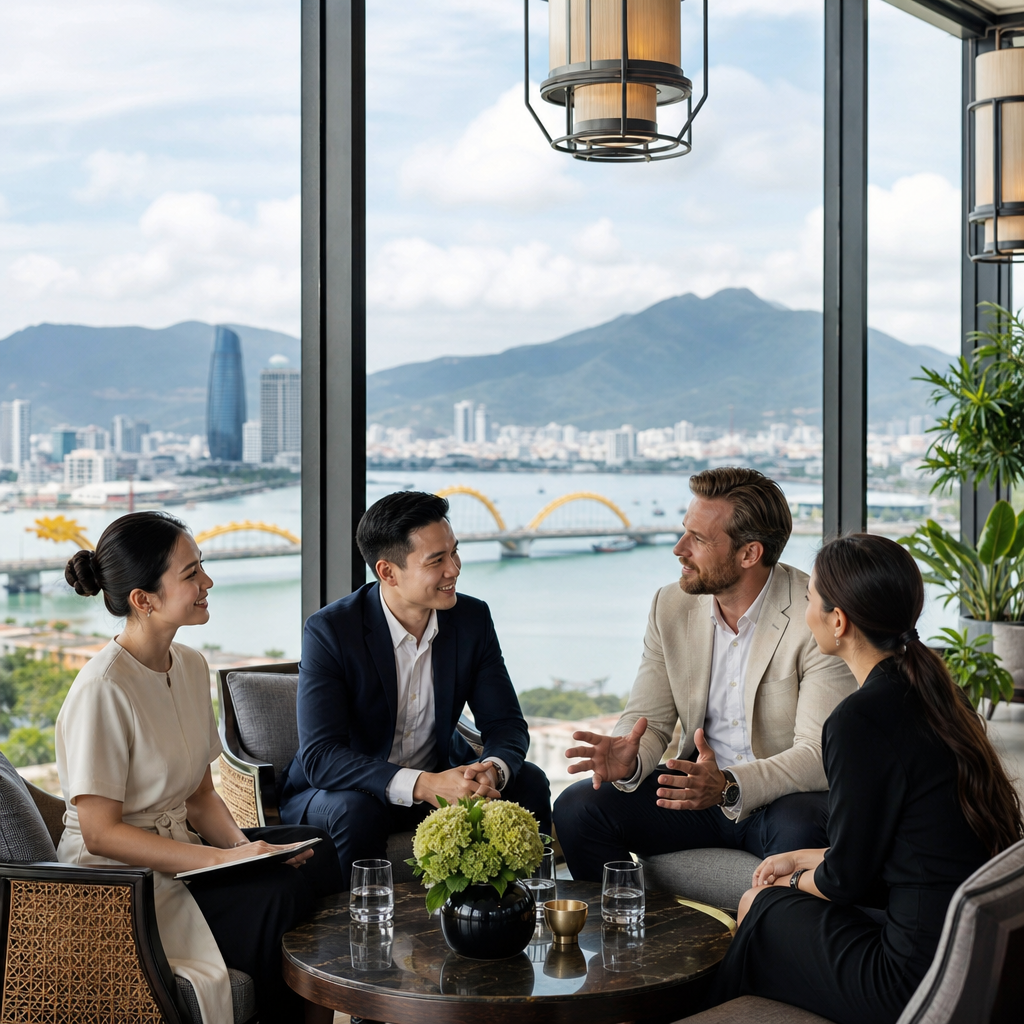
Inside Da Nang’s Hospitality Opportunity
A morning arrival in Da Nang quickly puts the city’s hospitality ambitions into perspective. The airport, beachfront hotels, conference venues, restaurants, and resort corridors create a compact environment for testing partnerships. For an overseas traveler, however, the value of a discovery day depends on more than seeing attractive properties; it depends on understanding how each conversation fits the local market.
This field journal follows a practical route through hotel visits, supplier discussions, and local introductions. A Da Nang hospitality partnership visit is not simply a sequence of meetings, but a chance to observe service expectations, decision-making styles, and the relationships that support tourism operations.
A city built for connected meetings
Da Nang combines international air access with a strong coastal tourism identity and proximity to Hoi An and Hue. That geography allows a visitor to compare city hotels, beach resorts, attractions, transport providers, and food businesses within a relatively short itinerary. The result is a useful setting for companies exploring hospitality services, destination products, or corporate travel partnerships.
The value of seeing context firsthand
Written proposals rarely show how a property handles arrivals, coordinates suppliers, or responds to special requests. Walking through a lobby, meeting an operations manager, and discussing peak-period constraints can reveal details that brochures omit. With ezgogo.app, international visitors can arrange local interpreter support to navigate those conversations with greater confidence.
Question 1: Why is Da Nang attracting hospitality investors?
Da Nang attracts hospitality interest because it combines established tourism infrastructure, a major airport, beaches, and access to central Vietnam’s cultural destinations. Its growth also creates demand for hotels, experiences, transport, food services, and business-travel solutions.
Tourism momentum and regional access
Vietnam recorded 17.6 million international visitor arrivals in 2024, according to the General Statistics Office, while the country continued rebuilding air and tourism connections after the pandemic. Da Nang benefits from its position between northern and southern markets and from its role as a gateway to central Vietnam. Those fundamentals make the city relevant to both leisure and corporate hospitality planners.
- Airport connectivity: Da Nang International Airport supports access for domestic and international visitors.
- Destination variety: Beaches, heritage sites, food, and nearby Hoi An broaden partnership possibilities.
- Compact geography: Visitors can inspect several hospitality businesses in one working day.
Competition creates partnership openings
A competitive market encourages operators to distinguish themselves through service quality, local experiences, sustainability, and reliable distribution. For an overseas company, the opportunity may not be building a hotel; it may be supplying technology, creating tours, arranging wellness programs, or connecting properties with new customer segments. Direct meetings help clarify where a proposed service solves a genuine local problem.
Question 2: What happens during a hotel partnership meeting?
A hotel partnership meeting usually combines a property tour, an overview of the proposed collaboration, operational questions, and discussion of commercial next steps. The most useful meetings connect a broad idea to specific guest needs, staff workflows, costs, and responsibilities.
From lobby impressions to operating details
The day may begin with a walkthrough of reception, guest rooms, meeting areas, restaurants, and back-of-house access. A visitor can then ask how the hotel handles group arrivals, multilingual guests, transport coordination, or peak-season demand. These observations turn a general hotel partnership meeting into a practical assessment of fit.
- Guest profile: Identify the hotel’s priority markets, segments, and booking patterns.
- Service capacity: Discuss staffing, response times, inventory, and operational limits.
- Decision process: Confirm who evaluates proposals and what information is required next.
Reading the conversation accurately
Business communication can include indirect signals about timing, risk, and authority. A polite expression of interest may mean that the concept needs more evidence before a commitment, while a request for a detailed pilot could indicate genuine readiness. An experienced companion can help summarize these nuances afterward without replacing the client’s own judgment.
Question 3: How do local introductions improve business travel?
Local introductions improve business travel by helping visitors reach the right people faster and by creating a more natural foundation for trust. They can also reveal relevant suppliers, neighborhood specialists, and informal market information that is difficult to find through online research.
Beyond the scheduled hotel visit
After a property meeting, the itinerary might continue with a local food producer, transport operator, event organizer, or destination-management company. Each introduction adds another perspective on how visitors move through Da Nang and what hotels need from their partners. These conversations can expose complementary opportunities rather than leaving the traveler focused on a single business category.
- Supplier visibility: Meet operators who influence service delivery and guest satisfaction.
- Relationship building: Start conversations in a setting that feels less transactional.
- Market context: Compare what businesses say with what they experience day to day.
Trust is part of the itinerary
In Vietnam, personal rapport often supports the early stages of a commercial relationship. Sharing a meal or visiting a supplier can provide time for questions that would not fit inside a formal presentation. For visitors on Da Nang business travel, the schedule should therefore allow room for hospitality, introductions, and follow-up rather than filling every hour with back-to-back appointments.
Question 4: What does an interpreter-companion add beyond translation?
An interpreter-companion adds cultural context, logistical coordination, and situational awareness alongside language support. The role can help a traveler prepare questions, follow the pace of meetings, identify ambiguities, and reflect on what happened afterward.
Context before and during meetings
Simple translation transfers words, but effective business communication also depends on who speaks first, how disagreement is expressed, and when a decision is realistically expected. A professional can brief the visitor on local etiquette, clarify terminology, and help keep a discussion balanced. This is especially valuable when several companies use different vocabulary for similar services.
- Preparation: Review the agenda, company background, and priority questions before arrival.
- Live support: Interpret accurately while helping the visitor follow references and changes in direction.
- Debriefing: Separate confirmed commitments from possibilities that still need verification.
A practical companion on a moving day
Discovery days involve more than conference rooms. Traffic, last-minute schedule changes, unfamiliar addresses, meal arrangements, and site access can all affect the outcome. A local professional helps the traveler remain focused on commercial priorities while handling everyday friction, making the day more useful without taking control of the visitor’s decisions.
Question 5: How can visitors plan a productive discovery day?
Visitors should define a focused objective, group meetings by location, research each organization, and reserve time for follow-up notes. A productive discovery day balances structured appointments with enough flexibility to explore unexpected introductions or operational details.
Build a realistic route
Begin with two or three measurable goals, such as validating a supplier model, finding a hotel pilot partner, or assessing demand for a new experience. Then organize appointments around the city’s geography and allow realistic transfer time. A short briefing document should list attendees, questions, required materials, and the specific decision expected from each meeting.
- Prioritize: Put the most important meeting early, when attention and energy are strongest.
- Buffer: Leave space for traffic, extended discussions, and unexpected introductions.
- Record: Capture names, responsibilities, promised documents, and agreed deadlines.
Turn observations into next steps
At the end of each visit, write a short summary while details remain fresh. Note what was confirmed, what remains unclear, and which assumptions need evidence. A successful Da Nang hospitality partnership visit should finish with an organized follow-up list, not merely a folder of business cards and attractive property photographs.
Conclusion
Da Nang offers a practical setting for hospitality discovery because its tourism assets, business infrastructure, and compact geography bring many potential partners within reach. The strongest results come from combining property visits with supplier conversations, local introductions, and careful interpretation of commercial context.
For an international traveler, the right companion can make a busy itinerary easier to understand and act on. Explore ezgogo.app when planning your next Vietnam business trip and connect with interpreter-companions who can support more informed local conversations.
Sources
- General Statistics Office of Vietnam — Socio-economic situation in the fourth quarter and 2024
- Reuters — Vietnam sees 18 million foreign tourists in 2024
- Vietnam Briefing — Vietnam’s Tourism Sector: 2024 Outlook and Investment Opportunities
- Airports Corporation of Vietnam — Da Nang International Airport
Frequently Asked Questions
Question 1: Why is Da Nang attracting hospitality investors?
Da Nang attracts hospitality interest because it combines established tourism infrastructure, a major airport, beaches, and access to central Vietnam’s cultural destinations. Its growth also creates demand for hotels, experiences, transport, food services, and business-travel solutions.
Question 2: What happens during a hotel partnership meeting?
A hotel partnership meeting usually combines a property tour, an overview of the proposed collaboration, operational questions, and discussion of commercial next steps. The most useful meetings connect a broad idea to specific guest needs, staff workflows, costs, and responsibilities.
Question 3: How do local introductions improve business travel?
Local introductions improve business travel by helping visitors reach the right people faster and by creating a more natural foundation for trust. They can also reveal relevant suppliers, neighborhood specialists, and informal market information that is difficult to find through online research.
Question 4: What does an interpreter-companion add beyond translation?
An interpreter-companion adds cultural context, logistical coordination, and situational awareness alongside language support. The role can help a traveler prepare questions, follow the pace of meetings, identify ambiguities, and reflect on what happened afterward.
Question 5: How can visitors plan a productive discovery day?
Visitors should define a focused objective, group meetings by location, research each organization, and reserve time for follow-up notes. A productive discovery day balances structured appointments with enough flexibility to explore unexpected introductions or operational details.
Need a local companion or interpreter in Vietnam?
Browse verified companions for language support, factory visits, and authentic local experiences.
Find a Companion →