 EZGOGO
Da Nang Local Guide: Field Journal of a Business Trip
A successful business trip to Da Nang depends on more than a packed itinerary. This field journal follows a Da Nang local guide helping an international team move between meetings, meals, hotel transfers, and cultural experiences. From choosing realistic travel times to explaining dining etiquette and navigating bilingual conversations, small decisions shape the entire visit. Discover how local coordination supports international team travel, reduces friction during a Da Nang business visit, and creates space for genuine connections. The story also shows why professional interpreters and companions can make Vietnam travel support more practical, personal, and culturally informed.
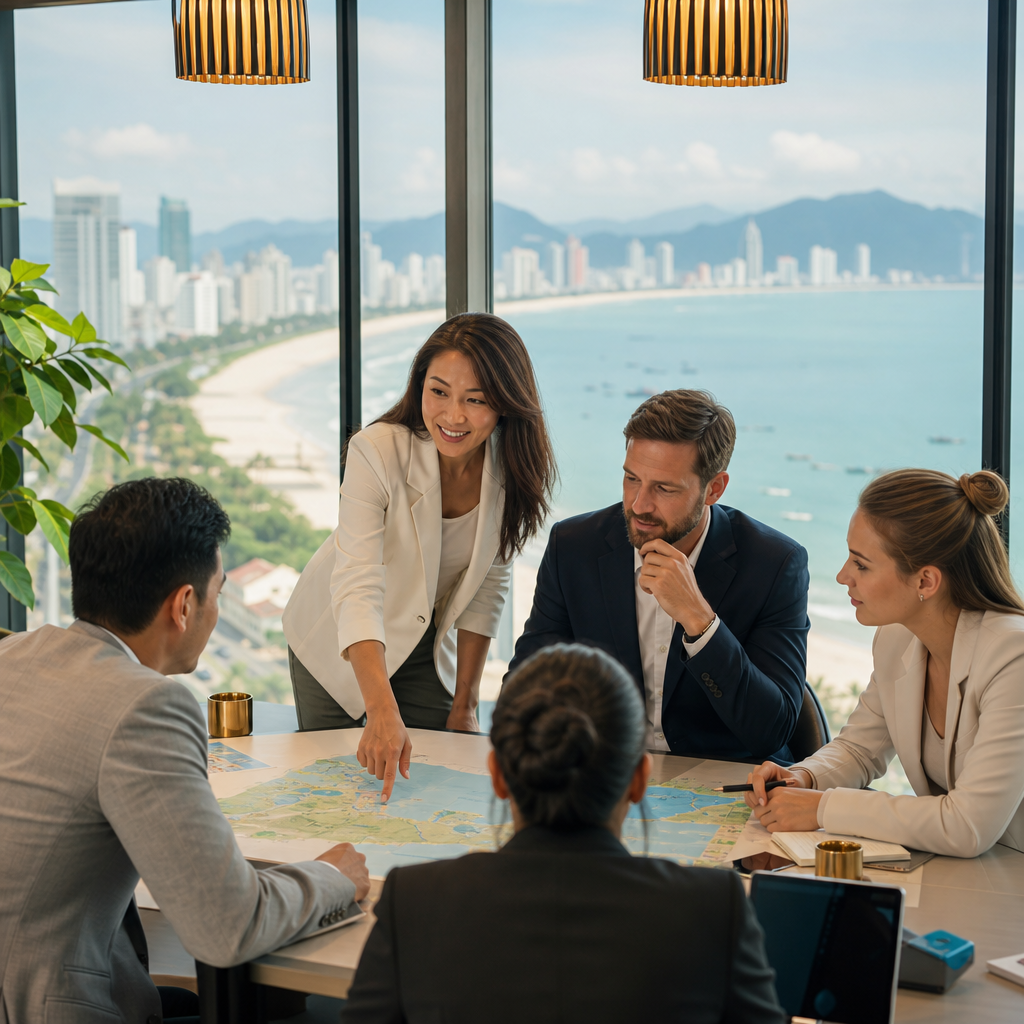
Inside a Smoother Da Nang Business Visit
Da Nang combines a growing business environment with beaches, heritage sites, and a compact urban layout. For an international team, that combination can be productive but demanding: a meeting may be near an industrial area, while dinner, translation needs, and airport timing create a second layer of decisions.
A Da Nang local guide helps connect those details. The role is not simply to show landmarks, but to read the day, adjust the route, explain local expectations, and keep professional priorities intact while the team experiences the city.
A city built for mixed itineraries
Da Nang is central to Vietnam’s tourism network and serves as a gateway to destinations including Hoi An and Hue. Its airport, coastal districts, riverfront, and surrounding business areas make short transfers possible, although traffic, weather, and appointment locations still need careful planning.
The value of small decisions
Good coordination often appears invisible. It may mean confirming a restaurant can handle dietary requirements, allowing extra time for a factory visit, or explaining why a formal greeting takes longer than expected. These choices reduce uncertainty and let visiting executives focus on conversations rather than logistics.
Question 1: How does a local guide prepare an international team?
A local guide prepares an international team by mapping its meetings, transport, language needs, dietary requirements, and cultural priorities before arrival. The guide then turns that information into a flexible daily plan rather than a rigid sightseeing schedule.
Reading the purpose of the visit
Preparation starts with the team’s objectives. A group visiting suppliers may need precise arrival times and help with technical vocabulary, while a leadership delegation may place greater emphasis on hosting, restaurant selection, and relationship-building. Understanding the purpose prevents generic travel planning.
- Appointment map: Locations, contact persons, meeting length, and backup routes are reviewed in advance.
- Communication plan: Key terms and expected language preferences are identified before discussions begin.
- Personal needs: Food allergies, mobility concerns, preferred pacing, and evening availability are included.
Building a practical briefing
A short briefing can cover greeting customs, clothing expectations, payment habits, traffic conditions, and appropriate questions at a workplace. It should be useful rather than overwhelming. Visitors benefit most when advice is connected to the exact meetings and experiences planned for their day.
Question 2: Why do travel times matter in Da Nang?
Travel times matter because a short distance on a map can still become a scheduling risk during busy periods, rain, or a tightly packed business day. A realistic buffer protects meetings and gives the team time to arrive calm and prepared.
Moving between business and city districts
Da Nang’s major roads connect the airport, central districts, beachfront hotels, and routes toward industrial zones. However, an international team may lose time when loading vehicles, finding a specific building, communicating with security, or waiting for a host. A guide anticipates these ordinary delays.
- Arrival buffers: Extra time is reserved before meetings, especially for first visits to unfamiliar facilities.
- Weather checks: Rain and flooding risks can influence route choices during the wet season.
- Vehicle coordination: Pickup points and driver instructions are confirmed in language the team understands.
Keeping the itinerary flexible
Flexibility does not mean poor organization. It means ranking the day’s priorities and knowing which activities can move if a meeting runs late. This approach is particularly helpful when a team combines a Da Nang business visit with a dinner, market walk, or short trip beyond the city.
Question 3: How can cultural guidance improve meetings?
Cultural guidance improves meetings by clarifying how Vietnamese business relationships are built, how seniority may influence introductions, and when indirect communication is being used. It helps visitors show respect without forcing local interactions into unfamiliar assumptions.
Explaining the relationship-first approach
Vietnamese business conversations may include personal questions, refreshments, or informal discussion before the central agenda. For visitors accustomed to moving immediately to contracts or presentations, this can feel unexpected. A guide can explain that introductory conversation may support trust and should not automatically be treated as lost time.
- Introductions: Names, roles, and seniority are confirmed so the greeting feels organized.
- Conversation pace: Sensitive topics are approached carefully and clarified without public embarrassment.
- Meeting follow-up: Agreements and unresolved points are summarized to reduce translation gaps.
Supporting bilingual conversations
Interpreting is more than replacing words. It can involve preserving tone, identifying ambiguity, and signaling when a speaker has finished a point. In a technical meeting, the guide may also keep a running vocabulary list so repeated terms remain consistent throughout the discussion.
Question 4: What makes local dining easier for visitors?
Local dining becomes easier when a guide matches restaurants and dishes to the team’s schedule, preferences, and comfort level. Clear explanations of ingredients, ordering customs, and portion styles help visitors explore Da Nang without avoidable stress.
Choosing food around the schedule
A quick lunch near a meeting venue may be more useful than a famous restaurant across town. For an evening event, the guide can recommend a setting suitable for conversation, client hosting, or a relaxed team meal. Timing, noise, seating, and payment arrangements all affect the experience.
- Dietary clarity: Ingredients and preparation methods are checked before orders are placed.
- Shared dishes: Family-style dining is explained so guests understand how food is commonly served.
- Business tone: Restaurant choices reflect whether the meal is informal, celebratory, or client-facing.
Turning a meal into cultural context
Da Nang’s food culture includes regional specialties such as mi Quang, banh xeo, seafood, and dishes influenced by central Vietnamese traditions. A guide can introduce these foods gradually, explain how they are eaten, and avoid presenting local cuisine as a performance for visitors.
Question 5: When should a team use professional travel support?
A team should use professional travel support when meetings involve language sensitivity, multiple transfers, unfamiliar facilities, or limited time for problem-solving. An interpreter-companion can combine communication assistance with practical coordination throughout the visit.
Support beyond formal interpreting
Many travel issues appear between meetings: a changed pickup point, a misunderstood menu, a delayed host, or a request to alter the evening plan. A local companion can respond quickly because they understand both the team’s priorities and the surrounding context. This is especially valuable for first-time visitors.
- Continuity: The same support person can follow the group across meetings, meals, and activities.
- Local judgment: Small decisions are made with awareness of local timing, etiquette, and practical constraints.
- Team confidence: Visitors can participate more fully when basic communication and logistics are covered.
Choosing the right level of help
Not every itinerary needs full-day assistance. Some teams need an interpreter for a supplier meeting, while others benefit from support during airport arrival, a client dinner, or a weekend extension. Platforms such as ezgogo.app help foreign businesses explore interpreter-companions suited to different Vietnam travel needs.
Conclusion
The strongest international team travel experiences are shaped by details that rarely appear in a brochure. A Da Nang local guide helps connect punctual transport, thoughtful cultural guidance, clear interpretation, and authentic local experiences, allowing business visitors to move through the city with greater confidence.
For a future Da Nang business visit, consider which parts of the itinerary would benefit from local judgment rather than remote planning alone. Explore ezgogo.app to find interpreter-companions who can make your next Vietnam business trip smoother, more personal, and easier to navigate.
Sources
Frequently Asked Questions
Question 1: How does a local guide prepare an international team?
A local guide prepares an international team by mapping its meetings, transport, language needs, dietary requirements, and cultural priorities before arrival. The guide then turns that information into a flexible daily plan rather than a rigid sightseeing schedule.
Question 2: Why do travel times matter in Da Nang?
Travel times matter because a short distance on a map can still become a scheduling risk during busy periods, rain, or a tightly packed business day. A realistic buffer protects meetings and gives the team time to arrive calm and prepared.
Question 3: How can cultural guidance improve meetings?
Cultural guidance improves meetings by clarifying how Vietnamese business relationships are built, how seniority may influence introductions, and when indirect communication is being used. It helps visitors show respect without forcing local interactions into unfamiliar assumptions.
Question 4: What makes local dining easier for visitors?
Local dining becomes easier when a guide matches restaurants and dishes to the team’s schedule, preferences, and comfort level. Clear explanations of ingredients, ordering customs, and portion styles help visitors explore Da Nang without avoidable stress.
Question 5: When should a team use professional travel support?
A team should use professional travel support when meetings involve language sensitivity, multiple transfers, unfamiliar facilities, or limited time for problem-solving. An interpreter-companion can combine communication assistance with practical coordination throughout the visit.
Need a local companion or interpreter in Vietnam?
Browse verified companions for language support, factory visits, and authentic local experiences.
Find a Companion →