 EZGOGO
Da Nang site inspection guide: A Field Journal for Investors
A coastal property visit in Da Nang can look straightforward until traffic, tides, zoning language, and local business customs enter the picture. This field journal follows an international client, a Vietnam local guide, and an interpreter-companion as they assess a potential site from the airport to the shoreline. Readers will see how transport planning, terminology support, stakeholder introductions, and on-the-ground cultural context can improve a business trip. The article also explains what visitors should verify before treating a promising coastal location as an investment opportunity.
A Coastal Visit With More Than a View
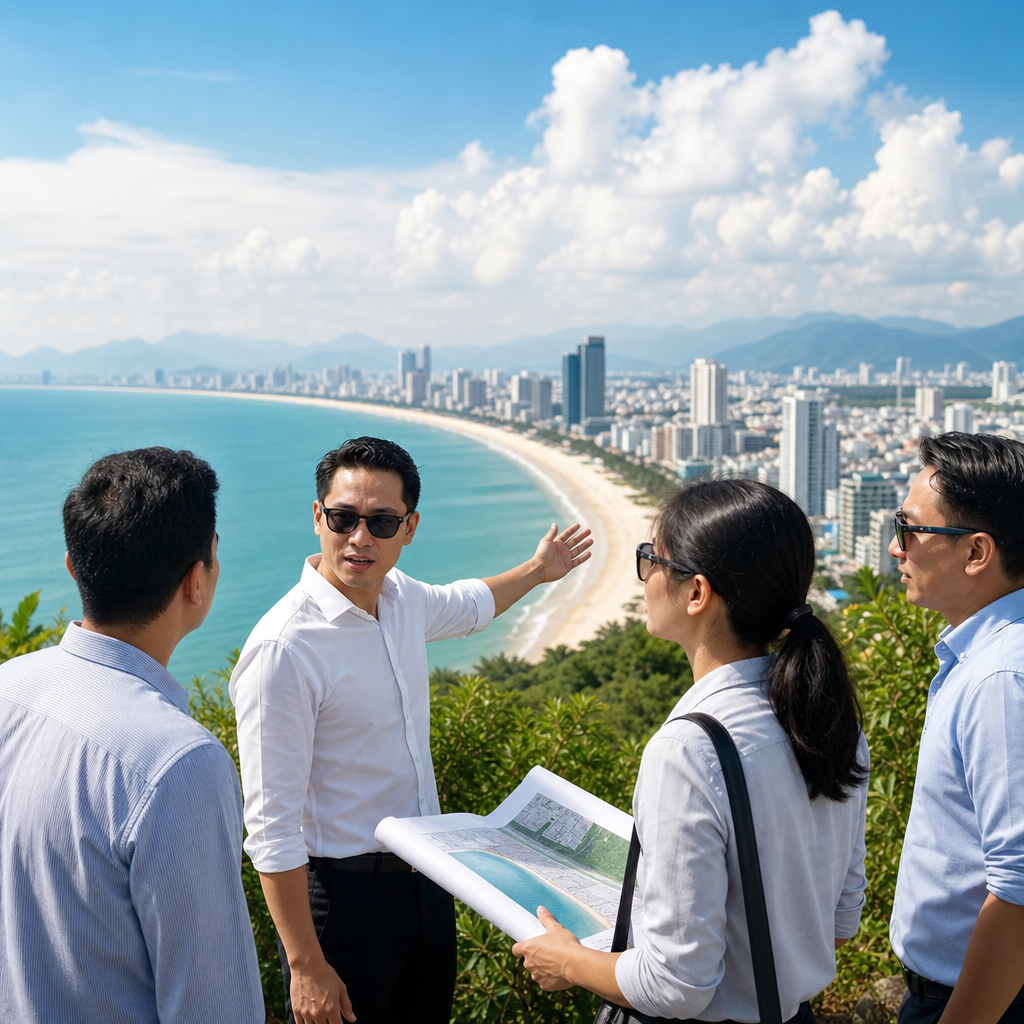
At 8:15 a.m., an overseas hospitality executive leaves central Da Nang with a local adviser and an interpreter-companion. The destination is a coastal parcel outside the city center, where the client wants to understand access, surrounding development, and the practical conditions behind a polished investment presentation.
The first lesson of a Da Nang site inspection guide is that a site visit is not simply a drive, a translation session, or a photo opportunity. It is a moving fact-finding exercise that connects maps, people, infrastructure, weather, and business etiquette in one tightly scheduled morning.
From airport gateway to coastal corridor
Da Nang International Airport sits close to the urban core, making the city relatively convenient for visiting executives. However, the final journey can still involve busy intersections, narrow access roads, construction traffic, and rapidly changing surroundings. A prepared Vietnam local guide helps the group use travel time to frame the questions that matter before arrival.
The interpreter as an observation partner
A professional interpreter-companion does more than convert sentences between languages. They can clarify whether a comment is a formal commitment, a preliminary suggestion, or a polite expression of interest. That distinction is especially important when a coastal property visit includes several parties with different responsibilities.
Question 1: Why does Da Nang matter for coastal business visits?
Da Nang matters because it combines an international airport, a major seaport, established tourism demand, and a growing services economy in one coastal city. Those advantages make it useful for investors, operators, manufacturers, and hospitality groups evaluating central Vietnam.
A connected central location
Da Nang functions as a transport and commercial gateway for central Vietnam. The city has direct air connections, road links toward Hue and Hoi An, and access to Tien Sa Port. For a visiting business team, that combination creates a broader question than whether one parcel looks attractive: can the location support customers, staff, suppliers, and regional movement?
- Airport access: Short transfers can make repeated inspections and executive visits more practical.
- Port proximity: Tien Sa supports the wider logistics picture for selected commercial activities.
- Tourism demand: Beaches, heritage destinations, and hospitality infrastructure shape the market context.
Growth requires careful verification
Strong visitor numbers and new development do not automatically make every coastal site viable. Investors still need to examine planning status, land-use conditions, flood exposure, utilities, and permitted construction. A Da Nang site inspection guide should therefore distinguish between a citywide growth story and the verified facts of the individual property.
Question 2: How should visitors plan transport to a coastal site?
Visitors should schedule the route around traffic, weather, meeting windows, and return time rather than relying on a simple map estimate. A driver and Da Nang interpreter who know the area can reduce delays while keeping the inspection focused.
Build time around the route
The group leaves before the late-morning heat builds, carrying water, printed site details, and a phone with offline mapping. The interpreter confirms the meeting point in Vietnamese and English because a pin may identify a broad road rather than the exact gate. This small check prevents a common failure: arriving nearby but losing time finding the responsible contact.
- Traffic buffer: Add extra time for school traffic, roadworks, and busy bridges.
- Weather plan: Keep rain protection and a backup indoor discussion location available.
- Site access: Confirm whether cars, vans, or walking shoes are appropriate for the final approach.
Observe the journey, not only the destination
The route reveals information that a brochure cannot: neighboring hotels, undeveloped plots, drainage channels, retail activity, and the condition of connecting roads. The interpreter helps the client ask neutral questions without turning observations into premature conclusions. This is practical business travel assistance, particularly when the visitor cannot easily read signs or discuss conditions with nearby stakeholders.
Question 3: Which terms and documents need interpretation?
Visitors should clarify land-use rights, planning status, construction permissions, infrastructure responsibilities, and commercial terms before treating a site as investable. Interpretation should preserve the exact meaning of technical language and clearly separate confirmed documents from verbal explanations.
Translate concepts, not just words
During the briefing, phrases involving land, leases, approvals, and project timelines can sound familiar while carrying specific legal or administrative meaning. The Da Nang interpreter asks speakers to slow down, repeats figures, and records the Vietnamese term alongside the working English explanation. That creates a useful trail for lawyers, engineers, and management teams reviewing the visit later.
- Planning status: Confirm which plan or decision supports the stated development direction.
- Infrastructure: Ask who is responsible for roads, drainage, electricity, water, and connection costs.
- Written evidence: Request copies or references instead of relying only on spoken assurances.
Keep the meeting commercially clear
Professional interpretation also manages the rhythm of negotiation. A visitor may want to challenge a forecast directly, while a local representative may expect a more relationship-based exchange before discussing sensitive details. The interpreter can explain the intent behind the question, reduce unnecessary friction, and make sure both sides leave with the same next steps.
Question 4: How can visitors read the local context?
Visitors can read local context by combining direct observation with respectful conversations involving residents, operators, officials, and nearby businesses. A trusted companion helps explain what is visible, what is customary, and what still requires independent verification.
Look beyond the boundary line
At the shoreline, the client notes beach access, nearby construction, wind direction, drainage, and the distance between the parcel and existing services. The guide also points out how weekend activity differs from a quiet weekday morning. These details help test whether a concept fits the lived environment rather than only the developer’s rendered images.
Respect relationships during questions
Local knowledge is valuable, but it should be gathered without making promises or implying authority the visitor does not have. An interpreter-companion can introduce the client properly, explain the purpose of the visit, and identify when a question should be directed to a licensed professional or government office. Courtesy often produces clearer information than an overly aggressive interview.
Question 5: What should a visitor record before deciding?
Before deciding, visitors should record verified documents, unanswered questions, physical conditions, stakeholder commitments, cost assumptions, and a clear follow-up owner for each issue. The goal is not to approve the site on the spot but to return with a reliable decision file.
Create a structured inspection record
The client photographs access points, notes the time and weather, and marks questions directly on a site plan. The interpreter labels key observations in both languages, including names, job titles, phone numbers, and promised documents. This prevents a common post-trip problem: remembering the atmosphere of a place while losing the detail needed for due diligence.
- Verified facts: Separate documents and measured observations from estimates.
- Open questions: Assign each question to a person and a deadline.
- Decision criteria: Compare access, costs, approvals, demand, and operational risks.
Turn the visit into a next-step plan
Back at the hotel, the team reviews the notes before memories fade. They decide which items require a surveyor, lawyer, architect, market study, or follow-up meeting with local authorities. For international visitors, the value of a site inspection often lies in this disciplined transition from impressions to evidence.
Conclusion
A coastal inspection in Da Nang is most useful when transport, terminology, relationships, and physical evidence are considered together. The city’s connectivity and tourism profile create real opportunities, but every parcel still demands careful verification. A practical Da Nang site inspection guide helps visitors ask better questions without confusing a promising first impression with a final business decision.
International teams can make the day more productive by arranging a capable driver, clear meeting schedule, and culturally aware language support before arrival. For the next Vietnam business trip, explore interpreter-companions through ezgogo.app and build local context into the itinerary from the start.
Sources
- General Statistics Office of Vietnam — Socio-economic situation in the fourth quarter and 2023
- Vietnam Briefing — Vietnam Tourism Statistics 2024
- World Bank — Vietnam Macro Monitoring Report
- Asian Development Bank — Asian Development Outlook April 2024
- Airports Corporation of Vietnam — Da Nang International Airport
Frequently Asked Questions
Question 1: Why does Da Nang matter for coastal business visits?
Da Nang matters because it combines an international airport, a major seaport, established tourism demand, and a growing services economy in one coastal city. Those advantages make it useful for investors, operators, manufacturers, and hospitality groups evaluating central Vietnam.
Question 2: How should visitors plan transport to a coastal site?
Visitors should schedule the route around traffic, weather, meeting windows, and return time rather than relying on a simple map estimate. A driver and Da Nang interpreter who know the area can reduce delays while keeping the inspection focused.
Question 3: Which terms and documents need interpretation?
Visitors should clarify land-use rights, planning status, construction permissions, infrastructure responsibilities, and commercial terms before treating a site as investable. Interpretation should preserve the exact meaning of technical language and clearly separate confirmed documents from verbal explanations.
Question 4: How can visitors read the local context?
Visitors can read local context by combining direct observation with respectful conversations involving residents, operators, officials, and nearby businesses. A trusted companion helps explain what is visible, what is customary, and what still requires independent verification.
Question 5: What should a visitor record before deciding?
Before deciding, visitors should record verified documents, unanswered questions, physical conditions, stakeholder commitments, cost assumptions, and a clear follow-up owner for each issue. The goal is not to approve the site on the spot but to return with a reliable decision file.
Need a local companion or interpreter in Vietnam?
Browse verified companions for language support, factory visits, and authentic local experiences.
Find a Companion →