 EZGOGO
Factory Floor Interpretation Manufacturing: 5 Critical Checkpoints
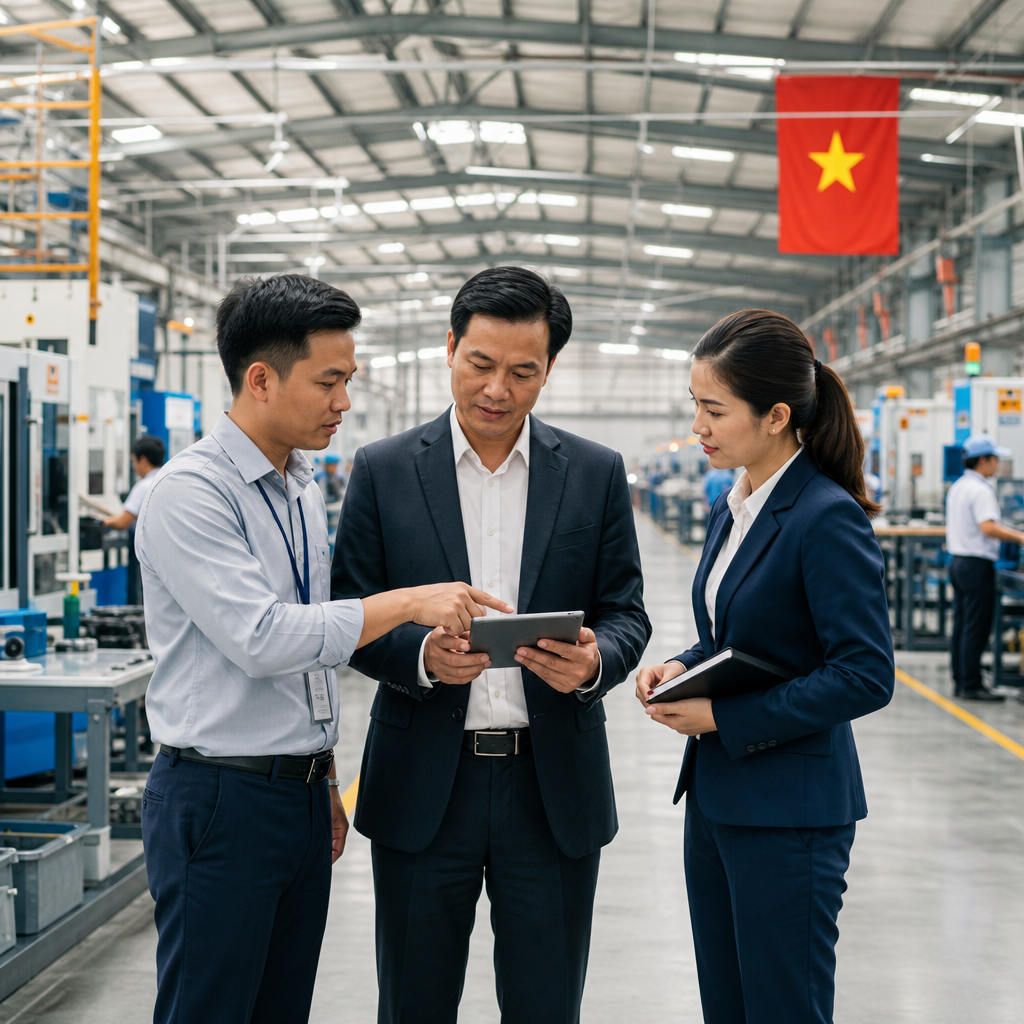
Factory floor interpretation manufacturing requires precision at every stage of production oversight. When foreign businesses negotiate supply contracts or audit Vietnamese manufacturing facilities, miscommunication about equipment specs, safety protocols, or quality standards can cost thousands in rework or shutdowns. This guide walks you through five non-negotiable moments where professional interpretation prevents errors and protects your supply chain partnership from the ground up.
Why Factory Floor Interpretation Matters for Manufacturing Deals
Vietnam's manufacturing sector generated over $365 billion in export revenue in 2023, cementing its position as a global production powerhouse. Foreign buyers placing orders with Vietnamese factories face a stark reality: misunderstandings on the production floor cost time, money, and reputation.
Factory floor interpretation manufacturing is not simply translating words—it is clarifying technical intent between cultures and industries in real-time. A single miscommunication about tolerance levels, material sourcing, or shutdown procedures can trigger production delays, safety incidents, or quality rejections that consume weeks to resolve.
The Cost of Miscommunication on Vietnamese Manufacturing Floors
According to Vietnam Investment Review, foreign manufacturers cite communication barriers as the third-largest operational risk when scaling production in Vietnam. One automotive supplier reported a $250,000 rework cost after miscommunication about alloy specifications during a factory audit in 2022.
Why Professional Interpreters Are Your First Line of Defense
Trained manufacturing interpreters understand industry terminology, equipment names, safety standards, and cultural negotiation norms. They catch ambiguities that lay translators miss, ask clarifying questions unprompted, and document agreements in writing to prevent future disputes.
Question 1: What happens during equipment specification review?
Equipment specification review requires interpreters to translate not only machine names and technical manuals but also to clarify tolerance ranges, maintenance cycles, and operator certifications—ensuring both parties hold identical expectations before production begins.
Translating Technical Specifications Without Error Margin
When you walk a Vietnamese factory floor, machinery names, settings, and output ranges must be translated with absolute accuracy. A professional factory floor interpretation manufacturing specialist will ask: "What is the acceptable variance on this dimension?" and "How many hours can this line run before mandatory maintenance?" rather than assuming standard Western norms apply.
- Tolerance interpretation: Millimeters vs. inches, microns, and acceptable defect rates must be locked into written confirmation.
- Capacity clarification: Asking about units per hour, shift patterns, and downtime reality prevents overcommitment.
- Maintenance schedules: Understanding when equipment stops protects your delivery timeline from surprise shutdowns.
Documentation of Equipment Capabilities and Limits
Professional interpreters ensure that equipment specs are documented in both English and Vietnamese, signed by factory management. This creates a binding reference if disputes arise later about what the line can or cannot produce.
Question 2: How do safety protocols require real-time translation?
Safety protocol translation prevents injuries and legal liability by ensuring workers understand hazard warnings, your company understands facility safeguards, and both parties agree on incident reporting procedures in advance.
Clarifying Hazard Communication and Worker Protection Standards
Vietnam's labor laws comply with International Labour Organization (ILO) standards, but factory interpretations vary widely. A professional factory floor interpretation manufacturing interpreter will ask workers about personal protective equipment (PPE) requirements, chemical handling, electrical safety, and lockout/tagout protocols in their native language, ensuring honest answers.
- Hazard labeling accuracy: Confirming chemical safety data sheets (SDS) are available in Vietnamese and understood by operators.
- PPE enforcement: Observing and asking whether safety equipment is actually worn—not just stored.
- Incident reporting: Understanding how near-misses and injuries are logged and communicated to management.
Building Trust and Compliance Documentation
When a professional interpreter asks safety questions and documents responses, factory supervisors take those concerns seriously. This approach signals that your company values worker welfare and accountability, strengthening the long-term partnership and reducing hidden liability.
Question 3: Why is production quality assurance interpretation critical?
Quality assurance interpretation ensures your standards for inspections, testing, and defect thresholds are understood identically by Vietnamese production teams, preventing shipments that fail your acceptance criteria.
Defining Quality Standards and Inspection Procedures
Vietnamese factories often work to multiple customer specifications simultaneously. A professional interpreter clarifies: "For this customer, defects over 2mm are rejected; for another, 3mm is acceptable." Walking the line with an interpreter ensures quality staff understand which standard applies to your order and where inspections happen.
- Defect classification: Ensuring critical, major, and minor defect categories match your requirements exactly.
- Sampling protocols: Confirming inspection frequency—every unit vs. every 100 units—and the consequences of failed batches.
- Testing equipment calibration: Asking when measuring tools were last certified and whether they meet your precision requirements.
Documentation and Traceability in Real Time
Factory floor interpretation manufacturing includes ensuring that quality records are legible, dated, and traceable to specific production batches. An interpreter will ask to review actual inspection logs, not templates, confirming that quality checks are genuinely happening.
Question 4: What must interpreters clarify during capacity verification?
Capacity verification interpretation prevents over-promising by clarifying actual production rates, realistic lead times, and constraints—such as shared equipment, seasonal staffing changes, or material supply delays—that could affect your order.
Real-World Production Rates and Lead Time Factors
Factory managers often quote optimistic timelines. A trained interpreter asks: "What is the realistic lead time if raw materials arrive on Tuesday?" and "How many of your staff are on vacation in February?" Professional factory floor interpretation manufacturing identifies the difference between maximum theoretical capacity and what actually ships on schedule.
- Shared equipment transparency: Asking whether other customers' orders compete for the same lines, which could delay yours.
- Material supply dependencies: Understanding whether delays upstream (from suppliers) would cascade into late shipments.
- Seasonal patterns: Confirming staffing, holiday schedules, and Lunar New Year shutdowns affect your timeline.
Contingency Planning and Realistic Commitment
Interpreters help you negotiate realistic commitments by asking factories: "If urgent orders come in, what is your buffer capacity?" and "How would you prioritize my order if conflicts arise?" These conversations prevent disputes later and build accountability.
Question 5: How does compliance and certification translation protect your deal?
Compliance and certification interpretation verifies that factory licenses, quality certifications (ISO, IATF), worker training records, and regulatory compliance are genuine, current, and relevant to your product category.
Verifying Certifications and Regulatory Compliance Documents
Vietnamese factories often display certifications on walls. A professional interpreter reviews original documents, checks expiration dates, and asks: "Is this facility currently audited under this standard?" Many facilities hold outdated certificates; interpreters catch this before you sign a contract. Factory floor interpretation manufacturing includes confirming worker training records, hazardous material licenses, and environmental permits are up-to-date.
- ISO and industry certification scope: Confirming certificates apply to the specific processes making your product, not just general operations.
- Third-party audit frequency: Asking when the facility was last audited externally and whether findings were resolved.
- Environmental and waste compliance: Understanding how the factory disposes of chemicals and waste to avoid your supply chain liability.
Legal Protection Through Documentation
When an interpreter documents certifications, capacity commitments, and compliance status in writing—with factory signature—you gain legal recourse if factories misrepresent capabilities. This written record protects you in disputes with your own customers or regulators.
Conclusion
Factory floor interpretation manufacturing is not a luxury—it is essential infrastructure for protecting your supply chain, workers' safety, and your company's reputation. The five checkpoints covered here (equipment specs, safety protocols, quality standards, capacity reality, and compliance verification) form a checklist that professional interpreters execute instinctively, asking the right questions before miscommunication becomes an expensive mistake.
When you plan your next manufacturing audit or site visit in Vietnam, partner with ezgogo.app to connect with interpreter-companions who understand both your industry and Vietnamese factory operations. Professional factory floor interpretation manufacturing transforms a high-risk audit into a confident, documented partnership that scales reliably.
Sources
- Vietnam Investment Review — Vietnam Manufacturing Export Sector Growth 2023
- VnExpress Business — Communication Barriers in Vietnamese Manufacturing Operations
- General Statistics Office of Vietnam (GSO) — Industrial Production and Quality Standards
- International Labour Organization (ILO) — Vietnam Labour Standards and Safety Compliance
- Reuters — Manufacturing Supply Chain Risk in Vietnam: 2022 Analysis
Frequently Asked Questions
Question 1: What happens during equipment specification review?
Equipment specification review requires interpreters to translate not only machine names and technical manuals but also to clarify tolerance ranges, maintenance cycles, and operator certifications—ensuring both parties hold identical expectations before production begins.
Question 2: How do safety protocols require real-time translation?
Safety protocol translation prevents injuries and legal liability by ensuring workers understand hazard warnings, your company understands facility safeguards, and both parties agree on incident reporting procedures in advance.
Question 3: Why is production quality assurance interpretation critical?
Quality assurance interpretation ensures your standards for inspections, testing, and defect thresholds are understood identically by Vietnamese production teams, preventing shipments that fail your acceptance criteria.
Question 4: What must interpreters clarify during capacity verification?
Capacity verification interpretation prevents over-promising by clarifying actual production rates, realistic lead times, and constraints—such as shared equipment, seasonal staffing changes, or material supply delays—that could affect your order.
Question 5: How does compliance and certification translation protect your deal?
Compliance and certification interpretation verifies that factory licenses, quality certifications (ISO, IATF), worker training records, and regulatory compliance are genuine, current, and relevant to your product category.
Need a local companion or interpreter in Vietnam?
Browse verified companions for language support, factory visits, and authentic local experiences.
Find a Companion →