 EZGOGO
Factory Negotiation Interpreter Review: Vietnam Client Story
A high-stakes factory meeting in Vietnam can turn on details that never appear in a contract. In this factory negotiation interpreter review, an international sourcing team explains how preparation, cultural context, and bilingual support helped its delegation move from cautious discussion to a faster agreement with a Vietnamese manufacturer. The story reflects wider changes in Vietnam’s manufacturing and trade landscape, where overseas companies increasingly work with local suppliers. Read the practical lessons on meeting preparation, technical clarity, relationship-building, and choosing a Vietnam business interpreter for the next negotiation.
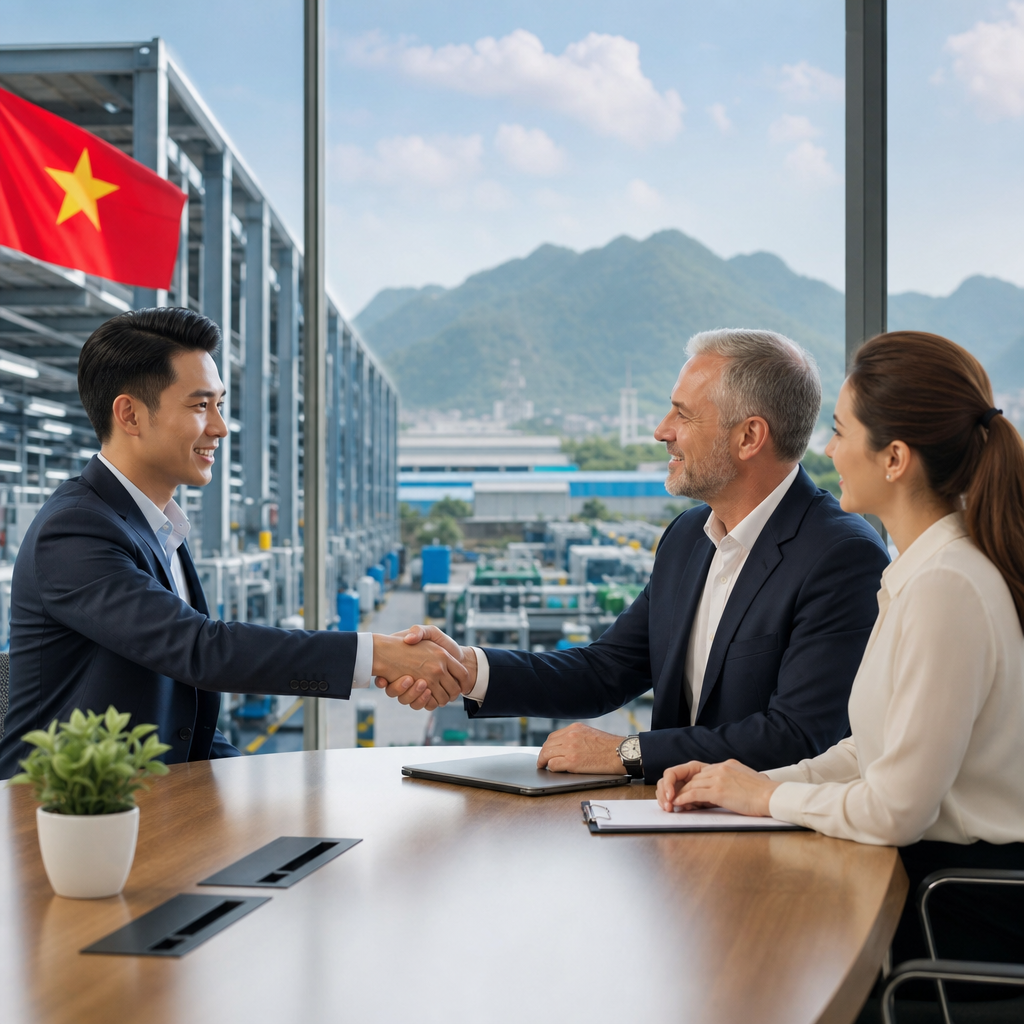
A Negotiation That Needed More Than Translation
Vietnam has become an important manufacturing base for electronics, textiles, furniture, machinery, and consumer goods. The General Statistics Office reported that manufacturing and processing remained a central part of the country’s industrial economy in 2024, while the World Bank continued to identify trade and foreign investment as major drivers of growth.
Against that backdrop, one overseas sourcing team arrived for a factory meeting involving pricing, production capacity, quality controls, and delivery schedules. The company later described the assignment in this factory negotiation interpreter review: the meeting needed not only accurate language, but also preparation and cultural clarity.
The pressure behind the meeting
The international team had a narrow window to assess the supplier and decide whether to proceed with a trial order. Technical questions had been prepared in English, but the factory’s answers involved production assumptions, approval procedures, and timing commitments that required careful interpretation.
Why context mattered
In manufacturing negotiation, a short answer does not always mean agreement, and a polite response may not confirm a firm commitment. The visiting team needed help distinguishing confirmed capacity from a possible future arrangement, while the Vietnamese managers needed the commercial priorities explained in a practical, respectful way.
Question 1: Why did the factory meeting matter?
The meeting mattered because the buyer was evaluating whether a Vietnamese supplier could meet its quality, volume, and delivery requirements before placing a trial order.
Vietnam’s expanding manufacturing role
Vietnam’s export-oriented economy has attracted manufacturers seeking regional supply-chain access and production diversification. Reuters has reported on the country’s role in global manufacturing, particularly as companies have expanded operations in Southeast Asia. For individual buyers, that opportunity still depends on verifying a supplier’s actual capabilities on the factory floor.
- Capacity: The buyer needed to separate current production volume from planned expansion.
- Quality: Both sides had to align on inspection stages, tolerances, and corrective action.
- Timing: The proposed schedule required agreement on materials, sampling, and shipment milestones.
A decision with commercial consequences
A misunderstanding at this stage could create costly rework, missed launches, or disputes over responsibility. The team therefore treated the visit as a decision meeting rather than a routine introduction, combining a factory tour with structured questions and a written follow-up plan.
Question 2: How did preparation improve the negotiation?
Preparation improved the negotiation by giving the interpreter a shared brief, terminology list, meeting sequence, and clear distinction between must-have terms and negotiable points.
Building a useful briefing
Before the visit, the team provided product specifications, draft commercial terms, target volumes, and a list of unresolved issues. The Vietnam business interpreter reviewed the materials in advance and flagged terms that could create ambiguity, including production lead time, acceptance criteria, tooling ownership, and the meaning of “ready to ship.”
- Technical vocabulary: Product and process terms were agreed before the meeting.
- Negotiation priorities: The buyer ranked price, quality, timing, and payment conditions.
- Open questions: The interpreter helped organize issues requiring a factory response.
Keeping the conversation focused
Preparation also reduced repetition. When the factory team gave a broad answer, the interpreter could ask for the specific quantity, date, document, or responsible department needed to confirm it. That structure allowed the client to compare statements with its checklist instead of relying on impressions formed during a fast-moving discussion.
Question 3: What cultural details changed the discussion?
Cultural clarity changed the discussion by making indirect concerns visible without turning normal Vietnamese business courtesy into a false promise.
Reading polite disagreement
Business communication styles differ across countries, especially when seniority, face, and long-term relationships influence how difficult points are raised. The interpreter helped the visiting team recognize when a positive-sounding response required a follow-up question, while preserving a respectful tone with the factory’s managers.
That role was especially important when the buyer challenged a proposed delivery date. Rather than presenting the concern as an accusation, the interpreter reframed it around shared planning: what production steps had to be completed, which inputs were still uncertain, and when both teams could review the schedule again.
Protecting the relationship
Successful bilingual negotiations do not remove disagreement; they make disagreement workable. The client could press for evidence and commitments while the Vietnamese team could explain constraints without losing face, helping the meeting remain commercially direct and relationship-conscious.
Question 4: How did bilingual support speed agreement?
Bilingual support sped agreement by resolving technical and commercial ambiguities during the meeting, so fewer issues had to be reopened through delayed email exchanges.
From interpretation to confirmation
The interpreter did more than convert sentences between languages. At natural pauses, the client was encouraged to confirm the exact meaning of an answer, while the factory team was asked to identify the person responsible for each next step. This produced a practical action list covering samples, quality documents, pricing, and production scheduling.
The client’s factory negotiation interpreter review emphasized that speed came from clarity, not from rushing. Once both teams understood which terms were final and which required internal approval, they reached a conditional agreement on the trial order and set dates for the remaining documentation.
Recording the next steps
At the close, the parties reviewed decisions in both languages and agreed on owners and deadlines. That simple discipline reduced the risk that “we will check” would later be remembered as “we agreed,” a common source of friction in cross-border sourcing projects.
Question 5: What should companies plan before a Vietnam factory visit?
Companies should prepare a concise commercial brief, share technical documents early, define decision authority, and book an interpreter who understands both business etiquette and manufacturing terminology.
A practical preparation checklist
Buyers should identify the outcomes they need from the visit before booking flights. They should also decide who can approve revised terms, which issues require legal review, and how the factory’s claims will be verified after the meeting.
- Send materials early: Share specifications, drawings, schedules, and draft terms before arrival.
- Separate priorities: Mark non-negotiable requirements and areas where flexibility is possible.
- Plan verification: Request records, samples, process observations, and named follow-up owners.
Choosing the right support
An interpreter-companion can support the wider business day, including factory visits, transport coordination, informal meals, and follow-up meetings. For companies entering Vietnam’s manufacturing market, that continuity can help connect what was said in the conference room with what is observed on the production floor. ezgogo.app helps foreign businesses find professional interpreter-companions in Vietnam.
Conclusion
This client success story shows why a factory meeting should be treated as a prepared business process, not simply a language exercise. Clear terminology, cultural awareness, documented commitments, and focused follow-up helped the international team reach a faster agreement while protecting the relationship with its Vietnamese supplier.
For overseas companies sourcing, investing, or reviewing production in Vietnam, the right support can make important conversations more efficient and more precise. Explore EZGOGO interpreter-companions for your next Vietnam business trip through ezgogo.app.
Sources
Frequently Asked Questions
Question 1: Why did the factory meeting matter?
The meeting mattered because the buyer was evaluating whether a Vietnamese supplier could meet its quality, volume, and delivery requirements before placing a trial order.
Question 2: How did preparation improve the negotiation?
Preparation improved the negotiation by giving the interpreter a shared brief, terminology list, meeting sequence, and clear distinction between must-have terms and negotiable points.
Question 3: What cultural details changed the discussion?
Cultural clarity changed the discussion by making indirect concerns visible without turning normal Vietnamese business courtesy into a false promise.
Question 4: How did bilingual support speed agreement?
Bilingual support sped agreement by resolving technical and commercial ambiguities during the meeting, so fewer issues had to be reopened through delayed email exchanges.
Question 5: What should companies plan before a Vietnam factory visit?
Companies should prepare a concise commercial brief, share technical documents early, define decision authority, and book an interpreter who understands both business etiquette and manufacturing terminology.
Need a local companion or interpreter in Vietnam?
Browse verified companions for language support, factory visits, and authentic local experiences.
Find a Companion →