 EZGOGO
Factory Tour Interpreter Preparation: 5 Critical Setup Steps
Foreign buyers conducting plant tours in Vietnam often face communication breakdowns on noisy factory floors where technical jargon, safety protocols, and quality standards demand precision. This guide reveals five critical setup steps—from vocabulary alignment to equipment terminology translation—that professional interpreters use to prevent costly misunderstandings and ensure seamless manufacturing facility visits.
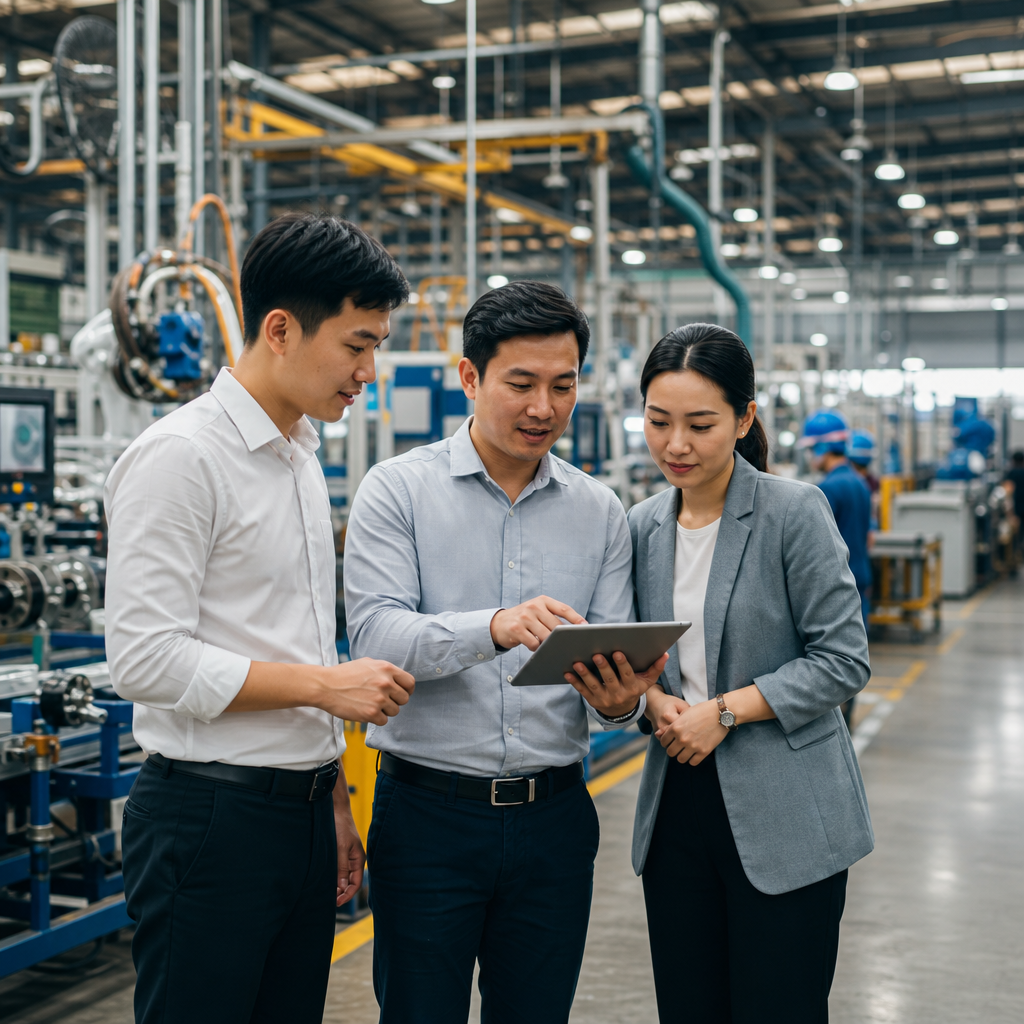
Why Factory Tour Interpreter Preparation Matters
Manufacturing facility visits demand more preparation than standard business meetings. Foreign buyers inspecting Vietnamese plants need precise communication about production capacity, quality control processes, and compliance standards—any ambiguity can derail multi-million-dollar deals or mask serious operational risks.
According to industry data from Vietnam Investment Review, over 40% of failed foreign investment deals in manufacturing cite communication gaps as a contributing factor. Without proper factory tour interpreter preparation, technical misunderstandings cascade into production delays, specification errors, and damaged buyer-supplier relationships.
The Hidden Costs of Poor Preparation
Unprepared interpreters may miss critical equipment specifications, misinterpret quality metrics, or fail to convey safety compliance details. These gaps don't just create awkward moments—they expose both buyer and supplier to legal liability, reputational damage, and operational failures that cost tens of thousands of dollars.
Why Vietnamese Manufacturing Requires Specialized Preparation
Vietnam's manufacturing sector spans textiles, electronics, automotive components, and machinery production. Each sector uses distinct technical terminology, regulatory frameworks, and production methodologies that demand interpreter specialization and advance vocabulary alignment to ensure clear communication.
Question 1: What should you brief your interpreter about before the factory visit?
Your interpreter needs at least 5–7 days advance briefing covering the buyer's specific objectives, the supplier's product categories, production processes involved, and any known communication sensitivities or decision-makers present during the tour.
Core Briefing Components
A comprehensive factory tour interpreter preparation briefing should include the buyer's background (their industry, technical expertise level, decision-making authority), the specific products or components they're evaluating, and their primary concerns—whether cost, capacity, quality, or compliance. This context allows your interpreter to anticipate which technical discussions will be most critical.
- Buyer profile and decision authority: Understanding whether the visitor is a procurement officer, engineer, or executive changes the depth and tone of interpretation needed.
- Product scope and production stages: Knowing which manufacturing lines will be toured helps the interpreter study relevant equipment names and process flows in advance.
- Known pain points or past disputes: If previous communication issues arose around delivery timelines or defect rates, your interpreter can prepare tailored clarification language.
Pre-Tour Documentation Review
Share all relevant supply agreements, technical specifications, order history, and quality standards documents with your interpreter at least one week prior. This allows them to absorb the context and pre-translate critical passages, reducing real-time processing load and minimizing errors during high-stakes discussions on the factory floor.
Question 2: How do you create an effective equipment terminology glossary?
Build a bilingual equipment glossary specific to your facility by listing every machine, process, and control system by its Vietnamese name, English translation, and brief functional description—then review it with your interpreter and plant engineers two weeks before the visit.
Structured Glossary Development
Manufacturing facility visits fail when interpreters encounter unfamiliar machine names or process terminology mid-tour. A dedicated equipment glossary prevents this by pre-translating all machinery, control panels, testing equipment, and production metrics your buyer will encounter. Organize entries by production zone (cutting, assembly, quality control, packaging) for easy reference during the actual tour.
- Machine-specific names and functions: Include both the common Vietnamese workplace name and formal manufacturer terminology (e.g., "máy dệt" vs. "computerized weaving loom").
- Control system terminology: Pre-translate all display labels, alarm messages, and diagnostic codes your interpreter may need to explain in real-time.
- Quality and inspection metrics: Ensure consistent translation of defect classifications, sampling protocols, and pass/fail criteria across the entire conversation.
Digital vs. Paper Reference Tools
Provide your interpreter with both a printed glossary they can physically reference on the factory floor and a digital version on their phone or tablet. Include photos or equipment diagrams wherever possible; visual aids allow interpreters to confirm terminology with plant staff and quickly look up unfamiliar items without slowing conversation flow or creating awkward silences during critical discussions.
Question 3: What are the most critical safety and compliance terms to pre-translate?
Safety and compliance terminology—including emergency procedures, hazard classifications, certifications, and worker protection standards—must be pre-translated and rehearsed because misunderstanding these terms creates legal liability and undermines buyer confidence in your operation.
Essential Safety Vocabulary
Factory tours always include safety discussions. Foreign buyers want to understand hazard controls, emergency protocols, and worker protections. Your interpreter must be fluent in safety jargon: personal protective equipment (PPE) categories, lockout-tagout procedures, chemical safety data sheets, and emergency response protocols. Mistranslations in this area can expose your operation to regulatory scrutiny or buyer rejection.
- Hazard and risk classification: Pre-align translations of chemical classes, electrical safety ratings, mechanical hazard categories, and noise/thermal exposure levels with Vietnamese occupational safety standards (QCVN 01:2015/BYT).
- Certification and audit terms: Ensure your interpreter can confidently explain ISO 9001, ISO 45001, SEDEX audit status, and any industry-specific certifications (e.g., RoHS, REACH compliance for electronics manufacturing).
- Emergency procedures: Pre-script evacuation routes, fire suppression systems, first aid protocols, and incident reporting procedures so your interpreter can explain them clearly under pressure.
Compliance Documentation Language
During plant tours, buyers often ask to review compliance certificates, inspection reports, or audit records. Your interpreter needs familiarity with regulatory terminology used in these documents—audit findings, corrective action requests, non-conformance codes, and certification validity periods. Provide sample documents in advance so they can study terminology without pressure and prepare accurate translations if buyers ask detailed questions.
Question 4: How should you prepare your interpreter for noisy factory floor conditions?
Factory tour interpreter preparation must include acoustic conditioning: conducting practice sessions on actual or simulated noisy floors, establishing clear hand signals and visual communication backup systems, and using wireless microphone systems to maintain interpretation quality despite machinery noise.
Acoustic and Fatigue Management
Most interpreters work in quiet conference rooms where they can hear every word. Factory floors present extreme challenges: machinery noise (often 85–110 decibels in textile or metalworking facilities), multiple simultaneous conversations, and acoustic reflections that muddy speech. Your interpreter needs 2–3 practice sessions walking noisy production areas, wearing hearing protection, and interpreting while managing cognitive overload and physical fatigue from sustained concentration.
- Hearing protection selection: Work with your interpreter to find earplugs or earmuffs that block machinery noise while preserving speech intelligibility—critical for accurate interpretation without compromising occupational safety.
- Positioning and proximity tactics: Train your interpreter to position themselves between buyer and plant staff, ask speakers to face toward them, and request temporary machinery slowdowns during critical explanations to ensure accurate interpretation.
- Fatigue breaks and pacing: Schedule 15–20 minute breaks every 90 minutes during plant tours; sustained interpretation in noisy environments causes rapid fatigue, increasing error rates and reducing interpretation quality by up to 40%.
Technology-Enabled Interpretation Solutions
Invest in wireless microphone systems (lapel mics for both your plant manager and the buyer) that feed directly into your interpreter's earpiece. This removes acoustic barriers and lets interpreters hear clearly even in the noisiest zones. Some advanced setups include real-time captioning or visual term cards displayed on tablets, allowing interpreters to confirm technical terms without verbal interruption during critical discussions.
Question 5: What contingency communication systems prevent real-time interpretation gaps?
Establish backup communication systems—bilingual glossary cards, simplified diagrams, written clarification protocols, and pre-identified bilingual plant staff—to bridge interpretation gaps when noise, unfamiliar terminology, or complex explanations exceed your interpreter's capacity in real-time.
Layered Communication Redundancy
Even well-prepared interpreters encounter unexpected terminology or complex technical explanations they cannot immediately render. Your factory tour interpreter preparation should include contingency layers: designated bilingual plant engineers who can provide written clarifications, laminated diagram cards showing production flows, pre-written Q&A documents addressing common buyer questions, and a mobile translator app backup for unexpected terms. These tools prevent communication collapse if your primary interpreter reaches their limit.
- Bilingual plant staff deployment: Identify 2–3 English-speaking engineers or supervisors who can step in to clarify complex concepts, answer technical deep-dives, or provide written explanations if your primary interpreter needs support.
- Visual communication aids: Prepare laminated process flow diagrams, equipment spec sheets with bilingual labels, and sample product photos that allow buyers to follow explanations visually even if interpretation breaks down momentarily.
- Pre-written Q&A and clarification documents: Translate common buyer questions (capacity, lead times, defect rates, certifications, pricing models) into polished English documents that can be referenced or handed over if live interpretation becomes strained.
Post-Tour Clarification Protocol
Even perfect interpretation sometimes leaves buyers with residual questions. Build a 48-hour post-tour window where your interpreter can send buyers written clarifications on technical points, product specifications, or pricing details discussed during the facility visit. This reinforces the interpretation and provides written record that protects both parties from future misunderstandings about what was actually agreed or understood during the tour.
Conclusion
Mastering factory tour interpreter preparation protects your manufacturing business from costly misunderstandings, builds buyer confidence, and accelerates deal closure. The five critical setup steps—comprehensive pre-tour briefing, specialized equipment glossaries, pre-translated safety terminology, acoustic conditioning for noisy environments, and layered communication backup systems—transform your plant tour from a logistical risk into a competitive advantage.
If your business regularly hosts foreign buyers touring Vietnamese manufacturing facilities, connecting with a professional interpreter-companion through ezgogo.app ensures you have expert support trained in industrial communication and cultural nuance. Their experience navigating factory floors and technical discussions helps close international deals with confidence and precision.
Sources
- Vietnam Investment Review — Foreign Investment in Vietnamese Manufacturing Sector
- VnExpress Business — Vietnam's Manufacturing Hub and Export Growth Trends
- General Statistics Office of Vietnam — Industrial Production and Export Data
- Reuters — Vietnam Economic and Trade Reports
- Ministry of Home Affairs Vietnam — QCVN 01:2015/BYT Occupational Safety Standards
- SEDEX — Supplier Ethical Data Exchange for Manufacturing Compliance
Frequently Asked Questions
Question 1: What should you brief your interpreter about before the factory visit?
Your interpreter needs at least 5–7 days advance briefing covering the buyer's specific objectives, the supplier's product categories, production processes involved, and any known communication sensitivities or decision-makers present during the tour.
Question 2: How do you create an effective equipment terminology glossary?
Build a bilingual equipment glossary specific to your facility by listing every machine, process, and control system by its Vietnamese name, English translation, and brief functional description—then review it with your interpreter and plant engineers two weeks before the visit.
Question 3: What are the most critical safety and compliance terms to pre-translate?
Safety and compliance terminology—including emergency procedures, hazard classifications, certifications, and worker protection standards—must be pre-translated and rehearsed because misunderstanding these terms creates legal liability and undermines buyer confidence in your operation.
Question 4: How should you prepare your interpreter for noisy factory floor conditions?
Factory tour interpreter preparation must include acoustic conditioning: conducting practice sessions on actual or simulated noisy floors, establishing clear hand signals and visual communication backup systems, and using wireless microphone systems to maintain interpretation quality despite machinery noise.
Question 5: What contingency communication systems prevent real-time interpretation gaps?
Establish backup communication systems—bilingual glossary cards, simplified diagrams, written clarification protocols, and pre-identified bilingual plant staff—to bridge interpretation gaps when noise, unfamiliar terminology, or complex explanations exceed your interpreter's capacity in real-time.
Need a local companion or interpreter in Vietnam?
Browse verified companions for language support, factory visits, and authentic local experiences.
Find a Companion →