 EZGOGO
Hanoi Authentic Food Tour Beyond the Tourist Districts
A Hanoi authentic food tour can reveal a city far beyond its famous Old Quarter restaurants. In neighborhood markets, family-run stalls, and busy commuter streets, everyday dishes carry stories about migration, craft, and changing urban life. This field journal follows the route a local guide Hanoi can create: one that balances Vietnamese street food with cultural context, practical language help, and respectful discovery. Readers will learn how to find hidden food spots, what to expect from local dining customs, and why an interpreter-companion can make a short Hanoi visit feel more personal and rewarding.
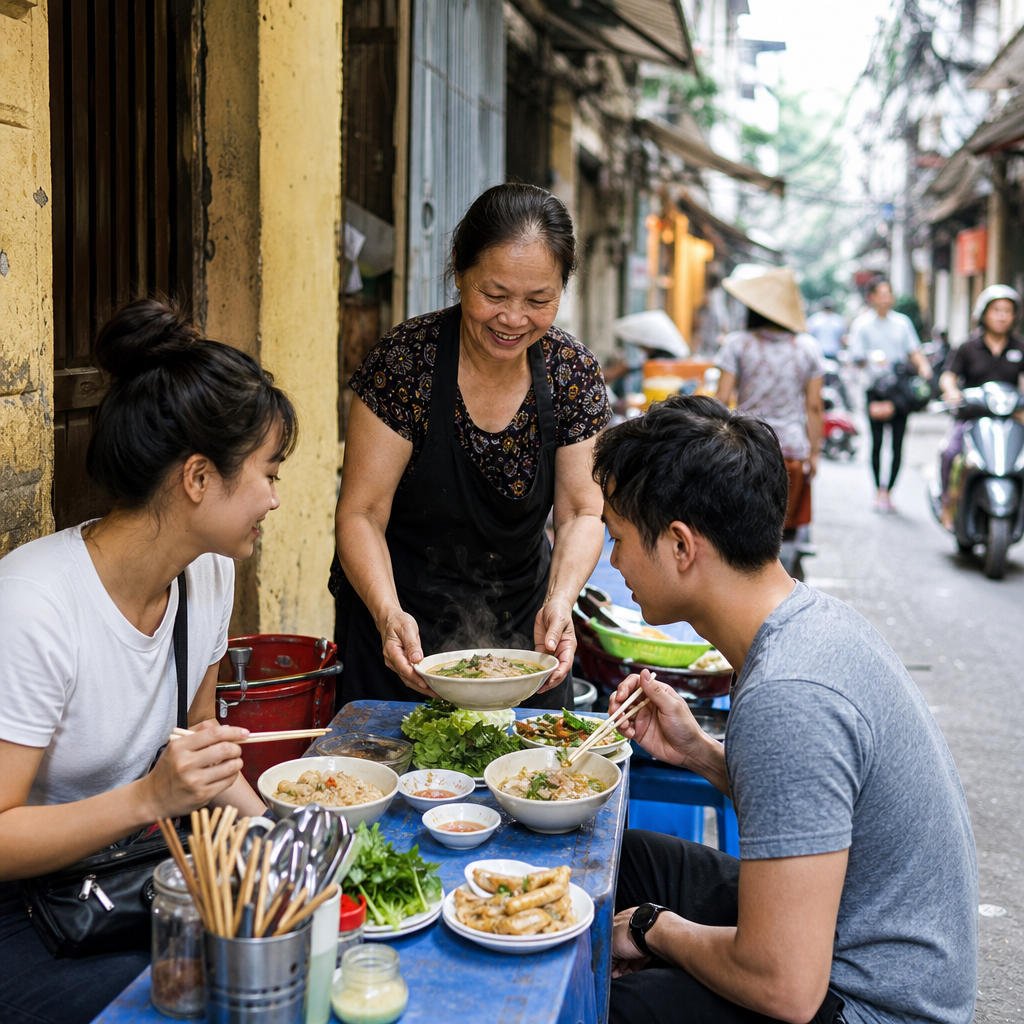
Beyond Hanoi’s Tourist Food Map
Hanoi’s best food memories do not always begin at a landmark restaurant. They may start beside a neighborhood market, where a metal cart serves breakfast before office workers arrive, or at a family stall known mainly by people who live nearby. A Hanoi authentic food tour follows these ordinary rhythms rather than treating the city as a checklist of famous dishes.
That approach matters as Hanoi’s tourism economy continues to recover and diversify. Vietnam welcomed more than 17.5 million international visitors in 2024, according to the General Statistics Office, increasing demand for experiences that feel local while remaining accessible to first-time travelers.
The city behind the postcard
Hanoi’s historic core is only one part of the capital’s culinary landscape. Districts such as Hai Ba Trung, Dong Da, Tay Ho, and Thanh Xuan contain different mixes of students, office workers, long-established households, and newer businesses. Each area changes the food story, from early noodle breakfasts to late-night grilled snacks.
A meal as a cultural experience
Food also explains how Hanoi works. The timing of a meal, the way herbs are added, and the quick exchange between customer and vendor all reflect local habits. With a local guide Hanoi visitors can ask about ingredients, family recipes, and neighborhood history instead of simply photographing a bowl and moving on.
Question 1: Why look beyond Hanoi’s tourist districts?
Travelers should look beyond the main tourist districts because neighborhood eateries often show how Hanoians actually eat, socialize, and work. The result is a more personal introduction to the city, with less reliance on menus designed only for international visitors.
Everyday demand shapes the menu
Local food businesses generally serve the customers who return most often. That can mean a focused menu, fast preparation, and dishes adjusted to the habits of a particular street. Visitors may encounter bun cha at lunchtime, xoi in the morning, or a small dessert stall that is busiest after school and work.
- Regular customers: Neighborhood demand encourages consistency and keeps traditional preparation connected to daily life.
- Smaller menus: Specialization can make it easier to identify what a stall is known for.
- Different rhythms: Breakfast, lunch, and late-night food reveal separate sides of Hanoi.
Hidden food spots reward patience
Some hidden food spots are not hidden in a dramatic sense; they are simply located away from the routes most visitors walk. A narrow entrance, a handwritten sign, or a crowded cluster of scooters may be the only clue. Exploring respectfully, without blocking customers or vendors, often leads to the most memorable stops.
Question 2: Where can visitors find everyday Hanoi food?
Visitors can find everyday Hanoi food in neighborhood markets, residential lanes, commuter streets, and family-run stalls outside the most concentrated sightseeing routes. The best location depends on the meal, opening hours, and the guide’s relationship with local vendors.
Markets and residential lanes
Markets are useful starting points because they bring ingredients, prepared food, and local conversation together. A walk may pass baskets of herbs, fresh noodles, seasonal fruit, and cooked dishes packed for takeaway. In residential lanes, the atmosphere is quieter, but a stall can be equally busy when its regular customers arrive.
Vietnamese street food is often highly time-sensitive. A broth may be served early, grilled items may appear later, and a dessert vendor may set up only for a short afternoon window. A local guide can plan the route around these patterns rather than promising that every dish is available all day.
Choosing dishes with context
A useful food walk balances well-known specialties with less familiar choices. Pho, banh cuon, bun cha, and egg coffee can provide an accessible introduction, while regional snacks, seasonal vegetables, or a vendor’s personal specialty add depth. Context helps travelers understand why a dish belongs in that neighborhood and moment.
Question 3: How does a local guide improve the experience?
A local guide improves a food tour by translating menus, explaining customs, identifying reliable stalls, and creating natural conversations with vendors. An interpreter-companion can also help visitors ask questions without turning a casual meal into an awkward transaction.
Language opens more than menus
Translation is especially valuable when a stall has no English menu or uses a short verbal ordering system. The guide can clarify ingredients, spice levels, portion sizes, and dietary concerns. Just as importantly, language allows a traveler to learn how a recipe developed or how long a family has served the neighborhood.
- Ordering confidently: Clear communication reduces mistakes and helps guests choose suitable portions.
- Asking respectful questions: Simple Vietnamese phrases can create warmer interactions with vendors.
- Reading the setting: A guide can explain queues, seating habits, and payment customs.
Cultural interpretation changes the meal
Cultural interpretation goes beyond translating words. It explains why herbs arrive separately, why diners share certain dishes, and why a meal may be quick rather than ceremonial. Through ezgogo.app, foreign visitors can connect with interpreter-companions who help turn a food stop into a richer Hanoi experience.
Question 4: What should travelers know about street-food etiquette?
Travelers should observe the stall before ordering, follow local seating and queueing habits, keep belongings compact, and ask before taking close-up photographs. Basic courtesy matters because small vendors work in tight spaces and depend on a fast, orderly service.
Observe before joining
Watch where customers stand, whether they pay before or after eating, and how tables are shared. If a stall is crowded, wait at the edge rather than occupying a seat reserved for someone finishing an order. A guide can quietly explain these details, helping visitors participate without interrupting the routine.
- Keep space clear: Avoid blocking entrances, cooking areas, or narrow sidewalks.
- Ask before photos: Seek permission when photographing vendors, staff, or customers.
- Carry small notes: Cash remains useful at many informal food businesses.
Eat with curiosity and flexibility
Street food is shaped by weather, supply, and daily demand, so a recommended stop may sell out or change slightly. Flexibility is part of the experience. Travelers should mention allergies or dietary restrictions early, while recognizing that some ingredients and cooking surfaces may be shared.
Question 5: How can a food tour support local businesses?
A food tour supports local businesses when visitors spend directly with small vendors, follow responsible group behavior, and value the people behind the food. Choosing several modest stops can distribute spending more widely than concentrating the entire meal at one venue.
Small purchases have local impact
Family-run stalls often operate with limited seating and modest margins, but they are part of a neighborhood’s social infrastructure. A group that orders thoughtfully, pays promptly, and leaves space for regular customers can contribute without overwhelming the business. Returning later or recommending a vendor accurately may also help.
Tourism research frequently links authentic experiences with local participation, but authenticity should not mean treating communities as scenery. The strongest food walks create an exchange: visitors learn, vendors earn, and residents retain control over how their daily spaces are shared.
A better model for visitor spending
Responsible planning can include independent stalls, markets, and small cafés alongside more established restaurants. It can also account for walking distances, weather, and accessibility. A guide who knows the area can adjust the route when a vendor is busy, closed, or better visited at another time.
Conclusion
A Hanoi authentic food tour is most rewarding when it treats food as a doorway into everyday life. Neighborhood markets, family stalls, and local-language conversations reveal a capital that cannot be understood through landmark dishes alone. The key takeaway is simple: the farther a visitor looks from the standard route, the more context the meal can carry.
For foreign business travelers, curious visitors, and small groups, an interpreter-companion can make that exploration smoother and more respectful. When planning your next Hanoi trip, explore ezgogo.app to find local support for food, conversation, and meaningful cultural experiences.
Sources
- General Statistics Office of Vietnam — Socio-economic situation in the fourth quarter and 2024
- Reuters — Vietnam welcomes 17.5 million foreign tourists in 2024
- Vietnam Briefing — Vietnam’s Tourism Sector Targets 18 Million International Arrivals in 2024
- Vietnam News — Hanoi street food: A culinary journey through the capital
Frequently Asked Questions
Question 1: Why look beyond Hanoi’s tourist districts?
Travelers should look beyond the main tourist districts because neighborhood eateries often show how Hanoians actually eat, socialize, and work. The result is a more personal introduction to the city, with less reliance on menus designed only for international visitors.
Question 2: Where can visitors find everyday Hanoi food?
Visitors can find everyday Hanoi food in neighborhood markets, residential lanes, commuter streets, and family-run stalls outside the most concentrated sightseeing routes. The best location depends on the meal, opening hours, and the guide’s relationship with local vendors.
Question 3: How does a local guide improve the experience?
A local guide improves a food tour by translating menus, explaining customs, identifying reliable stalls, and creating natural conversations with vendors. An interpreter-companion can also help visitors ask questions without turning a casual meal into an awkward transaction.
Question 4: What should travelers know about street-food etiquette?
Travelers should observe the stall before ordering, follow local seating and queueing habits, keep belongings compact, and ask before taking close-up photographs. Basic courtesy matters because small vendors work in tight spaces and depend on a fast, orderly service.
Question 5: How can a food tour support local businesses?
A food tour supports local businesses when visitors spend directly with small vendors, follow responsible group behavior, and value the people behind the food. Choosing several modest stops can distribute spending more widely than concentrating the entire meal at one venue.
Need a local companion or interpreter in Vietnam?
Browse verified companions for language support, factory visits, and authentic local experiences.
Find a Companion →