 EZGOGO
Hanoi startup business trip: A Field Journal for Teams
A Hanoi startup business trip can move quickly from investor meetings to factory visits, coworking sessions, and informal conversations over coffee. This field journal follows an international team navigating Hanoi with support from a knowledgeable local companion. Along the way, it examines how Vietnam’s startup ecosystem, manufacturing links, transport patterns, and business customs shape each day. Readers will find practical guidance on scheduling, communication, neighborhood context, meeting etiquette, and choosing the right local support for a productive visit beyond the conference room.
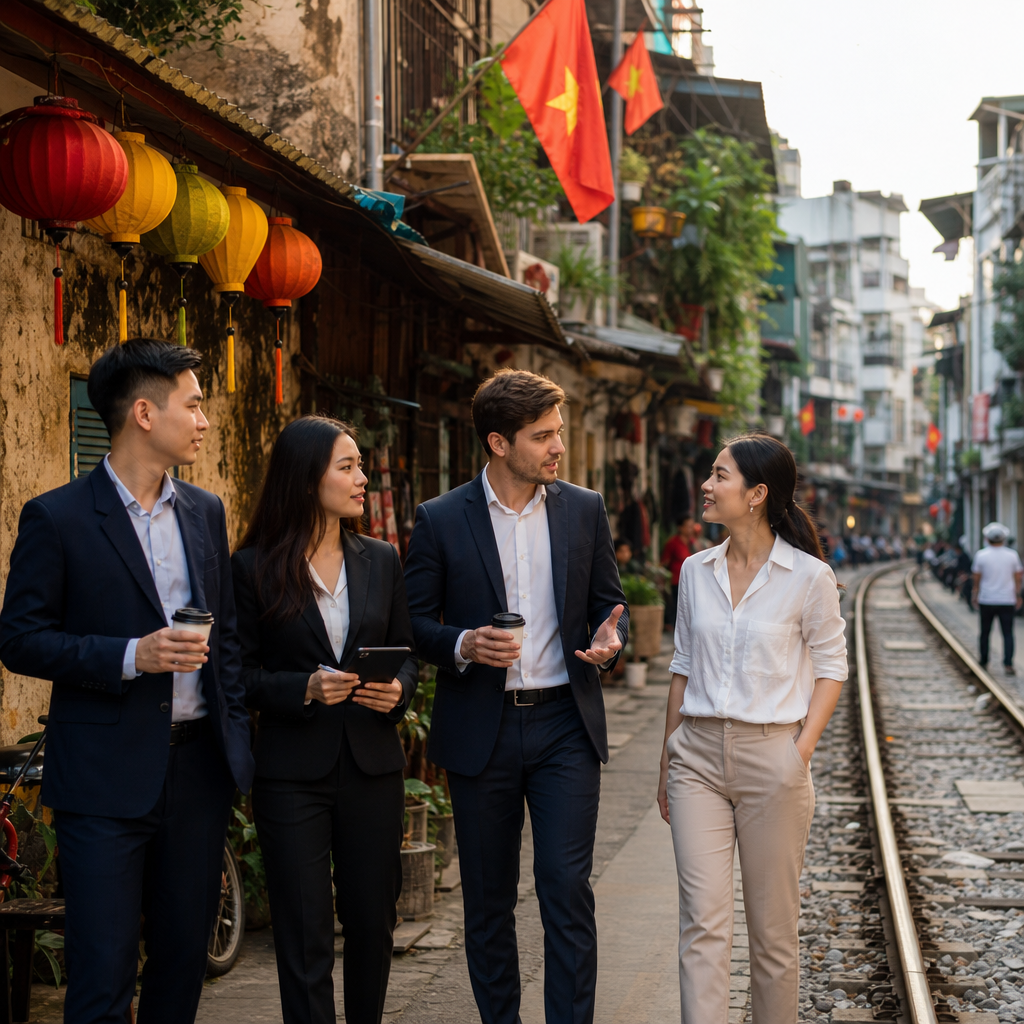
Inside a Startup Week in Hanoi
Monday begins with a quiet planning session near Hoan Kiem Lake before the team heads toward a technology meeting. Their agenda combines investor conversations, product research, and a visit to a local partner. For an international group, the challenge is not only reaching each appointment but also understanding how Hanoi’s neighborhoods, traffic, and communication rhythms affect the day.
This Hanoi startup business trip becomes more productive when the itinerary leaves room for context. A knowledgeable companion can help the team distinguish formal decisions from exploratory conversations, clarify unfamiliar phrases, and keep transitions realistic. The result is a closer look at Hanoi as a working city rather than simply a backdrop for scheduled meetings.
A city connecting technology and commerce
Hanoi is Vietnam’s political and administrative center, while also hosting universities, technology companies, incubators, and professional services firms. The city’s startup activity benefits from links to national policy, research, and a growing digital economy. Teams arriving for Vietnam startup meetings often find that local relationships matter as much as a polished presentation.
The value of moving at local speed
Distances on a map can be misleading when roads are busy and appointments stretch beyond their planned end time. A flexible schedule helps visitors avoid turning every delay into a crisis. It also creates opportunities to observe the city, ask better questions, and arrive at the next conversation prepared rather than rushed.
Question 1: Why is Hanoi attracting international startup teams?
Hanoi attracts international startup teams because it combines access to government, universities, technology talent, investors, and established domestic businesses. Its role as Vietnam’s capital also makes it important for teams exploring regulation, partnerships, and the country’s expanding digital economy.
A gateway to Vietnam’s business ecosystem
Vietnam’s economy has continued to draw foreign investment, particularly in manufacturing, technology, and supply-chain activities. The General Statistics Office reported that Vietnam’s gross domestic product grew 7.09% in 2024, illustrating the scale of the market teams are investigating. Hanoi offers a useful starting point for understanding how public institutions and private companies interact.
- Policy access: Capital-based meetings can help teams understand national priorities and administrative requirements.
- Talent networks: Universities and technology communities provide links to engineering, research, and business talent.
- Partner discovery: Local firms can connect startups with customers, vendors, and regional opportunities.
From pitch deck to practical questions
International founders often arrive focused on market size or fundraising, then discover that execution questions are more revealing. Who makes the buying decision, how are contracts handled, and which local partner can deliver reliably? A Hanoi local guide cannot replace legal or financial advice, but can help visitors frame questions and recognize where further professional review is needed.
Question 2: How should teams structure meetings across Hanoi?
Teams should group appointments by area, protect travel buffers, and reserve time after important meetings for notes and follow-up. A realistic itinerary is more effective than a crowded schedule that leaves no room for traffic, introductions, or extended discussion.
Building a workable daily route
A typical day may begin in the central districts, continue to a coworking space, and finish with a partner visit farther from the historic core. The route should account for peak traffic, weather, and the likelihood that a meeting will run over. Confirming addresses in Vietnamese and sharing a single itinerary with all participants reduces avoidable confusion.
- Cluster locations: Schedule nearby meetings together instead of crossing the city repeatedly.
- Keep buffers: Allow extra time between appointments, especially during morning and evening traffic.
- Record decisions: Assign one person to capture commitments, owners, and deadlines after each meeting.
Coworking spaces as neutral ground
Coworking spaces can provide reliable internet, presentation facilities, and a less formal setting for early discussions. They also expose visiting teams to founders and freelancers working locally. During a Hanoi startup business trip, this setting can be useful for testing assumptions before committing to a larger partnership or public launch.
Question 3: What does a local guide add to business meetings?
A local guide adds practical navigation, language support, cultural interpretation, and real-time schedule management. The strongest support helps visitors communicate clearly while preserving the business relationship and allowing qualified interpreters, lawyers, or consultants to handle specialist work.
Reading the room without overinterpreting
Business communication may become indirect when a counterpart wants to preserve harmony or avoid rejecting an idea publicly. A companion familiar with local norms can flag when a polite response needs a follow-up question, while avoiding assumptions about what a partner means. Cultural business guidance is most useful when it encourages respectful clarification rather than stereotypes.
- Language clarity: Help explain names, addresses, menus, and everyday logistics.
- Meeting flow: Notice when introductions, hospitality, or informal discussion are important to rapport.
- Follow-up support: Help the team organize questions and confirm next steps after a conversation.
A companion who understands the itinerary
The practical difference is often visible between meetings. A capable companion checks the next destination, confirms timing, and helps the team transition from a formal appointment to a meal or neighborhood visit. Through ezgogo.app, foreign businesses can explore interpreter-companions suited to the needs of a Vietnam visit.
Question 4: How can visitors understand Hanoi beyond the conference room?
Visitors can understand Hanoi by combining business appointments with carefully planned time in local neighborhoods, markets, cafés, museums, and food districts. These experiences reveal consumer habits, social patterns, and the everyday context behind the market data discussed in meetings.
Neighborhoods as market research
A walk through the Old Quarter can show how small shops, delivery services, tourism, and food businesses operate in dense urban spaces. Other districts present different patterns, including newer commercial developments and residential areas. These observations should complement formal research, not substitute for customer interviews, surveys, or sector analysis.
Food, hospitality, and relationship building
Meals frequently create a more relaxed setting for continuing a business conversation. Visitors should communicate dietary requirements in advance and remain attentive to the preferences of hosts. A local companion can explain dishes, etiquette, and practical choices without taking control of the relationship, helping guests participate confidently.
Question 5: What should teams prepare before arriving?
Teams should prepare a bilingual itinerary, verified meeting details, realistic travel times, clear role assignments, and a short briefing on Vietnamese business etiquette. They should also define which tasks require licensed professional advice and which can be supported by an interpreter-companion.
A practical pre-trip checklist
Preparation begins with the purpose of the visit: fundraising, sourcing, hiring, market validation, or partnership development. Each objective requires different meetings and evidence. Teams should confirm whether visitors need business visas, invitations, or other documentation, using official Vietnamese authorities or qualified advisers for current requirements.
- Meeting file: Keep agendas, company profiles, questions, and contact details in one shared folder.
- Communication plan: Decide who presents, who takes notes, and who approves follow-up messages.
- Risk planning: Prepare alternatives for weather, traffic, connectivity, illness, or a canceled appointment.
Respecting professional boundaries
An interpreter-companion can support communication and local coordination, but should not be presented as a lawyer, broker, accountant, or government representative without the required qualifications. Clear expectations protect everyone involved. This distinction also helps the team choose appropriate experts when a meeting involves contracts, investment terms, tax, labor, or regulatory decisions.
Conclusion
A successful Hanoi startup business trip is built from more than efficient transport between appointments. It depends on realistic planning, careful listening, local context, and enough flexibility to let relationships develop. Hanoi’s technology, institutional, and commercial networks reward teams that arrive prepared but remain curious about how business is actually conducted.
For an international team, the right local support can turn a demanding schedule into a clearer and more welcoming experience. When planning your next Vietnam business trip, explore ezgogo.app to find interpreter-companions who can help you move through Hanoi with confidence.
Sources
Frequently Asked Questions
Question 1: Why is Hanoi attracting international startup teams?
Hanoi attracts international startup teams because it combines access to government, universities, technology talent, investors, and established domestic businesses. Its role as Vietnam’s capital also makes it important for teams exploring regulation, partnerships, and the country’s expanding digital economy.
Question 2: How should teams structure meetings across Hanoi?
Teams should group appointments by area, protect travel buffers, and reserve time after important meetings for notes and follow-up. A realistic itinerary is more effective than a crowded schedule that leaves no room for traffic, introductions, or extended discussion.
Question 3: What does a local guide add to business meetings?
A local guide adds practical navigation, language support, cultural interpretation, and real-time schedule management. The strongest support helps visitors communicate clearly while preserving the business relationship and allowing qualified interpreters, lawyers, or consultants to handle specialist work.
Question 4: How can visitors understand Hanoi beyond the conference room?
Visitors can understand Hanoi by combining business appointments with carefully planned time in local neighborhoods, markets, cafés, museums, and food districts. These experiences reveal consumer habits, social patterns, and the everyday context behind the market data discussed in meetings.
Question 5: What should teams prepare before arriving?
Teams should prepare a bilingual itinerary, verified meeting details, realistic travel times, clear role assignments, and a short briefing on Vietnamese business etiquette. They should also define which tasks require licensed professional advice and which can be supported by an interpreter-companion.
Need a local companion or interpreter in Vietnam?
Browse verified companions for language support, factory visits, and authentic local experiences.
Find a Companion →