 EZGOGO
Ho Chi Minh City food guide: A Multilingual Street Tour
A bowl of noodles can open a conversation, but ordering it confidently in Ho Chi Minh City often takes more than an appetite. This Ho Chi Minh City food guide follows an international visitor and a multilingual local companion through busy lanes, family-run stalls, and neighborhood markets. Along the way, unfamiliar ingredients become approachable, vendor exchanges feel relaxed, and everyday food customs come into focus. Readers will discover what makes a local food tour memorable, how interpreters add cultural context, and why Vietnamese street food is best experienced with someone who can bridge language, etiquette, and local knowledge.
Beyond a Restaurant Checklist
Ho Chi Minh City’s food culture is shaped by markets, narrow alleys, family kitchens, and roadside stalls as much as by formal restaurants. A visitor can move from bánh mì to cơm tấm within a few blocks, yet the most rewarding discoveries often depend on timing, neighborhood knowledge, and the confidence to ask questions.
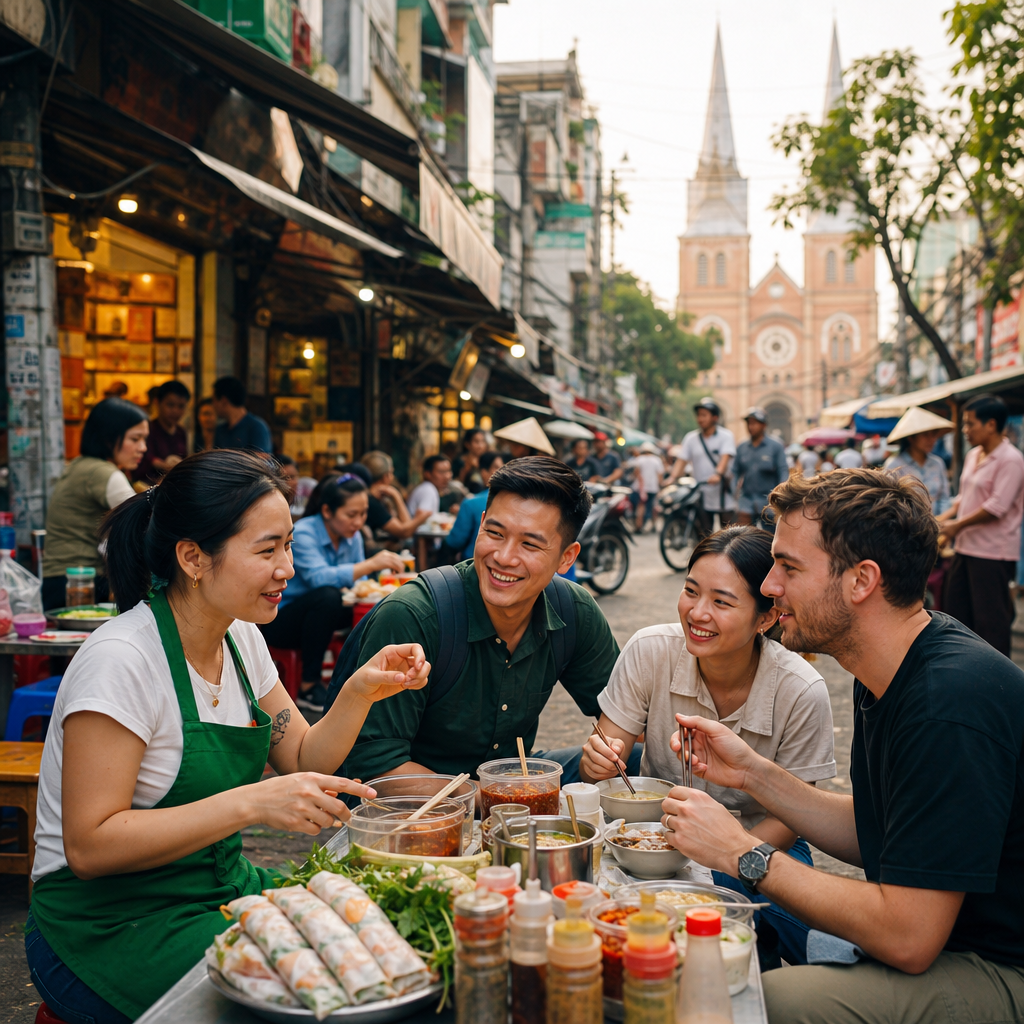
On one recent evening, an international traveler joined a local companion for a relaxed walk through the city. The route was not simply a list of famous dishes; it was a moving conversation about ingredients, ordering habits, traffic, and the people who make each meal part of daily life.
A city best read through its neighborhoods
Ho Chi Minh City is Vietnam’s largest urban center and a major destination for international visitors. Its food scene reflects migration, regional cooking traditions, and the fast pace of a commercial hub, making neighborhood context essential when deciding what to taste and where to pause.
When food becomes a shared language
At a small stall, the visitor pointed to a tray of herbs and asked about an unfamiliar green leaf. The companion translated the question, explained how locals combine the herbs with noodles and broth, and helped turn uncertainty into a shared exchange with the vendor.
Question 1: What makes a Ho Chi Minh City food guide useful?
A useful Ho Chi Minh City food guide connects dishes with place, timing, etiquette, and personal comfort instead of offering a static list of restaurants.
Context behind the plate
The companion explained that cơm tấm, or broken-rice dishes, are closely associated with southern Vietnamese eating culture, while bánh mì reflects a broader history of adaptation and local creativity. Such details help visitors see street food as living culture rather than a collection of photo opportunities.
- Neighborhood knowledge: Routes can favor lively local areas over only the most heavily promoted stops.
- Dish explanations: Visitors learn ingredients, textures, sauces, and common ways to eat each item.
- Flexible pacing: The experience can adjust for allergies, spice tolerance, dietary needs, and appetite.
A route shaped by real-time choices
Instead of following a rigid schedule, the pair changed direction when a crowded stall began serving a fresh batch of noodles. That flexibility made the evening feel less like a packaged excursion and more like an introduction guided by local judgment.
Question 2: How does a multilingual companion change the experience?
A multilingual companion makes food tours more comfortable by translating menus, vendor conversations, cultural nuances, and questions that visitors may otherwise avoid asking.
More than translating words
Literal translation is only one part of the job. The companion also explained when a vendor was joking, how to signal a preferred portion, and why a short exchange at a crowded stall could be friendly even when it sounded hurried to an unfamiliar listener.
- Ordering confidence: Visitors can clarify ingredients and portions before committing to a dish.
- Cultural interpretation: Small gestures and customs become easier to understand in context.
- Natural conversation: Vendors can share stories when language barriers are reduced.
Building trust at busy stalls
During the tour, the traveler asked whether a dipping sauce contained shrimp. The companion translated the question carefully, listened to the vendor’s response, and helped identify another option. That moment showed how interpretation can support both safety and a more respectful relationship with local businesses.
Question 3: Which street food moments reveal local culture?
The most revealing moments often happen in ordinary settings: watching a vendor prepare breakfast, sharing condiments, learning table manners, or seeing how neighbors gather after work.
Breakfast on the pavement
Early in the evening, the companion described how street food serves different rhythms of city life. Some dishes are associated with breakfast, while others suit a quick lunch or late-night gathering. This practical knowledge gave the visitor a clearer sense of how food fits into urban routines.
- Shared tables: Compact seating encourages quick, informal interaction among strangers.
- Fresh preparation: Ingredients are often assembled or cooked directly in front of customers.
- Everyday affordability: Street stalls remain important to residents seeking convenient meals.
The stories behind familiar dishes
A vendor preparing gỏi cuốn described the balance between herbs, noodles, vegetables, and dipping sauce. The visitor had eaten fresh spring rolls before, but the conversation revealed how technique, freshness, and personal preferences can vary from one household or stall to another.
Question 4: How can visitors eat comfortably and responsibly?
Visitors can eat more comfortably by choosing busy stalls, checking ingredients, carrying hand sanitizer, drinking treated water, and following local guidance on hygiene and etiquette.
Practical choices matter
High turnover can be a useful sign because ingredients are being served frequently, although no single visual cue guarantees safety. The companion encouraged the traveler to observe preparation areas, ask clear questions about allergens, and choose smaller portions when trying several unfamiliar dishes.
- Start gradually: Sample one or two dishes before planning a full evening of tasting.
- Ask specifically: Mention allergies and dietary restrictions before food is prepared.
- Respect the stall: Follow the vendor’s seating, payment, and queueing customs.
Responsible tourism in local neighborhoods
A good local food tour also considers residents. Keeping voices moderate, avoiding blocked entrances, asking before taking close-up photographs, and buying directly from vendors help visitors enjoy the city without treating communities as scenery.
Question 5: Why choose a local companion for a food tour?
A local companion combines practical assistance with cultural connection, helping international travelers explore Vietnamese street food with greater confidence and curiosity.
The value of human guidance
Apps can identify dishes, maps can locate markets, and review sites can suggest popular addresses. A person on the ground adds something different: the ability to notice a changed menu, read a situation, explain an unspoken custom, and adapt the experience to the traveler in front of them.
- Personalized discovery: Routes can reflect interests, dietary needs, and available time.
- Language support: Conversations with vendors become more accessible and reciprocal.
- Cultural connection: Food becomes an entry point to stories about work, family, and place.
Planning a more relaxed evening
For travelers arranging meetings, factory visits, or conference schedules, an organized food outing can be easier than navigating the city alone after a long day. Platforms such as ezgogo.app connect foreign visitors with interpreter-companions who can make that time more personal and culturally meaningful.
Conclusion
A memorable Ho Chi Minh City food guide should do more than identify what to eat. It should help visitors understand how dishes fit into neighborhoods, routines, conversations, and local hospitality. With the right companion, a busy street stall can become a place to ask questions, share a laugh, and experience the city beyond standard sightseeing.
For international travelers, the benefit is both practical and human: clearer communication, thoughtful navigation, and a stronger connection with the people behind the food. When planning your next Vietnam business or leisure trip, explore interpreter-companions through ezgogo.app for a more relaxed local food tour.
Sources
Frequently Asked Questions
Question 1: What makes a Ho Chi Minh City food guide useful?
A useful Ho Chi Minh City food guide connects dishes with place, timing, etiquette, and personal comfort instead of offering a static list of restaurants.
Question 2: How does a multilingual companion change the experience?
A multilingual companion makes food tours more comfortable by translating menus, vendor conversations, cultural nuances, and questions that visitors may otherwise avoid asking.
Question 3: Which street food moments reveal local culture?
The most revealing moments often happen in ordinary settings: watching a vendor prepare breakfast, sharing condiments, learning table manners, or seeing how neighbors gather after work.
Question 4: How can visitors eat comfortably and responsibly?
Visitors can eat more comfortably by choosing busy stalls, checking ingredients, carrying hand sanitizer, drinking treated water, and following local guidance on hygiene and etiquette.
Question 5: Why choose a local companion for a food tour?
A local companion combines practical assistance with cultural connection, helping international travelers explore Vietnamese street food with greater confidence and curiosity.
Need a local companion or interpreter in Vietnam?
Browse verified companions for language support, factory visits, and authentic local experiences.
Find a Companion →