 EZGOGO
Hospitality Interpretation Phrases Vietnam: 7 Must-Know Essentials
International hospitality demands more than fluent English—it requires cultural awareness and precise interpretation. Vietnam's booming hotel industry faces daily challenges when guests and staff encounter language barriers during check-in conflicts, special requests, and service recovery. This guide reveals 7 essential hospitality interpretation phrases every hotel manager needs, plus the cultural cues that transform guest interactions from frustrating to memorable. Discover how professional interpreters bridge these gaps.
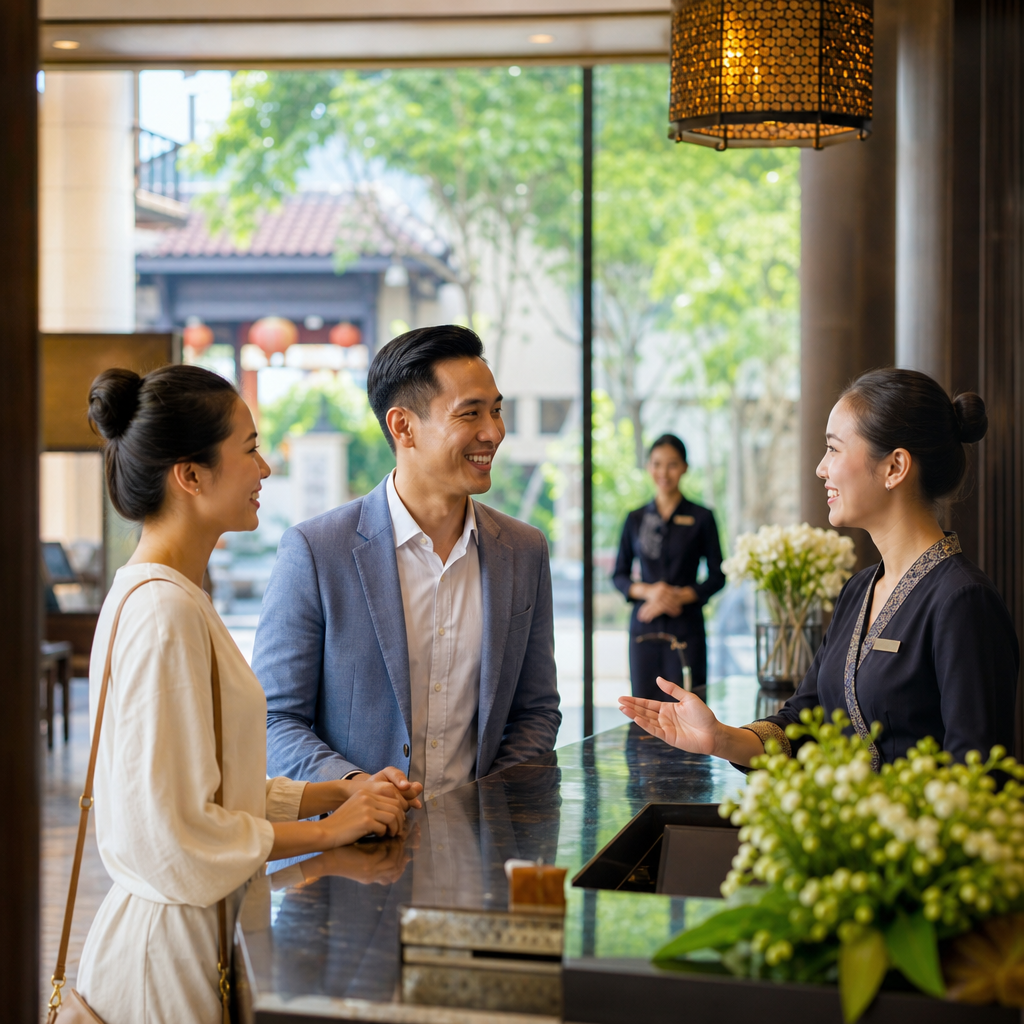
Vietnam's Hospitality Sector Demands Skilled Interpretation
Vietnam's hotel and tourism industry has undergone explosive growth over the past decade. International visitor arrivals reached 19.2 million in 2019 before pandemic disruption, and recovery has been swift, with 2023 figures showing strong momentum toward pre-pandemic peaks. Hotels ranging from three-star urban properties to five-star resort chains now operate in a fiercely competitive market where service quality directly impacts reputation and revenue.
Language barriers remain one of the most persistent operational challenges. Front-desk staff, housekeeping managers, and concierges frequently encounter guests from non-English-speaking backgrounds or guests whose English proficiency varies widely. When a misunderstanding occurs—a room reservation error, a special dietary request gone wrong, or a noise complaint—the cost extends beyond a single unhappy guest to potential negative online reviews that damage future bookings.
Why Hospitality Interpretation Phrases Matter Beyond Translation
Word-for-word translation often fails in hospitality contexts. A literal English-to-Vietnamese rendering of "We sincerely apologize for the inconvenience" may land flatly if the cultural undertones of accountability and face-saving are absent. Hospitality interpretation phrases must balance literal meaning with emotional resonance, respect for hierarchy, and acknowledgment of the guest's position as honored and valued in Vietnamese tradition.
The Role of Professional Interpreters in Service Recovery
Hotels employing professional interpreters—either in-house or on-call through networks like ezgogo.app—report faster conflict resolution and higher guest satisfaction scores. These professionals understand both technical vocabulary and the subtle verbal and non-verbal cues that signal sincerity, respect, and commitment to making things right. This dual competency is what separates transactional service from genuine hospitality interpretation excellence.
Question 1: What are the top 3 hospitality interpretation phrases for check-in conflicts?
Check-in conflicts often stem from booking system errors or unmet expectations. The three essential hospitality interpretation phrases every hotel manager needs are: "Tôi rất xin lỗi về sự nhầm lẫn này" (I sincerely apologize for this confusion), "Chúng tôi sẽ giải quyết vấn đề này ngay lập tức" (We will resolve this immediately), and "Bạn là khách quý của chúng tôi" (You are an honored guest of ours)—which reaffirms the guest's valued status during a tense moment.
Understanding Room Category Mismatches Through Interpretation
A common check-in conflict arises when a guest arrives expecting a suite upgrade that was promised verbally but not reflected in the booking system. The hotel staff member may only see a standard room reservation. A skilled interpreter helps both parties understand what was genuinely promised versus what was miscommunicated, while preserving the guest's dignity and the staff member's professional integrity.
- Clarification phrase: "Theo ghi chú của quý khách, anh/chị đã được hứa nâng cấp phòng—hãy cho tôi kiểm tra lại hệ thống" (According to your notes, you were promised a room upgrade—let me check the system again).
- Resolution phrase: "Chúng tôi sẽ chuẩn bị phòng tốt nhất có sẵn ngay bây giờ để bù đắp cho sự bất tiện" (We will prepare the best available room immediately to compensate for the inconvenience).
- Gratitude phrase: "Cảm ơn quý khách vì sự kiên nhẫn và thấu hiểu của anh/chị" (Thank you for your patience and understanding).
De-escalation Through Empathetic Language Bridging
When a guest is frustrated, emotional language often matters more than technical accuracy. Professional interpreters know to soften edges: rather than a blunt "We don't have that room type," they say "Tôi hiểu lòng bạn; hãy để tôi tìm một giải pháp tốt hơn cho bạn" (I understand your disappointment; let me find a better solution for you). This reframes the interaction from refusal to partnership in problem-solving.
Question 2: How do cultural etiquette cues improve guest service translation?
Vietnamese hospitality etiquette emphasizes respect for hierarchy, indirect communication, and collective harmony. Interpreters trained in these norms ensure phrases are delivered with appropriate tone, body language, and deference that prevent unintended offense and strengthen the guest's perception of genuine care.
The Power of Indirect Refusal and Face-Saving Language
In Western business cultures, a direct "No, we cannot do that" is considered honest and efficient. In Vietnamese tradition, direct refusal causes loss of face and can trigger offense. A skilled interpreter reframes limitations as collaborative constraints: "Chúng tôi muốn giúp bạn, nhưng hiện tại chúng tôi gặp khó khăn với điều này—hãy cho tôi tìm một cách khác" (We want to help you, but we're facing difficulty with that right now—let me find another way). This preserves the relationship while being truthful.
- Hierarchy respect: Always use formal address (ông, bà, anh, chị) rather than casual forms; show deference to guests as esteemed visitors regardless of age.
- Collective framing: Say "Chúng tôi sẽ" (we will) rather than "Tôi sẽ" (I will) to emphasize team commitment and shared responsibility for service recovery.
- Indirect requests: Instead of "Can you move to another room?", use "Would you be willing to consider a room with an even better view?" to frame as opportunity rather than displacement.
Non-Verbal Cues That Accompany Hospitality Interpretation Phrases
A sincere apology must include a slight bow or forward lean, steady eye contact, and a calm, measured tone. Rushing through an apology or appearing distracted sends a message of insincerity regardless of word choice. Professional interpreters coach hotel staff on these parallel communication channels so that verbal and non-verbal elements reinforce each other and build trust.
Question 3: Which phrases resolve complaints and rebuild guest trust?
The most effective complaint resolution phrases in hospitality interpretation phrases Vietnam combine acknowledgment of fault, transparent explanation of corrective action, and meaningful compensation. Key examples include "Đây là lỗi của chúng tôi và chúng tôi hoàn toàn chịu trách nhiệm" (This is our fault and we take full responsibility) and "Để bù đắp, chúng tôi muốn..." (To make this right, we would like to...).
From Blame Avoidance to Accountability in Translation
Guests sense when staff are deflecting blame, even across language barriers. The phrase "Có lẽ bạn không hiểu chính sách của chúng tôi" (Perhaps you misunderstood our policy) puts the burden on the guest and damages trust. Instead, a skilled interpreter redirects to accountability: "Chúng tôi không giải thích rõ ràng đủ—đó là lỗi của chúng tôi" (We did not explain clearly enough—that is our responsibility). This subtle shift transforms the dynamic from confrontation to partnership.
- Root cause transparency: "Vấn đề này xảy ra bởi vì [specific reason], và chúng tôi đã thay đổi quy trình để điều này không tái diễn" (This happened because [reason], and we have changed our process so this does not happen again).
- Guest validation: "Cảm xúc của bạn là hoàn toàn hợp lý—trong tình huống đó, tôi cũng sẽ cảm thấy thất vọng" (Your feelings are completely understandable—in that situation, I would feel disappointed too).
- Compensation clarity: "Chúng tôi muốn bù đắp bằng [specific gesture], và hy vọng điều này giúp bạn cảm thấy được trân trọng" (We would like to compensate with [specific gesture], and hope this helps you feel valued).
Building Long-Term Guest Loyalty Through Follow-Up Interpretation
Complaint resolution does not end at the moment of apology. A follow-up call or message in the guest's preferred language—"Chúng tôi vừa nhận được phản hồi của bạn và muốn biết liệu vấn đề đã được giải quyết thoả đáng" (We received your feedback and want to know if the issue was resolved satisfactorily)—demonstrates genuine commitment to long-term relationship. This persistence builds loyalty and positive word-of-mouth, especially important in Vietnam's reputation-driven service economy.
Question 4: Why do luxury hotels invest in professional hotel interpreter communication?
Luxury hotels compete on exclusivity and personalized service; language barriers directly threaten that positioning. High-net-worth guests expect seamless communication in their native language, and a single poorly handled interpretation incident can result in negative reviews on platforms like TripAdvisor or lost repeat business worth hundreds of thousands of dollars annually.
The Financial ROI of Professional Guest Service Translation
According to Vietnam Tourism Board reports, international visitors spending at five-star properties account for a disproportionate share of revenue despite representing a smaller percentage of total arrivals. These guests are acutely sensitive to service lapses. A professional hotel interpreter communication infrastructure—whether in-house multilingual concierges or on-call networks—reduces costly service failures, shortens complaint resolution times, and increases the likelihood of positive reviews that drive future bookings.
- Review impact: A single negative review in English on a global platform can suppress a hotel's search rankings and discourage international bookings for months, costing far more than the cost of professional interpretation services.
- Upsell potential: Skilled interpreters fluent in luxury service vernacular can facilitate premium offerings—wine pairings, spa experiences, local excursions—that guests might not request if language barriers prevented full explanation.
- Repeat booking probability: Guests who experience seamless, personalized communication are 40% more likely to book the same property again, according to hospitality research cited in industry journals.
Competitive Differentiation in Vietnam's Luxury Segment
Vietnam's five-star hotel market includes properties competing with regional hubs like Bangkok and Singapore. A Hanoi or Ho Chi Minh City property that offers professional interpretation in Mandarin, Japanese, and French gains measurable competitive advantage. Guests from these markets perceive the investment as a signal of respect and quality, strengthening brand positioning in the luxury segment where guest service translation is a core brand promise.
Question 5: What special request phrases prevent misunderstandings in Vietnamese hospitality?
Special requests—dietary restrictions, room modifications, business meeting setups—are where language precision is most critical. Essential phrases include "Hãy cho tôi biết chi tiết chính xác" (Please give me the exact details), "Chúng tôi sẽ chuẩn bị ngay" (We will prepare immediately), and "Xin vui lòng xác nhận lại để chúng tôi hiểu đúng" (Please confirm again so we understand correctly).
Clarification Loops That Prevent Service Failures
A guest requesting "no spicy food" may mean zero chili, or may tolerate mild spice. Assuming you understand without clarification is dangerous. A professional interpreter uses iterative confirmation: "Vì vậy, bạn không muốn cay—điều đó có nghĩa là không có ớt hoặc không có cay chút nào?" (So, you don't want spicy—does that mean no chili or absolutely no heat?). This methodical approach, though time-intensive, prevents kitchen and service failures that are far more costly than a few extra confirmation minutes.
- Dietary specificity: "Bạn không ăn thịt lợn vì tôn giáo hay vì sở thích cá nhân?" (You don't eat pork for religious reasons or personal preference?) clarifies the severity and helps kitchen staff tailor alternatives appropriately.
- Room setup details: "Bạn cần một bàn làm việc hay một không gian riêng để các cuộc họp?" (Do you need a desk or a private space for meetings?) identifies specific needs rather than guessing.
- Timing precision: "Bạn muốn buổi sáng sớm hay bất cứ lúc nào trong sáng?" (Early morning or anytime during the morning?) prevents early wake-up calls when a later time was intended.
Creating Written Records That Honor Guest Intent
After verbal confirmation, a written summary—in the guest's language or bilingual—ensures all parties have identical expectations. "Chúng tôi đã ghi chú rằng..." (We have noted that...) followed by a written confirmation email or document reduces the risk of hand-off errors across shifts and departments. This practice is standard in luxury hospitality but often overlooked in mid-market properties, creating unnecessary frustration and service gaps.
Conclusion
Mastering hospitality interpretation phrases Vietnam requires more than vocabulary—it demands cultural awareness, empathy, and systematic clarification. Hotels that invest in professional interpreter communication and train staff on these seven essential phrase sets see measurable improvements in guest satisfaction, online reputation, and repeat bookings. From check-in conflicts to complaint resolution, the phrases and approaches outlined here transform frustrating language barriers into opportunities to demonstrate exceptional service.
Whether you manage a boutique hotel or a large international chain, the value of skilled interpretation is undeniable. When your next international guest needs seamless communication support, ezgogo.app connects you with professional interpreter-companions who understand both language and the nuances of Vietnamese hospitality culture, ensuring every guest interaction leaves a lasting positive impression.
Sources
- Vietnam Investment Review — Vietnam's Tourism and Hospitality Sector Growth 2019–2024
- VnExpress Business — International Guest Service Standards in Vietnamese Hotels
- General Statistics Office (GSO) Vietnam — International Visitor Arrival Statistics and Hospitality Market Data
- Vietnam National Administration of Tourism — Hospitality Sector Recovery and Service Excellence Initiatives
- Asia Hotel Summit — Operational Excellence and Guest Communication in Southeast Asian Hospitality
Frequently Asked Questions
Question 1: What are the top 3 hospitality interpretation phrases for check-in conflicts?
Check-in conflicts often stem from booking system errors or unmet expectations. The three essential hospitality interpretation phrases every hotel manager needs are: "Tôi rất xin lỗi về sự nhầm lẫn này" (I sincerely apologize for this confusion), "Chúng tôi sẽ giải quyết vấn đề này ngay lập tức" (We will resolve this immediately), and "Bạn là khách quý của chúng tôi" (You are an honored guest of ours)—which reaffirms the guest's valued status during a tense moment.
Question 2: How do cultural etiquette cues improve guest service translation?
Vietnamese hospitality etiquette emphasizes respect for hierarchy, indirect communication, and collective harmony. Interpreters trained in these norms ensure phrases are delivered with appropriate tone, body language, and deference that prevent unintended offense and strengthen the guest's perception of genuine care.
Question 3: Which phrases resolve complaints and rebuild guest trust?
The most effective complaint resolution phrases in hospitality interpretation phrases Vietnam combine acknowledgment of fault, transparent explanation of corrective action, and meaningful compensation. Key examples include "Đây là lỗi của chúng tôi và chúng tôi hoàn toàn chịu trách nhiệm" (This is our fault and we take full responsibility) and "Để bù đắp, chúng tôi muốn..." (To make this right, we would like to...).
Question 4: Why do luxury hotels invest in professional hotel interpreter communication?
Luxury hotels compete on exclusivity and personalized service; language barriers directly threaten that positioning. High-net-worth guests expect seamless communication in their native language, and a single poorly handled interpretation incident can result in negative reviews on platforms like TripAdvisor or lost repeat business worth hundreds of thousands of dollars annually.
Question 5: What special request phrases prevent misunderstandings in Vietnamese hospitality?
Special requests—dietary restrictions, room modifications, business meeting setups—are where language precision is most critical. Essential phrases include "Hãy cho tôi biết chi tiết chính xác" (Please give me the exact details), "Chúng tôi sẽ chuẩn bị ngay" (We will prepare immediately), and "Xin vui lòng xác nhận lại để chúng tôi hiểu đúng" (Please confirm again so we understand correctly).
Need a local companion or interpreter in Vietnam?
Browse verified companions for language support, factory visits, and authentic local experiences.
Find a Companion →