 EZGOGO
Hospitality Interpretation Vietnam: Expert Guide for Hotels
Vietnam's hospitality sector is experiencing rapid growth, with international visitor numbers recovering strongly post-pandemic. Foreign hotel managers and restaurant owners increasingly need professional interpreter support to deliver world-class experiences across language barriers. This guide reveals proven strategies for structuring hospitality interpretation Vietnam services—from front-desk interactions to luxury dining scenarios—ensuring guests feel welcomed and valued regardless of their native language.
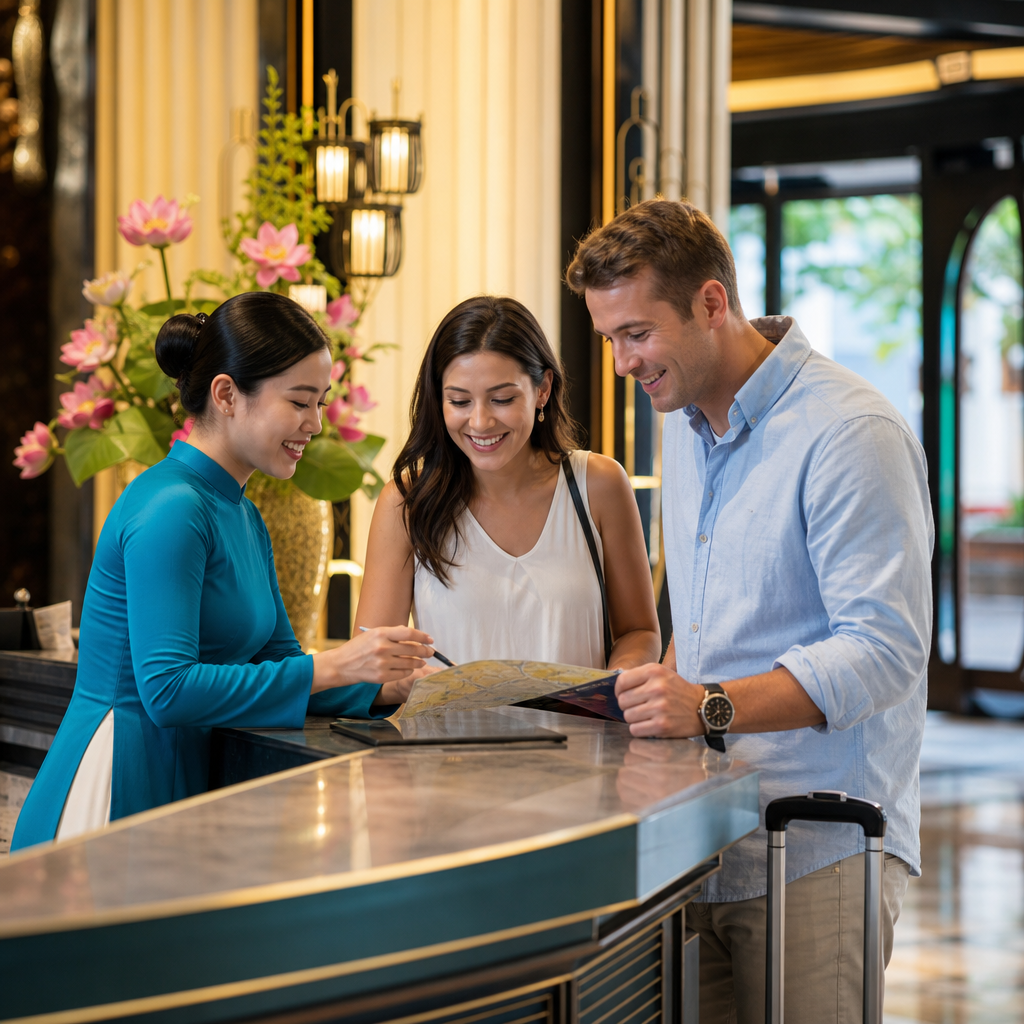
Building a Multilingual Hospitality Culture in Vietnam
Vietnam's hospitality sector is undergoing unprecedented transformation. The General Statistics Office of Vietnam reported that international arrivals reached 5.3 million visitors in 2022, with expectations to exceed pre-pandemic levels by 2024. As hotel occupancy rates climb, the demand for skilled hospitality interpretation Vietnam has become critical for competitive advantage.
Foreign managers operating boutique hotels, luxury resorts, and fine-dining establishments face immediate challenges: communicating room service requests, explaining amenities, and managing guest satisfaction in multiple languages simultaneously. Without professional interpreter support, service quality suffers and negative reviews multiply rapidly.
Why Hospitality Interpretation Matters More Than Ever
Guest experience hinges on clear communication. When a foreign traveler cannot understand check-in procedures, breakfast options, or spa policies, frustration builds immediately. Professional hospitality interpretation Vietnam transforms these friction points into moments of genuine connection and trust with international clientele.
The Business Case for Strategic Interpreter Integration
Hotels investing in professional interpreter-companions report measurable improvements in guest satisfaction scores, repeat bookings, and word-of-mouth referrals. The cost of miscommunication—incorrect room assignments, unmet dietary needs, or unresolved complaints—far exceeds the investment in structured interpretation services that prevent such incidents entirely.
Question 1: What is the role of professional interpretation in Vietnam's luxury hospitality sector?
Professional interpretation ensures accurate communication between hotel staff and international guests, preventing misunderstandings, enhancing service delivery, and building brand loyalty in Vietnam's competitive luxury hospitality market.
Bridging the Communication Gap in Upscale Environments
Luxury hospitality demands precision in every interaction. A misheard room-service order, an unexplained billing discrepancy, or a miscommunicated special request can damage a five-star reputation instantly. Professional interpreters fluent in hospitality terminology ensure guests understand exclusive amenities, dining reservations, and concierge services without ambiguity.
- Accuracy in technical details: Interpreters explain complex hotel systems like smart-room controls, spa treatment descriptions, and membership benefits in guests' native languages.
- Cultural sensitivity: Professional interpreters understand hospitality protocols specific to different nationalities, preventing cultural missteps during interactions.
- Rapid problem resolution: When conflicts arise, skilled interpreters mediate effectively, translating not just words but intent and emotion to find satisfactory solutions.
Revenue Protection Through Clear Communication
Hotels using hospitality interpretation Vietnam strategically prevent revenue leakage from guest confusion. When visitors understand room features, dining options, and premium services clearly, they spend more on add-ons and upgrades. Studies from Vietnam Investment Review highlight that international guests willing to pay premium rates specifically seek properties offering multilingual, personalized service experiences.
Question 2: How should hotels structure front-desk communication protocols with interpreter support?
Hotels should designate interpreter-companions during peak arrival hours, create multilingual check-in scripts, and train staff to recognize when interpretation is needed—ensuring seamless front-desk experiences for all international guests.
Strategic Scheduling and On-Site Presence
Front-desk communication is the guest's first hospitality touchpoint. Hotels should position professional interpreters during high-arrival periods—typically late afternoon and evening. Rather than waiting for problems to emerge, proactive interpreter presence ensures smooth check-in, luggage assistance, and initial service orientation without delays.
- Peak-hour coverage: Deploy interpreters during 4 PM to 9 PM when most international guests arrive, plus breakfast service hours for room-service orders.
- Pre-arrival coordination: Request booking information identifying guest languages in advance, allowing hotels to arrange specific-language interpreters before guests arrive.
- On-call backup system: Maintain interpreter availability via phone or video translation for unexpected language needs outside scheduled hours.
Multilingual Protocols and Staff Empowerment
Effective front-desk communication requires documentation. Hotels should develop laminated check-in cards with key phrases in the top six languages spoken by their international guest base. Staff training should emphasize when to proactively offer interpretation—never waiting for guests to struggle with English.
Front-desk teams equipped with visual room diagrams, amenity lists in multiple languages, and clear escalation procedures to interpreters create confidence and efficiency. The goal is zero guest confusion during arrival, setting the tone for their entire stay.
Question 3: What strategies resolve guest complaints across language barriers?
Hotels should deploy professional interpreters immediately when complaints arise, listen actively, validate guest concerns in their native language, and empower staff to offer tangible solutions that restore satisfaction.
The Critical Role of Neutral Mediation
Guest complaints often escalate because of miscommunication, not actual service failures. When a guest feels unheard in a foreign language, frustration compounds. Professional interpreters act as neutral mediators, translating not just words but emotional content, helping staff genuinely understand what the guest experienced and what would satisfy them.
- Empathetic interpretation: Skilled interpreters convey the emotional tone behind complaints, helping management understand not just what went wrong but how the guest feels.
- Solution translation: Interpreters explain potential remedies—room changes, credits, upgrades—clearly enough that guests understand the offer and feel their concern was taken seriously.
- Follow-up documentation: Interpreters record complaint details accurately, creating institutional memory that prevents the same issues recurring.
Training Staff for Complaint Prevention
Proactive communication prevents most complaints. Staff trained to anticipate guest needs—confirming room preferences, dietary restrictions, wake-up times—eliminate sources of dissatisfaction before they arise. When combined with professional hospitality interpretation Vietnam protocols, staff can detect early signs of guest frustration and address them immediately through interpretation rather than allowing problems to fester until explicit complaints emerge.
Question 4: How do cultural dining customs shape restaurant service language barriers in Vietnam?
Vietnamese dining customs—from table setup to payment timing—differ significantly from international norms; interpreters must explain these customs while accommodating foreign diners' expectations to prevent misunderstandings.
Navigating Dining Etiquette Differences
Fine-dining establishments in Vietnam often employ formal service rituals unfamiliar to international guests. Tea serving, the sequence of dishes, communal eating styles, and timing of the check presentation follow cultural protocols. Without explanation, foreign diners may feel confused or offended. Professional interpreters explain why the meal unfolds as it does, transforming potential friction into cultural education guests enjoy.
- Menu interpretation beyond translation: Interpreters explain ingredient origins, preparation methods, and Vietnamese culinary philosophy—elevating the dining experience into storytelling.
- Dietary requirement accommodation: Interpreters communicate special requests (allergies, vegetarian preferences, spice levels) to kitchen staff with precision, ensuring kitchen understanding aligns with guest expectations.
- Wine and beverage pairing guidance: Interpreters discuss local specialties, explain traditional pairings, and help guests navigate unfamiliar Vietnamese beverages with confidence.
Service Recovery in Restaurant Settings
Restaurant complaints often involve timing, portion size, or perceived service quality—all culturally relative. An interpreter-companion helps servers understand whether a guest found service too slow (common perception difference) or whether an actual error occurred. This distinction is crucial for appropriate response. When ezgogo.app connects restaurants with professional interpreter-companions, staff can clarify misunderstandings in real-time and adjust service style to match international guest expectations while maintaining Vietnamese hospitality traditions.
Question 5: What are best practices for integrating interpreter-companions into hotel operations?
Successful integration requires clear role definition, staff training on interpreter collaboration, real-time communication systems, and performance metrics that measure guest satisfaction improvements.
Operational Integration and Role Clarity
Interpreters must understand hotel operations, not just language. They should shadow front-desk staff, observe room-service procedures, and learn property-specific policies. Clarity on their role—are they translating only, or also providing cultural advising?—prevents confusion and ensures staff trust their expertise. Weekly briefings on arriving guest demographics allow interpreters to prepare specialized vocabulary and anticipate communication needs.
- Department-specific orientation: Interpreters train with housekeeping, F&B, spa, and concierge teams to understand each department's communication priorities and challenges.
- Communication system integration: Establish protocols for staff to request interpreter support—does housekeeping page the front desk, or call directly? Clear procedures prevent delays when language barriers emerge.
- Performance evaluation alignment: Measure interpreter impact through guest satisfaction scores, complaint resolution time, and repeat-guest rates—connecting interpretation quality directly to business outcomes.
Building Guest Experience Excellence Through Interpretation
Hotels that position hospitality interpretation Vietnam as a premium service feature—not a problem-solving tool—gain competitive advantage. Guests appreciate when staff proactively offer interpretation, making them feel valued and understood. Training should emphasize that interpreters enhance service, not substitute for staff effort. The combination of attentive staff and fluent interpreters creates memorable experiences that generate positive reviews, referrals, and loyalty among international travelers seeking personalized attention.
Conclusion
Professional hospitality interpretation Vietnam has evolved from a luxury to a business necessity for hotels and restaurants competing for international guests. The strategies outlined—front-desk protocols, complaint resolution frameworks, cultural dining guidance, and operational integration—create measurable improvements in guest satisfaction and revenue protection. Hotels that systematically structure interpreter support transform potential communication barriers into opportunities for genuine connection.
The hospitality sector's future belongs to properties that prioritize multilingual, culturally aware service delivery. If your hotel or restaurant operates in Vietnam's competitive tourism landscape, exploring professional interpreter-companion partnerships through ezgogo.app offers a practical path to service excellence that resonates with international guests and drives lasting business growth.
Sources
- General Statistics Office of Vietnam — International Visitor Arrivals Data
- Vietnam Investment Review — Hospitality Sector Growth and Service Standards
- VnExpress Business — Hotel Operations and Guest Experience Trends
- Reuters — Vietnam Tourism Recovery and Luxury Hospitality Market Analysis
- Vietnam Trade Information Portal — Hospitality and Service Industry Standards
Frequently Asked Questions
Question 1: What is the role of professional interpretation in Vietnam's luxury hospitality sector?
Professional interpretation ensures accurate communication between hotel staff and international guests, preventing misunderstandings, enhancing service delivery, and building brand loyalty in Vietnam's competitive luxury hospitality market.
Question 2: How should hotels structure front-desk communication protocols with interpreter support?
Hotels should designate interpreter-companions during peak arrival hours, create multilingual check-in scripts, and train staff to recognize when interpretation is needed—ensuring seamless front-desk experiences for all international guests.
Question 3: What strategies resolve guest complaints across language barriers?
Hotels should deploy professional interpreters immediately when complaints arise, listen actively, validate guest concerns in their native language, and empower staff to offer tangible solutions that restore satisfaction.
Question 4: How do cultural dining customs shape restaurant service language barriers in Vietnam?
Vietnamese dining customs—from table setup to payment timing—differ significantly from international norms; interpreters must explain these customs while accommodating foreign diners' expectations to prevent misunderstandings.
Question 5: What are best practices for integrating interpreter-companions into hotel operations?
Successful integration requires clear role definition, staff training on interpreter collaboration, real-time communication systems, and performance metrics that measure guest satisfaction improvements.
Need a local companion or interpreter in Vietnam?
Browse verified companions for language support, factory visits, and authentic local experiences.
Find a Companion →