 EZGOGO
Hospitality Interpreter Vietnam: Five-Star Hotel Guest Relations
Vietnam's luxury hotel sector is experiencing unprecedented international growth, with five-star properties in Hanoi and Ho Chi Minh City welcoming record numbers of foreign executives and leisure travelers. Professional hospitality interpreter Vietnam services go far beyond translation—they bridge cultural expectations, prevent misunderstandings, and elevate guest satisfaction. Discover how award-winning hotel interpretation specialists transform visitor experiences through deep cultural knowledge and sophisticated communication strategies.
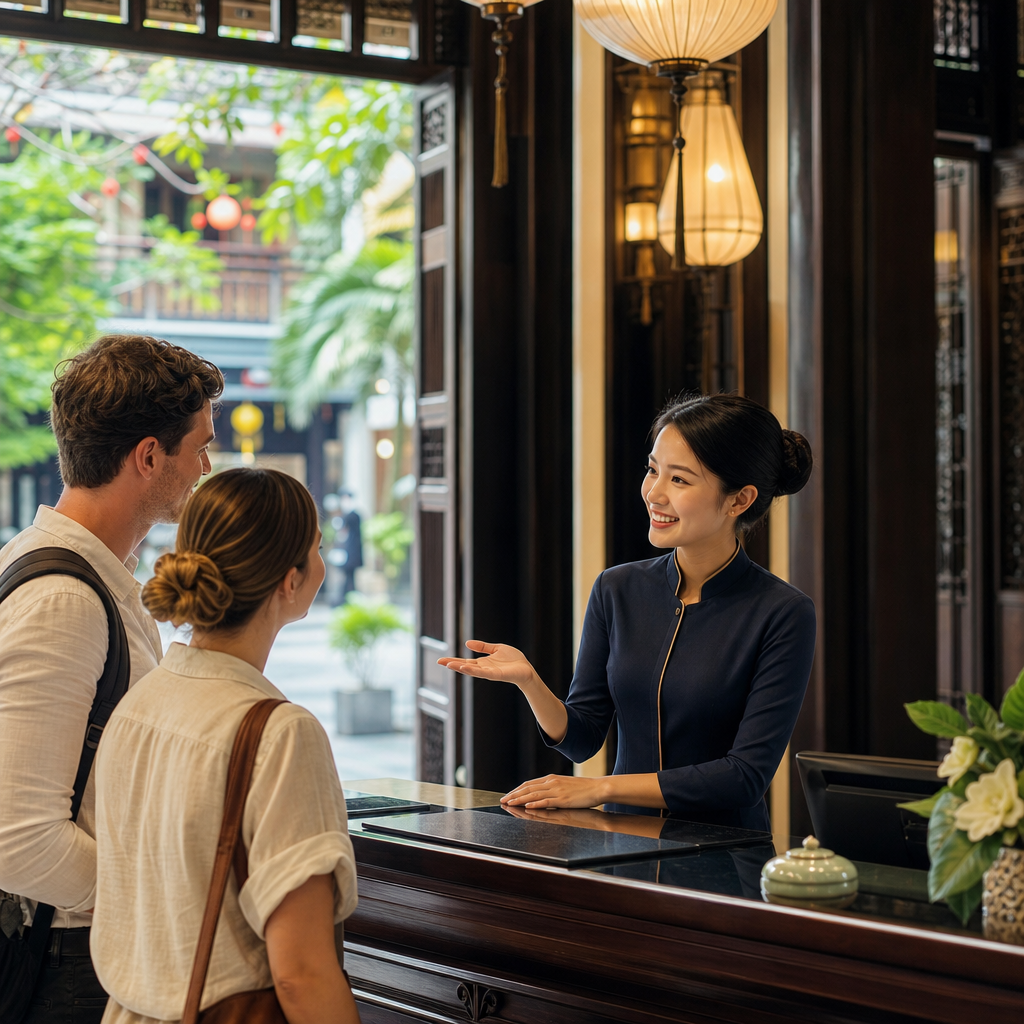
Why Hospitality Interpreters Matter in Vietnam's Luxury Sector
Vietnam's tourism industry generated an estimated 31.2 billion USD in 2019, with international arrivals climbing steadily despite pandemic disruptions. Five-star hotel groups including Sofitel, Park Hyatt, and InterContinental operate flagship properties across major urban centers, serving discerning international clientele who expect seamless multilingual service.
A hospitality interpreter Vietnam professional bridges the gap between operational excellence and cross-cultural understanding. This role transcends simple word-for-word translation, requiring deep knowledge of international guest expectations, local customs, business protocols, and the nuanced language of luxury service.
Vietnam's Growing International Hospitality Landscape
The General Statistics Office (GSO) reported that international visitor arrivals to Vietnam reached 18 million in 2019, with Hanoi and Ho Chi Minh City accounting for roughly 40 percent of total overnight stays. Premium hotel segments recorded the highest growth rates among accommodation categories, driven by expanding corporate travel and high-net-worth leisure tourism.
The Economics of Guest Experience Excellence
Research from the Vietnam Investment Review indicates that hotels investing in professional interpretation services report 18-25 percent higher guest satisfaction scores and improved online reputation metrics. Miscommunications—even small ones—cascade into negative reviews, cancellations, and lost corporate partnerships worth millions annually.
Question 1: What makes a hospitality interpreter different from a standard translator?
A hospitality interpreter combines linguistic fluency with specialized training in guest relations, cultural protocols, and luxury service standards. Standard translators focus on accurate word conversion; hospitality interpreters translate intent, emotion, and expectations within a service context.
Beyond Words: Understanding Guest Intent
When a French corporate executive requests "une chambre tranquille," a standard translator converts this to "a quiet room." A hospitality interpreter recognizes this signals not just noise concerns but potential fatigue, privacy preference, or the executive's need for a workspace. This nuance shapes room assignment, service timing, and personalization strategies.
- Contextual listening: Hospitality interpreters recognize what guests need before they fully articulate it, enabling proactive service adjustments.
- Emotional attunement: They read frustration, delight, or uncertainty in tone and body language, helping staff respond appropriately beyond the literal request.
- Service protocol knowledge: They understand luxury hospitality standards across multiple international markets and can advise staff on expectations specific to each guest's origin.
Cultural Protocol and Relationship Building
In Vietnamese culture, indirect communication and hierarchical respect are central to relationship building. International guests often expect directness and egalitarian interaction. A skilled hospitality interpreter helps staff navigate these expectations without compromising either cultural integrity or guest satisfaction.
Question 2: How do cultural differences affect guest satisfaction in five-star hotels?
Cultural differences directly impact guest satisfaction through variations in communication style, personal space expectations, meal preferences, and service timing—factors that require trained interpretation to address effectively.
Communication Style and Business Etiquette Across Markets
German and Northern European guests typically prefer direct, efficiency-focused communication. Japanese and Korean executives value relationship-building and formal titles. Middle Eastern travelers expect warmth, personalization, and flexible service parameters. American businesspeople often value speed and informality. These patterns require ezgogo.app-level expertise to interpret correctly and prevent offense.
- High-context vs. low-context cultures: Some cultures rely on implicit understanding; others require explicit detail—a hospitality interpreter knows which approach suits each guest.
- Time perception: Punctuality expectations vary globally; interpreters help align hotel operations with guest expectations around check-in, dining, and appointment timing.
- Formality levels: Some cultures expect formal address and professional distance; others prefer friendliness and informality—interpreters calibrate staff behavior accordingly.
Service Expectations and Luxury Standards
Luxury hospitality standards differ by market. Swiss and Scandinavian guests expect minimalist efficiency and privacy. Mainland Chinese travelers may value visible attentiveness, frequent check-ins, and demonstrations of exclusivity. Indian guests often prioritize personalized attention and flexible accommodation of extended family arrangements. A hospitality interpreter ensures staff understand and respect these variations.
Question 3: Which languages are most critical for Vietnam's hospitality industry?
English remains foundational, but Mandarin Chinese, French, Japanese, and Korean are increasingly critical for five-star properties competing for international market share in Vietnam.
Market-Driven Language Demand
Vietnam's hotel sector faces surging demand from Chinese business travelers and tourists. According to VnExpress Business, Chinese visitors comprised approximately 25-30 percent of international arrivals pre-pandemic. French remains important for Francophone African business delegations and heritage tourism. Japanese corporations maintain steady executive travel volumes to manufacturing hubs in southern Vietnam.
- Mandarin Chinese: Essential for property sales, group bookings, luxury spa services, and dining experience personalization—increasingly demanded by high-revenue corporate accounts.
- French: Required for heritage tourism, diplomatic functions, and relationships with Francophone business communities across West Africa.
- Japanese and Korean: Critical for tech, manufacturing, and entertainment sectors with significant presence across Vietnam's major cities.
Specialized Hospitality Vocabulary and Nuance
Hospitality interpretation requires mastery of industry-specific terminology across culinary, housekeeping, concierge, and wellness domains. A professional hospitality interpreter Vietnam specialist understands fine dining terminology, spa treatment names, architectural descriptions, and entertainment options in multiple languages with precision and cultural context.
Question 4: What specific scenarios require hospitality interpretation expertise?
VIP guest arrivals, complex room modifications, dispute resolution, corporate event coordination, and luxury service personalization are scenarios where hospitality interpreter expertise prevents costly misunderstandings and elevates guest satisfaction dramatically.
High-Stakes Guest Relations and VIP Coordination
When a multinational executive arrives with unexpected requirements—dietary restrictions due to religious or health concerns, room modifications for security, or specialized business center needs—hospitality interpretation ensures staff understand nuance and respond appropriately. These interactions often determine whether guests return and whether they recommend the property to colleagues and business partners.
- Executive expectations management: Interpreters help translate corporate travel policies and accommodation requirements, preventing assumptions that lead to service failures.
- Security and privacy protocols: Some international guests require discreet handling; interpreters explain these needs to staff clearly without breaching confidentiality.
- Family and entourage coordination: Multi-generational travel parties or executive delegations require clear communication across languages and cultural contexts.
Conflict Resolution and Service Recovery
When misunderstandings occur—a room quality concern, billing dispute, or unmet expectation—a skilled hospitality interpreter bridges the communication gap and facilitates resolution. They translate not just words but the emotional intent behind complaints, enabling hotel management to respond with empathy and appropriate remediation rather than defensiveness.
Question 5: How can hotels implement professional interpretation services effectively?
Forward-thinking hotels employ on-site hospitality interpreter specialists for key shifts, implement language training for core staff, and partner with professional interpretation networks for specialized or peak-demand scenarios.
Staffing Models and Best Practices
Five-star properties in Ho Chi Minh City and Hanoi increasingly adopt hybrid models: full-time hospitality interpreter staff during peak hours and for VIP arrivals, combined with strategic partnerships for surge capacity. Bloomberg's reporting on Vietnam's hospitality sector highlights that properties investing in permanent interpretation infrastructure report measurable improvements in guest retention and corporate account renewal rates.
- On-site interpretation teams: Dedicated hospitality interpreter professionals stationed at reception, concierge, and management levels ensure continuous availability and service consistency.
- Shift-based scheduling: Placing interpreters during check-in, checkout, and peak dining hours maximizes impact on guest touchpoints that drive satisfaction ratings.
- Specialized support networks: Partnerships with professional interpretation services handle languages requiring less frequent coverage and after-hours emergency communication.
Training and Interpreter Development
Hotels advancing their interpretation capabilities invest in ongoing training programs. Hospitality interpreter professionals benefit from exposure to guest feedback, seasonal trend analysis, and cultural updates. Some properties implement interpreter shadowing programs, pairing experienced professionals with bilingual staff to build internal capacity and reduce long-term interpretation costs.
Conclusion
The hospitality interpreter Vietnam role represents a strategic competitive advantage in a market where international guest expectations are rising and satisfaction metrics directly impact revenue and reputation. Beyond translation, these professionals shape experiences, prevent costly misunderstandings, and reinforce a hotel's position as a truly international destination welcoming diverse cultures with understanding and respect.
Hotels planning expansion or renovation in Vietnam's competitive luxury segment should prioritize professional interpretation infrastructure as integral to their service model. When you're ready to connect with award-winning hospitality interpreter specialists for your next Vietnam business trip or group travel coordination, explore options through ezgogo.app to ensure your guests and team communicate seamlessly across languages and cultures.
Sources
- General Statistics Office of Vietnam — International Visitor Arrivals and Tourism Statistics
- Vietnam Investment Review — Vietnam's Hospitality Sector Growth and Hotel Market Analysis
- VnExpress Business — International Visitor Trends and Market Segmentation
- Reuters Business — Vietnam Tourism Recovery and International Travel Patterns
- Bloomberg Asia Vietnam — Luxury Hospitality Investment and Guest Experience Standards
Frequently Asked Questions
Question 1: What makes a hospitality interpreter different from a standard translator?
A hospitality interpreter combines linguistic fluency with specialized training in guest relations, cultural protocols, and luxury service standards. Standard translators focus on accurate word conversion; hospitality interpreters translate intent, emotion, and expectations within a service context.
Question 2: How do cultural differences affect guest satisfaction in five-star hotels?
Cultural differences directly impact guest satisfaction through variations in communication style, personal space expectations, meal preferences, and service timing—factors that require trained interpretation to address effectively.
Question 3: Which languages are most critical for Vietnam's hospitality industry?
English remains foundational, but Mandarin Chinese, French, Japanese, and Korean are increasingly critical for five-star properties competing for international market share in Vietnam.
Question 4: What specific scenarios require hospitality interpretation expertise?
VIP guest arrivals, complex room modifications, dispute resolution, corporate event coordination, and luxury service personalization are scenarios where hospitality interpreter expertise prevents costly misunderstandings and elevates guest satisfaction dramatically.
Question 5: How can hotels implement professional interpretation services effectively?
Forward-thinking hotels employ on-site hospitality interpreter specialists for key shifts, implement language training for core staff, and partner with professional interpretation networks for specialized or peak-demand scenarios.
Need a local companion or interpreter in Vietnam?
Browse verified companions for language support, factory visits, and authentic local experiences.
Find a Companion →