 EZGOGO
Interpreter vs Machine Translation Manufacturing: Real Deal Case
When an Australian factory supplier nearly lost a $2 million partnership with a Vietnamese manufacturer, Google Translate's technical blunders exposed a critical gap. This real case study reveals why interpreter vs machine translation manufacturing negotiations demand human expertise—and how cultural nuance and precise terminology interpretation can mean the difference between a closed deal and a catastrophic miscommunication.
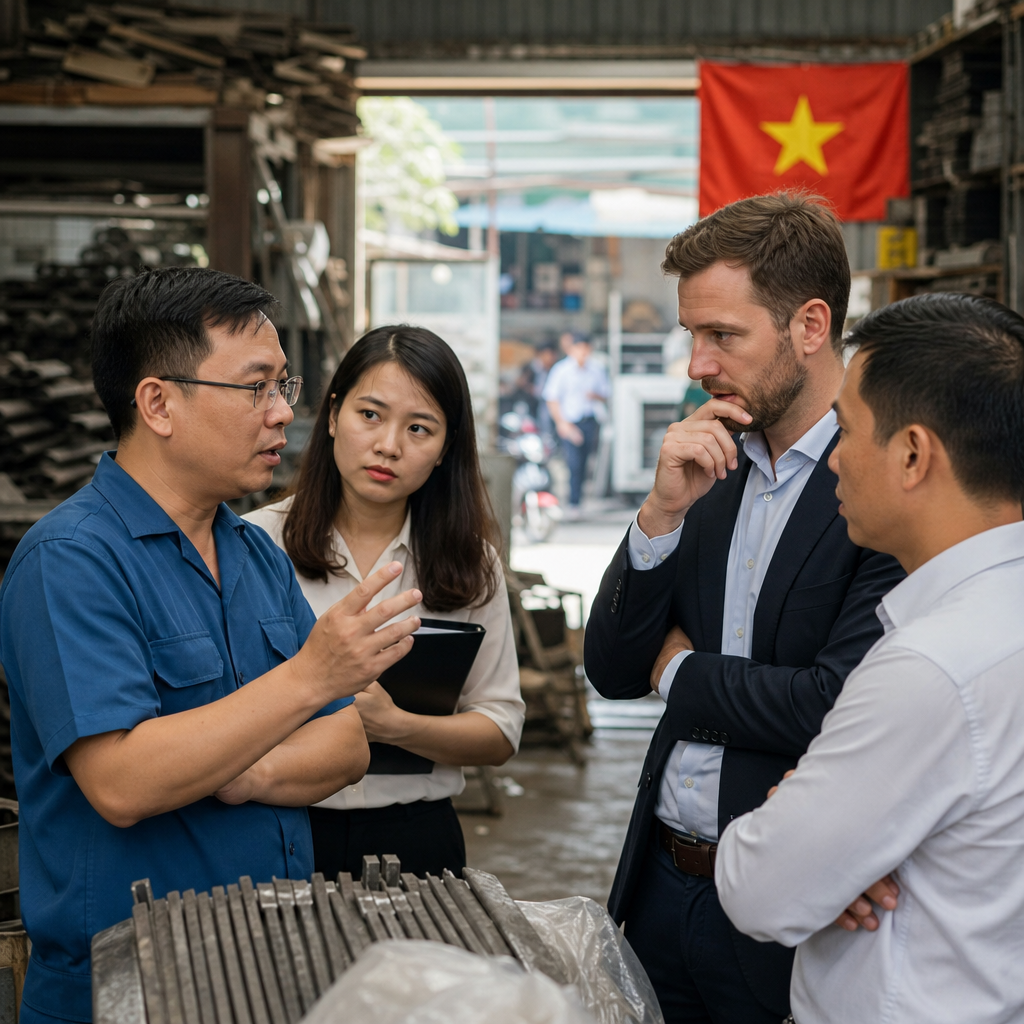
The $2 Million Miscommunication
In early 2023, a Melbourne-based industrial components supplier was weeks away from finalizing a $2 million machinery partnership with a tier-two Vietnamese manufacturer in Binh Duong Province. Both parties believed they had agreed on specifications, delivery timelines, and quality standards—until a professional interpreter reviewed the translated contract and discovered that Google Translate had fundamentally altered the meaning of critical technical clauses.
The breakdown wasn't a simple word-for-word error; it was a cascade of misinterpretations that threatened to expose the Australian company to massive liability and damage the Vietnamese partner's production schedule. What began as a routine due-diligence translation check became an urgent case study in why interpreter vs machine translation manufacturing negotiations remain non-negotiable.
How the Deal Reached Crisis Point
The Australian supplier had used Google Translate to convert technical specifications, payment terms, and quality-assurance protocols into Vietnamese. The Vietnamese manufacturer's team, in turn, had partially relied on the same tool for back-translations. Both sides believed they were aligned; neither had engaged a professional interpreter with manufacturing domain expertise.
The Intervention That Saved the Partnership
When the Australian director commissioned a professional human translator with 15 years of industrial manufacturing experience in Vietnam, the interpreter immediately flagged four critical errors that would have caused the deal to collapse. The cost of hiring a professional interpreter was under $3,000; the cost of the potential dispute would have exceeded $500,000 in delays and legal fees.
Question 1: What exactly did Google Translate get wrong in this manufacturing deal?
Google Translate mistranslated "tolerance specifications" as "accepting faults," reversed the meaning of quality-rejection clauses, and rendered technical abbreviations into nonsensical Vietnamese phrases—errors that would have obligated the Vietnamese manufacturer to accept defective parts.
The Four Critical Translation Failures
The first error involved the term "tolerance." In precision manufacturing, tolerance refers to the acceptable range of variation in measurements (e.g., ±0.5mm). Google Translate rendered the English phrase "parts must meet tolerance specifications" as "sản phẩm phải chấp nhận các khiếm khuyết"—which literally means "products must accept faults." The Vietnamese manufacturer interpreted this as permission to ship substandard components.
- Tolerance misinterpretation: Machine translation confused technical precision limits with acceptance of defects, inverting the contractual obligation entirely.
- Quality-rejection clause reversal: A clause stating "Vietnamese partner must reject any shipment with defects exceeding 2%" was translated as "partner must accept shipments exceeding 2% defects," flipping the contractual meaning 180 degrees.
- Abbreviation confusion: The acronym "SPC" (Statistical Process Control) was left untranslated, then misunderstood by the Vietnamese team as a foreign brand name rather than a quality-management methodology.
Why Machine Translation Struggles with Technical Language
Machine translation systems, including Google Translate, rely on probabilistic pattern-matching trained on general web text. Technical manufacturing vocabulary represents less than 0.1% of training data, so the algorithm defaults to literal, context-blind word substitution. Professional interpreters, by contrast, understand that "tolerance" in engineering contexts means something fundamentally different from its everyday usage.
Question 2: How do machine translation risks specifically impact technical negotiations?
Machine translation risks in manufacturing negotiations introduce ambiguity into binding contracts, erase cultural decision-making differences, and create liability gaps that neither party recognizes until production failures occur.
Domain-Specific Vocabulary Gaps
Vietnam's manufacturing sector has grown dramatically; GSO (General Statistics Office) Vietnam reported that manufacturing output increased 8.2% year-over-year in 2023. Yet most manufacturing vocabulary in both English and Vietnamese is highly specialized, with technical terms that have no direct equivalents. A professional interpreter vs machine translation manufacturing approach recognizes that "lead time," "batch tolerance," and "non-conformance report" require human judgment to translate correctly into Vietnamese.
- Precision-critical terminology: Words like "calibration," "validation," and "certification" have nuanced meanings in manufacturing that machine translation often collapses into single generic translations.
- Regulatory and standards terminology: References to ISO standards, quality certifications, and regulatory compliance terms vary by region and require expertise to convey accurately.
- Context-dependent phrasing: The phrase "must be shipped" versus "should be shipped" carries legal weight in contracts; machine translation often treats these interchangeably.
The Hidden Costs of Ambiguity in Manufacturing Deals
When a Vietnamese manufacturer receives ambiguous contract language via machine translation, decision-making defaults to verbal clarification or assumptions based on their own business practices. This can diverge sharply from the foreign partner's intent. In the Australian case, the Vietnamese team assumed that "tolerance specifications" meant they had flexibility in quality—a fatal misunderstanding that would have cost the Australian company thousands in warranty claims and reputation damage.
Question 3: Why is cultural context crucial in manufacturing partnerships in Vietnam?
Vietnamese business culture emphasizes relationship harmony and indirect communication, meaning that contract ambiguities are often silently accepted rather than questioned—a dynamic that machine translation completely misses.
Relationship-First Decision Making in Vietnam
Vietnamese manufacturing partners prioritize long-term relationship stability over strict literal contract interpretation. If a contract is ambiguous, a Vietnamese executive may assume goodwill and proceed—rather than demanding clarification—to preserve the business relationship. Machine translation eliminates the human layer that would catch and address these cultural assumptions before they crystallize into operational decisions.
Unspoken Negotiation Conventions
In manufacturing negotiations Vietnam, certain phrases carry implicit meaning that foreigners often miss. For example, when a Vietnamese partner says "we will try our best to meet this deadline," it frequently signals concern about feasibility rather than confident assent. Machine translation renders this as a straightforward commitment, missing the cultural signal entirely. A professional interpreter catches these nuances and flags them during live negotiations, preventing misaligned expectations.
Question 4: What specific terminology gaps emerged during this factory negotiation?
The interpreter identified that "stamping tolerance," "scrap rate," and "first-pass yield" had no direct Vietnamese equivalents and required explanatory definitions that machine translation could never provide.
Technical Terms That Machine Translation Cannot Handle
Manufacturing negotiations Vietnam frequently involve terminology that exists in English technical discourse but has never been formally translated into Vietnamese. The Australian supplier's contract included the term "first-pass yield" (the percentage of components that meet quality standards on the first production run). Google Translate produced a nonsensical phrase; a professional interpreter explained the concept in Vietnamese using industry-standard language understood by Vietnamese engineers.
- Stamping tolerance: Machine translation missed that this refers to acceptable variation in metal-stamped parts, treating it as generic "tolerance" language.
- Scrap rate: The English "scrap rate" (percentage of defective parts discarded) was mistranslated as "waste price," confusing cost with defect rate.
- First-pass yield: This term has no direct Vietnamese equivalent and requires explanation; machine translation attempted a literal word-for-word rendering that was meaningless to Vietnamese engineers.
How Professional Interpreters Bridge Terminology Gaps
An experienced interpreter with manufacturing background maintains mental glossaries of industry-standard terms in both languages and can explain concepts when formal equivalents don't exist. In this case, the interpreter defined "first-pass yield" using analogies and operational examples that resonated with the Vietnamese team's existing quality-management framework, ensuring both parties understood the contractual obligation identically.
Question 5: How can foreign businesses avoid translation disasters in Vietnam manufacturing deals?
Foreign businesses should hire professional interpreters with domain expertise before negotiations begin, conduct real-time interpretation during contract discussions, and require human review of all translated legal and technical documents.
Best Practices for Manufacturing Deal Interpretation
Vietnam's manufacturing sector is booming—Reuters reported that foreign direct investment in Vietnamese manufacturing reached $19.1 billion in 2023, with much of that capital flowing into electronics, textiles, and industrial components. That scale of investment demands translation standards that match the stakes. Best practices include: commissioning a professional interpreter before initial contract drafts are exchanged, using the interpreter during all live negotiations, and requiring the interpreter to review any machine-translated documents before they are signed.
- Pre-negotiation briefing: A professional interpreter should review all technical specifications and contract language at least one week before negotiations to prepare terminology definitions and identify potential ambiguities.
- Live real-time interpretation: During negotiations, an on-site or video interpreter should interpret every significant statement, ensuring immediate clarification of ambiguities rather than deferring them to post-negotiation document review.
- Document verification: After oral negotiations conclude, all written agreements should be interpreted by a human—not machine-translated—and reviewed by both parties' technical teams before execution.
Building a Professional Interpreter Partnership
Rather than hiring interpreters ad hoc for each deal, foreign manufacturers should build an ongoing relationship with a professional interpreter or interpretation service that specializes in their industry. This continuity ensures that terminology definitions remain consistent across multiple deals and that the interpreter develops deep familiarity with both the foreign company's operational language and the Vietnamese partner's business culture. Platforms like ezgogo.app connect foreign businesses with professional interpreter-companions who have sector-specific expertise and can serve as trusted partners throughout extended manufacturing negotiations and ongoing partnerships.
Conclusion
The Australian supplier's $2 million manufacturing deal was rescued by a single decision to hire a professional interpreter before finalizing the contract. The four critical errors that Google Translate had embedded into the agreement would have created years of dispute and destroyed a potentially profitable partnership. The lesson is unambiguous: in interpreter vs machine translation manufacturing contexts, human expertise is not a luxury—it is a mandatory investment that costs a fraction of the financial exposure it prevents.
For any foreign business entering manufacturing negotiations in Vietnam, the choice is stark. Machine translation offers speed and low cost upfront but introduces unquantifiable risk into contracts worth millions. Professional interpretation requires upfront investment but provides certainty, cultural alignment, and the foundation for lasting business relationships. As Vietnam's manufacturing sector continues its rapid expansion, the demand for credible interpreter services will only grow. Businesses serious about Vietnam manufacturing partnerships should prioritize human interpretation from the first conversation onward.
Sources
- General Statistics Office Vietnam — Manufacturing Output Data 2023
- Reuters — Vietnam FDI Manufacturing Investment 2023
- Vietnam Investment Review — Foreign Investment in Manufacturing Sector
- VnExpress Business — Vietnam Manufacturing Industry Trends
- ISO/IEC Standards — Manufacturing Quality and Process Control
Frequently Asked Questions
Question 1: What exactly did Google Translate get wrong in this manufacturing deal?
Google Translate mistranslated "tolerance specifications" as "accepting faults," reversed the meaning of quality-rejection clauses, and rendered technical abbreviations into nonsensical Vietnamese phrases—errors that would have obligated the Vietnamese manufacturer to accept defective parts.
Question 2: How do machine translation risks specifically impact technical negotiations?
Machine translation risks in manufacturing negotiations introduce ambiguity into binding contracts, erase cultural decision-making differences, and create liability gaps that neither party recognizes until production failures occur.
Question 3: Why is cultural context crucial in manufacturing partnerships in Vietnam?
Vietnamese business culture emphasizes relationship harmony and indirect communication, meaning that contract ambiguities are often silently accepted rather than questioned—a dynamic that machine translation completely misses.
Question 4: What specific terminology gaps emerged during this factory negotiation?
The interpreter identified that "stamping tolerance," "scrap rate," and "first-pass yield" had no direct Vietnamese equivalents and required explanatory definitions that machine translation could never provide.
Question 5: How can foreign businesses avoid translation disasters in Vietnam manufacturing deals?
Foreign businesses should hire professional interpreters with domain expertise before negotiations begin, conduct real-time interpretation during contract discussions, and require human review of all translated legal and technical documents.
Need a local companion or interpreter in Vietnam?
Browse verified companions for language support, factory visits, and authentic local experiences.
Find a Companion →