 EZGOGO
Manufacturing Interpretation Vietnam: Technical Guide for Factory Visits
Foreign engineers and quality managers conducting factory audits in Vietnam face unique communication challenges on the production floor. Manufacturing interpretation Vietnam requires specialized knowledge of equipment specifications, safety protocols, and real-time technical problem-solving. This guide covers pre-visit terminology briefing, industrial safety communication strategies, and how professional interpreter-companions ensure seamless machinery discussions during critical factory inspections.
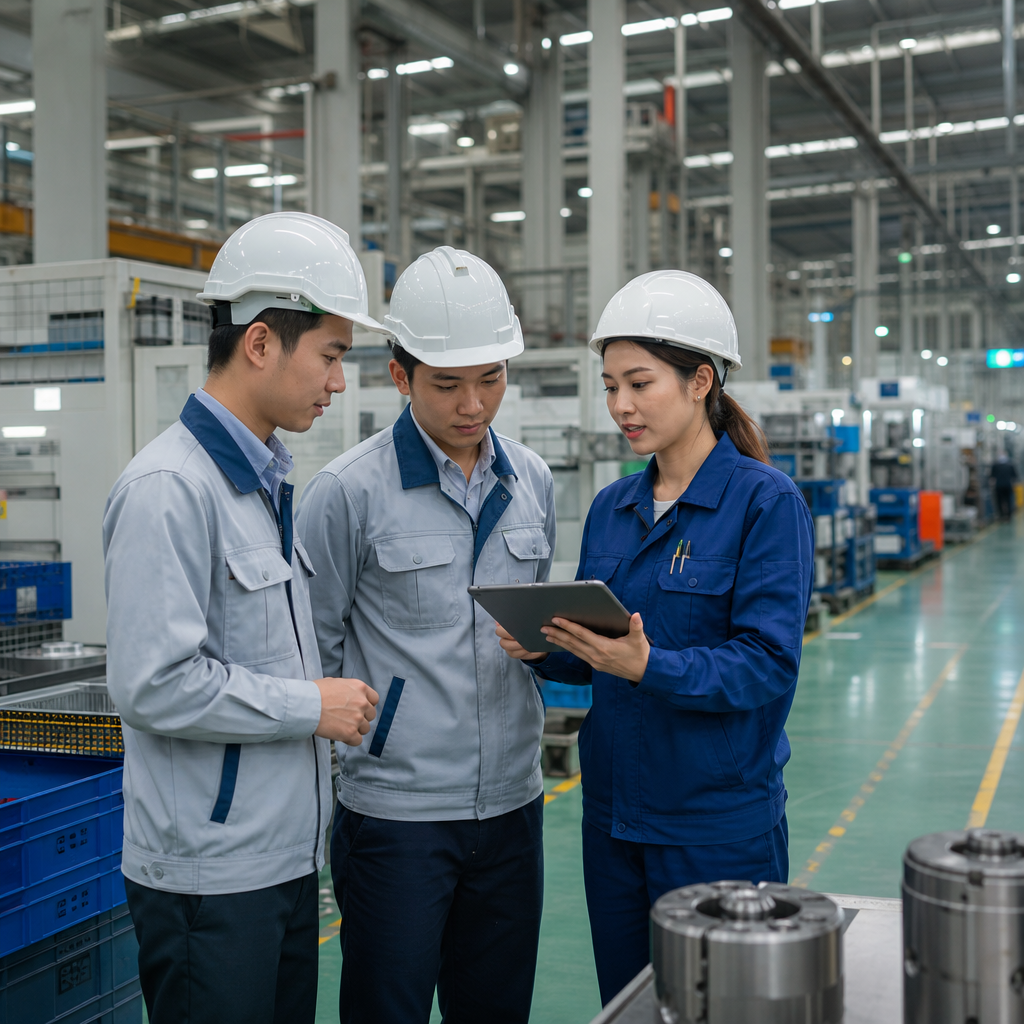
Preparing Your Manufacturing Interpreter for Factory Audits
Vietnam's manufacturing sector contributed $274 billion USD to the nation's GDP in 2023, with foreign investment driving rapid expansion across electronics, textiles, and automotive components. As international quality managers and engineers increasingly conduct on-site audits at Vietnamese factories, the demand for specialized manufacturing interpretation Vietnam services has surged significantly.
Communication breakdowns on the production floor cost time, compromise safety, and undermine audit credibility. Unlike general business interpretation, manufacturing floor work demands deep familiarity with equipment specifications, process workflows, and safety documentation—skills that separate competent interpreters from truly effective ones.
Why Specialized Manufacturing Interpretation Matters
Vietnam's manufacturing workforce exceeds 8 million people, yet language barriers remain a critical challenge during quality inspections and technical audits. General English-speaking staff cannot reliably translate between engineering specifications and shop-floor reality. A specialized manufacturing interpreter bridges this gap by understanding both language and industrial context.
The Cost of Miscommunication on Factory Floors
Misinterpreted safety instructions can lead to workplace accidents and regulatory violations. Inaccurate equipment specifications during audits may cause undetected quality issues, leading to costly recalls and reputational damage for your business. Professional manufacturing interpretation Vietnam minimizes these risks through precision and cultural-technical fluency.
Question 1: What technical terminology should interpreters master before a factory visit?
Interpreters must pre-study industry-specific vocabulary including equipment names, process terminology, safety protocols, quality standards (ISO 9001, CE markings), and common production metrics unique to your sector before arriving at the factory floor.
Core Manufacturing Vocabulary Categories
Effective manufacturing interpretation requires fluency across multiple terminology domains. Equipment classification, operational procedures, maintenance protocols, and defect categories form the foundational lexicon. Interpreters should create glossaries organized by production stage—from raw materials intake through final inspection and packaging.
- Equipment terminology: CNC machines, injection molding units, conveyor systems, hydraulic presses, and testing instruments must be accurately named in both English and Vietnamese to avoid confusion during specifications review.
- Process description: Phase names, cycle times, temperature ranges, pressure specifications, and quality checkpoints require precise numerical translation to ensure manufacturing standards alignment.
- Safety language: Emergency procedures, lockout-tagout protocols, personal protective equipment (PPE) categories, and incident reporting must be translated with absolute consistency.
Industry-Specific Standards and Certifications
Vietnamese factories increasingly comply with international standards including ISO 9001 (quality management), ISO 14001 (environmental), and ISO 45001 (occupational health). Interpreters must understand these certification frameworks and their implementation on the factory floor to accurately convey audit findings and corrective action requirements.
Question 2: How do interpreters communicate safety protocols on the production floor?
Interpreters must use consistently rehearsed safety terminology, verify worker understanding through observation and check-back questions, and immediately clarify any instructions related to equipment hazards, emergency procedures, or personal protective equipment compliance.
Translating Safety Protocols Without Ambiguity
Safety communication tolerates zero margin for error. Interpreters conducting manufacturing interpretation Vietnam must translate hazard warnings, lockout procedures, and emergency evacuation routes with absolute precision. Pre-visit terminology briefing sessions should include role-playing scenarios where interpreters practice communicating critical safety information to factory floor supervisors and workers.
- Lockout-tagout (LOTO) protocols: Energy isolation procedures require exact terminology in Vietnamese to prevent accidental equipment activation during maintenance—a leading cause of factory floor injuries.
- PPE requirements: Hard hats, safety glasses, steel-toed boots, and respirators must be discussed with clear visibility of actual equipment so workers understand precisely which protective gear applies to specific stations.
- Emergency response: Fire alarm locations, assembly points, first aid station access, and injury reporting chains require identical terminology each time they are communicated to embed procedural knowledge.
Verifying Worker Comprehension During Safety Briefings
Simply translating safety instructions does not guarantee worker understanding. Professional interpreters use confirmation techniques—asking workers to repeat instructions, demonstrating correct procedures, and observing behavior changes—to verify that safety messages have been accurately received and understood on the production floor.
Question 3: What equipment specification details require specialized interpreter knowledge?
Equipment specifications require interpreters who understand technical parameters including dimensional tolerances, material grades, operating temperatures, pressure ratings, cycle times, and quality acceptance criteria specific to machinery used in each factory production stage.
Machinery Specification Documentation Review
During factory audits, foreign engineers commonly review equipment specification sheets, maintenance logs, and calibration certificates. ezgogo.app pairs quality managers with interpreters who possess mechanical knowledge, enabling them to accurately discuss nameplate ratings, operational tolerances, and performance metrics without introducing translation errors that could mask equipment defects.
- Tolerance specifications: Precise measurements (microns, millimeters, percentages) must be translated accurately—a rounding error can mean the difference between acceptable and defective products.
- Material certifications: Steel grades, alloy compositions, and polymer types require exact terminology to confirm that factory-sourced materials match engineering requirements.
- Performance metrics: Cycle times, throughput rates, defect frequencies, and quality yield percentages must be translated with numerical precision to enable meaningful audit comparisons across factory locations.
Handling Real-Time Equipment Troubleshooting Discussions
When equipment malfunctions or quality issues emerge during an audit, interpreters must rapidly translate diagnostic conversations between engineers and factory technicians. This requires not just language fluency but mechanical intuition—understanding likely failure modes, recognizing symptoms, and articulating troubleshooting logic clearly enough that both sides reach consensus on root causes and corrective actions.
Question 4: How can interpreters handle real-time technical problem-solving discussions?
Interpreters managing real-time problem-solving should confirm their understanding of the technical issue, ask clarifying questions when terminology is ambiguous, summarize conclusions in both languages to verify agreement, and document agreed-upon corrective actions using consistent terminology.
Active Listening and Clarification Techniques
Real-time technical discussions move quickly and cover complex ground. Interpreters must listen actively, identify moments where technical terms might be misunderstood, and pause conversations to request clarification before proceeding. This approach prevents compounding translation errors that multiply as discussions build on earlier misunderstandings about equipment condition or process performance.
- Requesting re-explanation: When a factory technician describes a problem using colloquial or region-specific Vietnamese terminology, interpreters should ask for alternative phrasings to ensure they grasp the technical reality before translating to engineers.
- Confirming technical understanding: Restating problems and proposed solutions in both languages confirms that all parties agree on root causes, preventing misaligned corrective actions that fail to address actual issues.
- Documenting solutions: Summarizing agreed-upon actions using exact technical terminology ensures that corrective action follow-up communications reference the same solutions discussed on the factory floor.
Managing Rapid Problem-Solving Conversations
Manufacturing interpretation Vietnam contexts often involve troubleshooting discussions that build momentum as engineers and technicians collaborate to solve pressing production issues. Interpreters must maintain accuracy under time pressure—slowing conversations when necessary while keeping discussions moving efficiently toward resolution.
Question 5: What preparation steps ensure accurate industrial safety communication?
Pre-visit preparation should include detailed safety protocol review with your manufacturing facility, glossary development for all hazard categories and emergency procedures, role-play simulation of critical safety scenarios, and clarification of communication chain for injury reporting and incident investigation protocols.
Pre-Visit Terminology Briefing and Walkthrough
Before arriving at the factory, professional interpreters benefit from advance briefing materials and ideally a facility walkthrough. During manufacturing interpretation Vietnam engagements, this preparation phase includes equipment identification, hazard assessment, PPE requirements review, and emergency procedure clarification. Interpreters who complete this groundwork arrive fully prepared to communicate safety protocols with precision and confidence.
- Hazard identification: Interpreters should learn which equipment poses specific dangers—machinery pinch points, chemical exposure risks, noise levels, electrical hazards—so they can emphasize safety concerns appropriately during factory floor discussions.
- Facility layout familiarity: Understanding emergency exits, assembly points, fire suppression systems, and first aid station locations enables interpreters to guide foreign visitors safely during facility tours and audits.
- Regulatory context: Knowledge of Vietnamese occupational safety regulations (Law on Occupational Safety and Health) and international standards (OSHA-equivalent requirements) helps interpreters recognize when factory practices may require corrective action.
Establishing Communication Protocols for Incidents
Clear incident reporting procedures prevent confusion if injuries or near-misses occur during audits. Interpreters should clarify communication chains in advance—understanding who to notify, what information to document, and how to communicate incident details to visiting engineers and facility management. This preparation ensures manufacturing interpretation remains reliable even during workplace emergencies.
Conclusion
Manufacturing interpretation Vietnam represents a specialized service that directly impacts factory audit quality, safety compliance, and international business relationships. By preparing interpreters through pre-visit briefings, glossary development, and scenario-based practice, quality managers ensure that technical discussions, safety protocols, and equipment specifications are translated with the precision these critical activities demand.
When planning your next factory audit or machinery discussion in Vietnam, invest in professional interpreters who combine language fluency with technical manufacturing knowledge. Explore ezgogo.app to connect with experienced interpreter-companions who specialize in manufacturing environments and understand the technical demands of your industry—ensuring every audit, inspection, and problem-solving discussion achieves maximum clarity and accuracy on the production floor.
Sources
- General Statistics Office of Vietnam — Manufacturing and Industrial Production Data
- VietnamNet Business — Foreign Investment in Vietnamese Manufacturing Sector
- Vietnam Briefing — Manufacturing Sector Overview and Growth Trends
- International Quality Assurance Standards (ISO 9001, ISO 14001, ISO 45001)
- International Labour Organization Vietnam — Occupational Safety and Health Standards
Frequently Asked Questions
Question 1: What technical terminology should interpreters master before a factory visit?
Interpreters must pre-study industry-specific vocabulary including equipment names, process terminology, safety protocols, quality standards (ISO 9001, CE markings), and common production metrics unique to your sector before arriving at the factory floor.
Question 2: How do interpreters communicate safety protocols on the production floor?
Interpreters must use consistently rehearsed safety terminology, verify worker understanding through observation and check-back questions, and immediately clarify any instructions related to equipment hazards, emergency procedures, or personal protective equipment compliance.
Question 3: What equipment specification details require specialized interpreter knowledge?
Equipment specifications require interpreters who understand technical parameters including dimensional tolerances, material grades, operating temperatures, pressure ratings, cycle times, and quality acceptance criteria specific to machinery used in each factory production stage.
Question 4: How can interpreters handle real-time technical problem-solving discussions?
Interpreters managing real-time problem-solving should confirm their understanding of the technical issue, ask clarifying questions when terminology is ambiguous, summarize conclusions in both languages to verify agreement, and document agreed-upon corrective actions using consistent terminology.
Question 5: What preparation steps ensure accurate industrial safety communication?
Pre-visit preparation should include detailed safety protocol review with your manufacturing facility, glossary development for all hazard categories and emergency procedures, role-play simulation of critical safety scenarios, and clarification of communication chain for injury reporting and incident investigation protocols.
Need a local companion or interpreter in Vietnam?
Browse verified companions for language support, factory visits, and authentic local experiences.
Find a Companion →