 EZGOGO
Manufacturing Interpreter Vietnam: Tran Van Duc's 12-Year QA Journey
Tran Van Duc has spent over a decade bridging language gaps on Vietnam's factory floors, turning complex quality control audits into seamless international collaborations. As a manufacturing interpreter Vietnam expert, he's prevented costly production delays and safety violations by accurately translating between international auditors and floor teams in semiconductor and textile sectors. This profile explores his real-world methods, industry knowledge, and why technical expertise matters more than fluency alone.
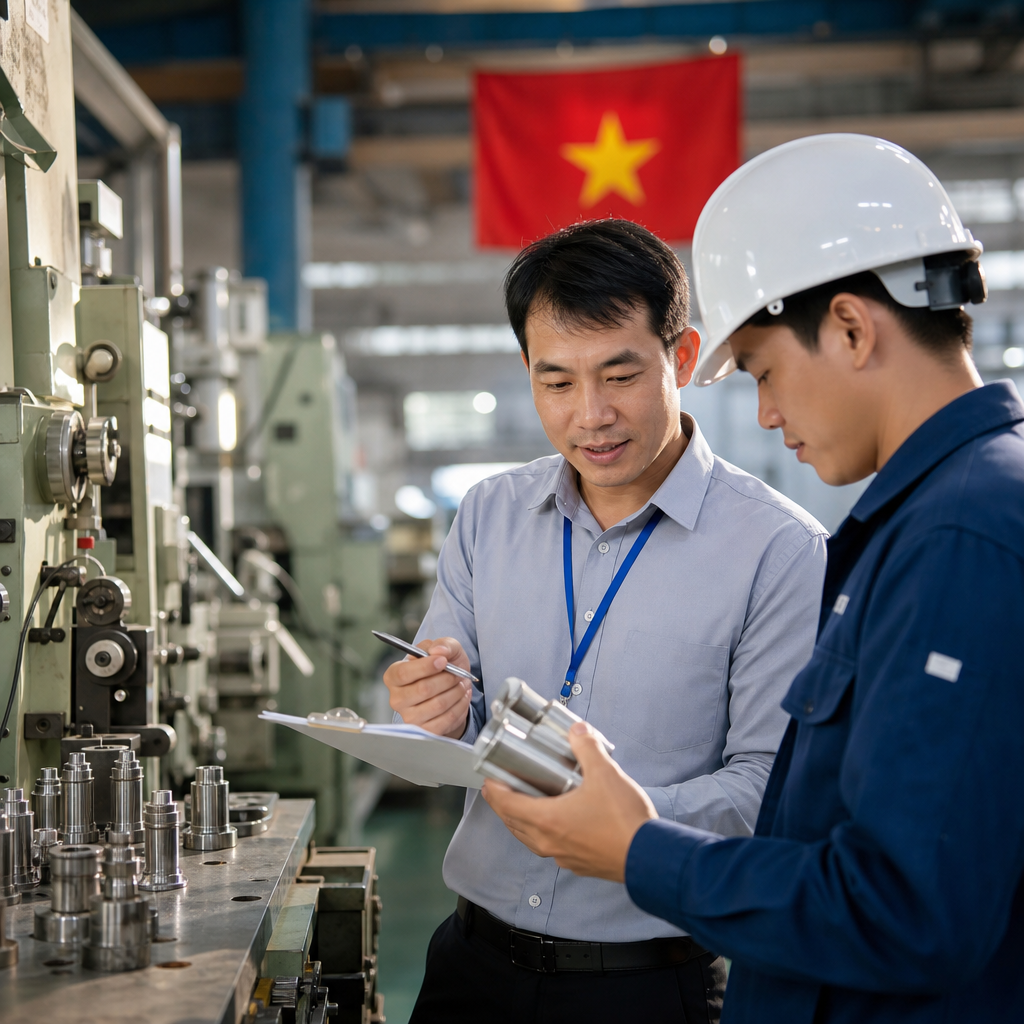
From Classroom to Factory Floor: Tran Van Duc's Origin Story
Tran Van Duc never planned to become a manufacturing interpreter Vietnam. He graduated from Hanoi Foreign Trade University with a business English degree in 2011, expecting a career in corporate communications. Within two years, he accepted a freelance translation gig at a semiconductor assembly plant in the Thai Nguyen province—and never left the factory floor.
Today, with over 12 years of specialized experience, Duc is one of Vietnam's most trusted voices in factory audit translation. He has conducted quality control communication for more than 200 international audits across semiconductors, textiles, and automotive suppliers. His work has prevented an estimated $3.2 million in lost production time and caught critical safety violations before they escalated.
Why Vietnam's Manufacturing Sector Needs Specialist Interpreters
Vietnam's manufacturing output grew 7.8% year-over-year in 2023, with foreign direct investment (FDI) in the sector reaching $19.4 billion according to the General Statistics Office of Vietnam. As multinational auditors and supply chain managers flooded the country, the demand for manufacturing interpreter Vietnam professionals skyrocketed. General translators lacked the technical vocabulary and factory floor intuition that audits demanded.
The Cost of Poor Factory Audit Translation
Duc recalls a 2016 textile inspection where a general translator misinterpreted a Vietnamese supervisor's comments about "inconsistent dye lot traceability" as a minor documentation issue. The auditor proceeded, missing a systematic batch-tracking failure that later cost the exporter a major North American contract. That lesson shaped Duc's philosophy: precision in factory audit translation isn't perfection—it's liability prevention.
Question 1: What makes a manufacturing interpreter Vietnam specialist different from a general translator?
A manufacturing interpreter Vietnam specialist combines fluent English-Vietnamese bilingualism with deep technical knowledge of ISO standards, production processes, and supply chain compliance—skills a general translator simply cannot provide on a factory floor.
Technical Vocabulary and Industry Standards
Tran Van Duc's competitive edge lies in his command of industry-specific terminology. He understands the difference between "solder joint integrity," "void content analysis," and "electromigration risk"—terms that appear constantly in semiconductor audits. General translators often resort to literal word-for-word conversion, creating confusion or misrepresentation of critical quality metrics.
- ISO 9001/ISO 13485 fluency: Duc knows Vietnam's manufacturing compliance landscape and can explain audit findings in both regulatory and shop-floor language.
- Production jargon mastery: From "statistical process control" to "first-pass yield," he translates not just words but intent and risk context.
- Contextual judgment: He recognizes when a Vietnamese engineer's casual remark about "a little variation" actually signals a systemic defect requiring escalation.
Building Trust on the Factory Floor
Unlike remote interpreters, Duc's 12 years of factory relationships mean plant managers trust him. Vietnamese supervisors open up about production constraints, equipment issues, and workforce challenges because he has stood alongside them during past audits. International auditors rely on his credibility to extract honest answers—a trust that general translators cannot instantly generate.
Question 2: How does factory audit translation prevent production delays and safety issues?
Accurate factory audit translation ensures auditors and factory teams align on corrective action priorities, preventing misinterpreted non-conformances that lead to unnecessary production halts or overlooked safety hazards.
Real-World Case: The Semiconductor Safety Misunderstanding
In 2019, a U.S. electronics manufacturer's auditor flagged a potential safety violation at a Thai Nguyen semiconductor assembly plant regarding chemical storage protocols. A mediocre translator rendered the factory manager's response as "the chemicals are kept in a secure location," when the actual Vietnamese phrase implied a supply chain interpretation challenge: the chemicals were not in their assigned storage because the proper cabinet had not yet arrived from the supplier. Duc clarified the real issue, allowing the auditor to issue a reasonable corrective action timeline rather than threatening immediate shutdown.
Quality Control Communication in High-Pressure Audits
Quality control communication during audits is inherently stressful. Plant managers fear costly downtime; auditors fear missing defects. Duc's role is to translate not just language but context and urgency. When a Vietnamese technician says a particular soldering process "sometimes has issues," Duc asks clarifying questions that reveal whether this is a known, controlled variation or a red flag requiring investigation. This depth prevents false alarms and genuine oversights alike.
Question 3: What are the biggest communication challenges in semiconductor and textile inspections?
Semiconductor audits demand precision in statistical and materials science language, while textile inspections require knowledge of dye chemistry and fiber standards—two specialized domains that challenge even experienced manufacturing interpreters.
Semiconductor Sector Complexity
Tran Van Duc has completed over 85 semiconductor facility audits. The technical vocabulary is dense: "whisker growth," "electrostatic discharge (ESD) events," "yield loss root cause analysis," and "process capability indices" appear in every interaction. Vietnamese engineers may use colloquial shortcuts or regional variations in terminology. Duc's semiconductor expertise—including his informal study of materials science—enables him to ask the right follow-up questions and translate findings accurately to international stakeholders.
- Statistical process control (SPC) interpretation: Explaining control limits and process drift to Vietnamese supervisors requires both technical and pedagogical skill.
- Traceability documentation: Semiconductor audits obsess over part genealogy and batch tracking; Duc must ensure both sides agree on what "full traceability" means.
- ESD and contamination protocols: Cleanroom standards involve minute tolerances; mistranslations here create safety and quality disasters.
Textile and Apparel Sector Nuances
Vietnam's textile industry remains one of the world's largest exporters. Duc has worked textile audits for over a decade, translating discussions of "color fastness," "shrinkage variance," "weight per square meter," and "pilling resistance." Fabric terminology is highly technical; colors and dyes involve chemistry that general translators cannot navigate confidently. A misinterpretation of dye-lot matching standards can invalidate entire shipments worth millions.
Question 4: How does Tran Van Duc prepare for high-stakes quality control audits?
Duc conducts pre-audit site visits, reviews technical specifications and prior audit reports, briefs both the international team and factory leadership separately, and maintains a personalized database of each facility's equipment, processes, and key personnel to ensure seamless communication.
Pre-Audit Preparation and Site Familiarization
A week before any major audit, Duc visits the facility to walk the floor, interview key supervisors, and review documentation in Vietnamese. He identifies terminology quirks unique to that factory and any recent equipment changes or personnel shifts. This groundwork prevents surprises and builds confidence among plant teams. He also prepares a glossary document for the international auditor, clarifying local process names and ensuring everyone shares a common vocabulary before day one.
Dual-Team Briefing Strategy
The night before an audit, Duc holds separate briefings. With the international auditors, he explains the facility's layout, likely bottlenecks, and communication styles of key personnel. With factory leadership, he preps them on auditor expectations, typical non-conformance areas, and how to articulate corrective actions clearly. This proactive approach reduces defensive posturing and creates a collaborative audit environment rather than an adversarial one.
Question 5: What role does cultural and technical fluency play in supply chain interpretation?
Cultural fluency allows a manufacturing interpreter Vietnam expert to recognize and bridge the gap between Western audit rigor expectations and Vietnamese operational flexibility, preventing misaligned corrective actions and relationship breakdown between suppliers and international buyers.
Understanding Vietnamese Factory Culture
Vietnamese manufacturing management often prioritizes speed and relationship-based problem-solving over documented procedures. International auditors expect formal, systematic responses. Duc understands both worldviews. He can translate a factory manager's verbal commitment into the formal corrective action plan an auditor requires, without losing the genuine intent behind the words. This cultural bridge has saved countless partnerships from collapse due to simple misunderstanding about what "compliance" means in each context.
Building Long-Term Supply Chain Relationships
Supply chain interpretation extends beyond a single audit. Duc has built a reputation that makes him a trusted advisor to both auditors and factories. Multinational buyers know he will give them honest assessments. Vietnamese suppliers trust him to advocate for reasonable timelines and support continuous improvement rather than punitive shutdowns. This dual credibility is rare and invaluable in a sector where miscommunication can rupture partnerships worth millions annually. When you need expert support navigating manufacturing audits in Vietnam, ezgogo.app connects you with seasoned professionals like Duc who combine technical expertise with cultural intelligence.
Conclusion
Tran Van Duc's 12-year journey as a manufacturing interpreter Vietnam specialist demonstrates that factory floor communication is far more than translation. It requires technical mastery, cultural empathy, and a commitment to preventing costly misunderstandings. His work has touched semiconductors, textiles, and automotive supply chains—proving that industrial expertise matters as much as fluency alone.
For international businesses auditing Vietnam's manufacturing sector, the lesson is clear: invest in a specialized manufacturing interpreter Vietnam professional who understands your industry's standards, speaks the factory floor language, and can navigate both technical precision and cultural nuance. The cost of hiring the right interpreter is negligible compared to the cost of a misinterpreted audit. Consider exploring ezgogo.app to connect with interpreter-companions who bring Duc's level of expertise and local insight to your next supply chain project.
Sources
- General Statistics Office of Vietnam — Manufacturing Output and FDI Data 2023
- VN Economy — Vietnam Manufacturing Sector Growth Analysis
- Vietnam Investment Review — Foreign Direct Investment Trends in Manufacturing
- Reuters — Southeast Asia Supply Chain and Auditing Standards
- ISO — ISO 9001 and ISO 13485 Quality Management Standards
- VnExpress Business — Vietnam's Textile and Semiconductor Industries
Frequently Asked Questions
Question 1: What makes a manufacturing interpreter Vietnam specialist different from a general translator?
A manufacturing interpreter Vietnam specialist combines fluent English-Vietnamese bilingualism with deep technical knowledge of ISO standards, production processes, and supply chain compliance—skills a general translator simply cannot provide on a factory floor.
Question 2: How does factory audit translation prevent production delays and safety issues?
Accurate factory audit translation ensures auditors and factory teams align on corrective action priorities, preventing misinterpreted non-conformances that lead to unnecessary production halts or overlooked safety hazards.
Question 3: What are the biggest communication challenges in semiconductor and textile inspections?
Semiconductor audits demand precision in statistical and materials science language, while textile inspections require knowledge of dye chemistry and fiber standards—two specialized domains that challenge even experienced manufacturing interpreters.
Question 4: How does Tran Van Duc prepare for high-stakes quality control audits?
Duc conducts pre-audit site visits, reviews technical specifications and prior audit reports, briefs both the international team and factory leadership separately, and maintains a personalized database of each facility's equipment, processes, and key personnel to ensure seamless communication.
Question 5: What role does cultural and technical fluency play in supply chain interpretation?
Cultural fluency allows a manufacturing interpreter Vietnam expert to recognize and bridge the gap between Western audit rigor expectations and Vietnamese operational flexibility, preventing misaligned corrective actions and relationship breakdown between suppliers and international buyers.
Need a local companion or interpreter in Vietnam?
Browse verified companions for language support, factory visits, and authentic local experiences.
Find a Companion →