 EZGOGO
Specialized Technical Interpreter Vietnam: Linh's Engineering Edge
Linh Tran isn't your typical interpreter. With a chemical engineering degree and fluent English, she bridges the critical gap between foreign procurement teams and Vietnamese factories in Da Nang. Her dual expertise catches safety lapses and process misunderstandings that generic interpreters miss entirely. Learn why specialized technical credentials matter more than language fluency alone—and how this reshapes manufacturing partnerships across Vietnam's industrial heartland.
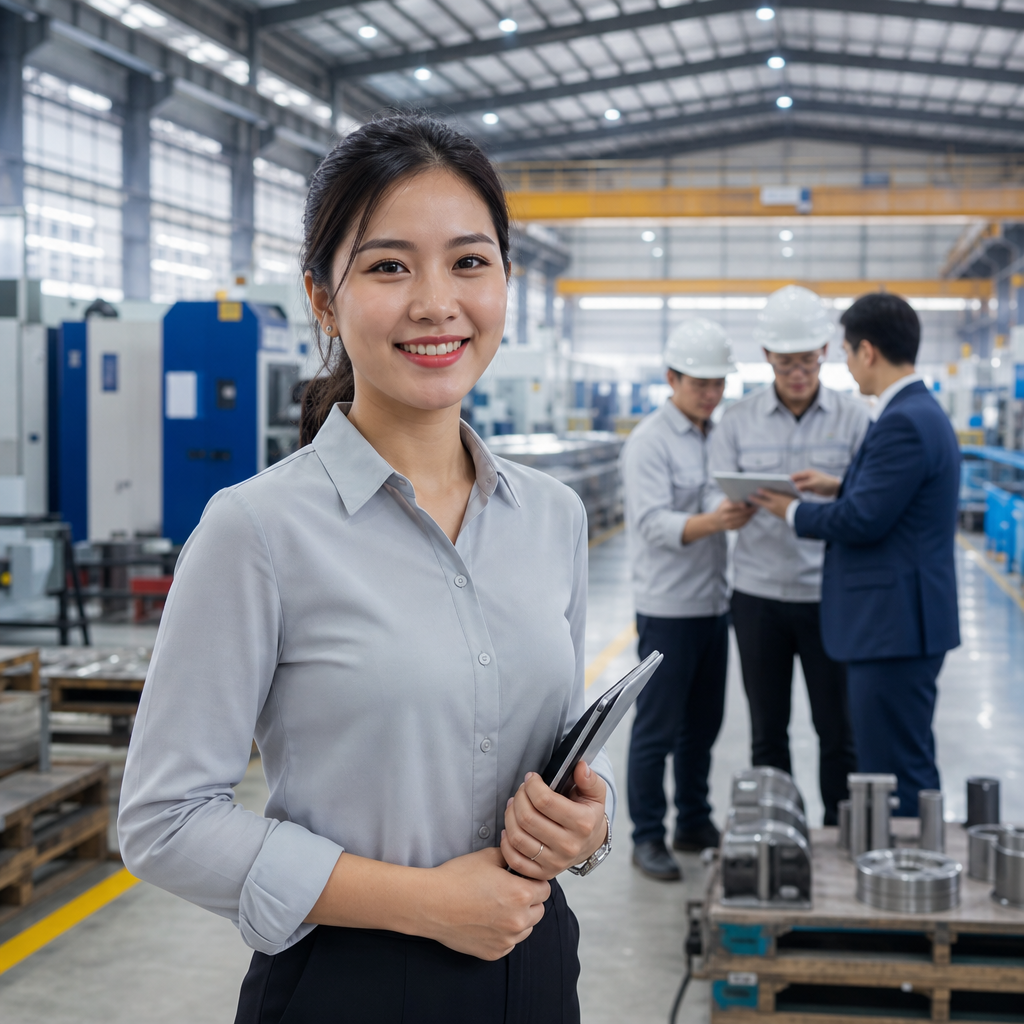
From Lab Coat to Interpreter's Booth: Linh's Unconventional Path
Linh Tran spent five years as a quality assurance chemist at a mid-sized pharmaceutical factory in Da Nang. She understood reaction kinetics, safety protocols, and equipment specifications intimately. Then, in 2018, a visiting procurement team from a German chemical company arrived—and the factory's usual interpreter failed to translate critical safety documentation accurately.
That moment changed everything. Linh stepped in, translating not just words but intent, converting technical diagrams and regulatory compliance issues into language both sides truly understood. Within months, foreign buyers began requesting her specifically for their negotiations.
The Da Nang Manufacturing Boom and the Interpreter Gap
Da Nang has emerged as Vietnam's fastest-growing manufacturing hub outside Ho Chi Minh City and Hanoi. According to Vietnam Investment Review, the city attracted $4.2 billion in foreign direct investment in 2023, with chemical, electronics, and machinery manufacturing leading the sectors. Yet many factories still rely on general-purpose interpreters with no technical background.
Why Language Alone Isn't Enough
A General Statistics Office survey noted that 62% of foreign manufacturing partners cite "communication gaps" as their top barrier to efficient partnership with Vietnamese suppliers. Generic interpreters can translate words, but they cannot catch technical contradictions, flag safety oversights, or negotiate equipment specifications with confidence.
Question 1: Why does a specialized technical interpreter cost more than a generic language specialist?
A specialized technical interpreter like Linh commands 40-60% higher fees because they reduce costly errors, prevent deal breakdowns, and protect both parties from compliance violations that generic interpreters would miss entirely.
The Economics of Expertise
Hiring a specialized technical interpreter Vietnam professional requires investment, but the ROI is measurable. A single mistranslation in equipment specifications or safety protocols can halt production, trigger regulatory fines, or damage long-term partnerships. Linh's background means she catches these issues before they become expensive mistakes.
- Error Prevention: Technical interpreters identify contradictions between translated documents and actual factory capabilities before contracts are signed.
- Negotiation Efficiency: Linh can engage in substantive discussions about process improvements, not just surface-level communication.
- Compliance Assurance: She ensures Vietnamese factories meet international environmental, safety, and quality standards during the procurement conversation itself.
Real-World Cost Savings
In 2021, a German electronics buyer working with Linh discovered that a Da Nang supplier's claimed "ISO 9001 certification" was outdated by two years. A generic interpreter would have let the claim slide. Linh's engineering knowledge caught the discrepancy, saving the buyer from investing in an unvetted partner. This single correction prevented an estimated $200,000 in future quality-related costs.
Question 2: How do chemical engineering credentials improve manufacturing translation accuracy?
Chemical engineering training provides Linh with domain-specific vocabulary, process understanding, and regulatory knowledge that allows her to translate not just words but concepts—ensuring both buyers and factories share the same technical reality.
Vocabulary That Matters
Chemical and manufacturing terminology is highly specialized. Terms like "catalytic conversion," "batch consistency," "thermal stability," and "feedstock purity" have no direct single-word translation. A specialized technical interpreter understands the science behind these terms and can explain them in culturally and linguistically appropriate ways. Linh's degree in chemistry allows her to do this instinctively.
- Precision in Specs: She translates equipment tolerances and material specifications accurately, preventing factories from building the wrong product.
- Regulatory Alignment: Chemical manufacturing involves EU, US, and Vietnamese safety standards; Linh knows all three frameworks.
- Process Logic: Understanding why certain steps are taken prevents dangerous shortcuts or cost-cutting measures that compromise quality.
Beyond Words: Understanding Intent
When a foreign buyer asks a Da Nang factory manager, "Can you scale production to 500 tons per month?" a generic interpreter translates the sentence. Linh translates the question behind the question: the buyer is asking about equipment capacity, supply chain readiness, and quality control at scale. She frames the Vietnamese factory manager's response in terms the buyer actually cares about.
Question 3: What safety risks arise when factories use non-technical interpreters?
Non-technical interpreters cannot identify safety protocol violations, hazard communication failures, or equipment mismatches—leaving foreign buyers exposed to regulatory liability and Vietnamese factories at risk of industrial accidents.
Hidden Safety Gaps
Vietnam's manufacturing sector has made strides in occupational health and safety, yet gaps remain. According to VnExpress Business (2022), chemical and electronics factories still record preventable accidents due to miscommunication between foreign advisors and local supervisors. A specialized technical interpreter Vietnam professional like Linh listens for these gaps during site tours and contract negotiations.
- Chemical Handling: When discussing raw material storage, Linh can verify that a factory's ventilation system actually matches international standards—not just in name.
- Equipment Calibration: She understands why calibration intervals matter and can confirm factories aren't cutting corners to reduce downtime.
- Hazard Communication: She ensures that Material Safety Data Sheets (MSDS) are properly translated and understood by factory workers, not merely filed away.
Liability and Compliance
Foreign procurement teams face legal liability if they knowingly or negligently overlook safety gaps at supplier factories. Linh's presence during facility assessments creates a documented chain of accountability. Her engineering credentials give foreign buyers confidence that they've conducted due diligence—protecting them from future lawsuits or regulatory action if accidents occur.
Question 4: How are industry-specific interpreters trained differently in Vietnam?
Industry-specific interpreters undergo dual training: formal language and interpretation education, plus technical certification or degree in their domain—a pathway still rare in Vietnam but increasingly demanded by multinational procurement teams.
Linh's Training Journey
Linh earned her chemical engineering degree from Danang University of Science and Technology, then completed a professional interpreter certification through the Vietnam Interpreter Association. This dual credentialing is uncommon; most Vietnamese interpreters choose one path or the other. Linh's investment in both created a competitive advantage that foreign manufacturers now value.
- University Programs: Vietnamese universities offer few dual-track programs combining technical subjects and professional interpretation; Linh built her pathway through sequential study.
- Certification Bodies: The Vietnam Interpreter Association and industry-specific trade groups are beginning to offer technical interpreter certifications, but supply lags demand.
- On-the-Job Learning: Many specialized technical interpreters in Vietnam, like Linh, developed expertise by working directly with foreign companies and absorbing domain knowledge over years.
A Growing Market Need
Vietnam's export-oriented manufacturing sector has exploded—but the pool of specialized technical interpreters has not kept pace. As Reuters reported in 2023, multinational supply chain managers cite interpreter quality as a bottleneck when vetting Vietnamese suppliers. Universities and private training organizations are beginning to respond, but certification standards remain fragmented.
Question 5: What does the future hold for specialized technical interpreters in Vietnam's export sector?
Demand for specialized technical interpreters Vietnam across manufacturing, electronics, and chemicals will accelerate as foreign companies deepen supply chain presence in Vietnam—likely creating a shortage of credentialed professionals through the 2030s.
Structural Demand Drivers
Vietnam's share of global electronics and chemical manufacturing continues to grow. Bloomberg reported in 2024 that US and European manufacturers are actively reshoring or nearshoring production away from China—and Vietnam is a top destination. This shift will multiply the number of foreign procurement teams, facility auditors, and technical consultants entering Vietnamese factories annually.
- Supply Chain Diversification: Multinational companies building redundancy away from single-country dependence will require frequent site visits and detailed technical negotiations.
- Regulatory Pressure: Foreign ESG (environmental, social, governance) mandates increasingly require on-site verification of supplier compliance—work that demands technical interpreters.
- Quality Benchmarking: As Vietnamese factories move upmarket into higher-value products, foreign partners will demand more rigorous technical due diligence.
Career Opportunity and Professional Evolution
Linh's success has inspired younger Vietnamese engineers to explore interpretation careers. Several Da Nang university graduates now pair technical degrees with interpreter training. Professional networks like ezgogo.app are beginning to bridge the supply side—connecting engineers with language skills to foreign companies seeking vetted, credentialed technical interpreters. The specialized technical interpreter market in Vietnam is nascent but poised for rapid growth.
Conclusion
Linh Tran's journey from chemical engineer to specialized technical interpreter Vietnam professional illustrates a critical gap in Vietnam's export economy. Generic language skills no longer suffice for complex manufacturing partnerships. As Vietnam's chemical, electronics, and machinery sectors attract more multinational investment, specialized technical interpreters who combine domain expertise with fluency will become indispensable.
If your company is planning procurement trips or supply chain assessments in Vietnam's manufacturing hubs, consider hiring an interpreter with real technical credentials—not just fluency. Specialized expertise prevents costly mistakes, accelerates negotiations, and builds trust with factory partners. Explore vetted interpreter-companions at ezgogo.app to connect with professionals like Linh who understand both your technical requirements and Vietnamese business culture.
Sources
- Vietnam Investment Review — Da Nang FDI and Manufacturing Growth 2023
- General Statistics Office of Vietnam — Supply Chain Communication Survey
- VnExpress Business — Occupational Safety in Chemical Manufacturing (2022)
- Reuters — US/EU Supply Chain Diversification from China to Vietnam (2023-2024)
- Bloomberg — Nearshoring Trends and Vietnam Electronics Manufacturing (2024)
- Danang University of Science and Technology — Engineering and Technical Education Programs
Frequently Asked Questions
Question 1: Why does a specialized technical interpreter cost more than a generic language specialist?
A specialized technical interpreter like Linh commands 40-60% higher fees because they reduce costly errors, prevent deal breakdowns, and protect both parties from compliance violations that generic interpreters would miss entirely.
Question 2: How do chemical engineering credentials improve manufacturing translation accuracy?
Chemical engineering training provides Linh with domain-specific vocabulary, process understanding, and regulatory knowledge that allows her to translate not just words but concepts—ensuring both buyers and factories share the same technical reality.
Question 3: What safety risks arise when factories use non-technical interpreters?
Non-technical interpreters cannot identify safety protocol violations, hazard communication failures, or equipment mismatches—leaving foreign buyers exposed to regulatory liability and Vietnamese factories at risk of industrial accidents.
Question 4: How are industry-specific interpreters trained differently in Vietnam?
Industry-specific interpreters undergo dual training: formal language and interpretation education, plus technical certification or degree in their domain—a pathway still rare in Vietnam but increasingly demanded by multinational procurement teams.
Question 5: What does the future hold for specialized technical interpreters in Vietnam's export sector?
Demand for specialized technical interpreters Vietnam across manufacturing, electronics, and chemicals will accelerate as foreign companies deepen supply chain presence in Vietnam—likely creating a shortage of credentialed professionals through the 2030s.
Need a local companion or interpreter in Vietnam?
Browse verified companions for language support, factory visits, and authentic local experiences.
Find a Companion →