 EZGOGO
Supply Chain Interpretation Vietnam Logistics: Avoiding Costly Miscommunication
Silent miscommunication in Vietnam's supply chain can devastate margins and relationships. A major logistics firm discovered that informal translation during supplier audits masked critical quality issues, leading to $2.3M in contract disputes. This field journal reveals how supply chain interpretation failures occur—and how professional interpreter-companions protect both operations and bottom lines in Vietnam's complex manufacturing and logistics ecosystem.
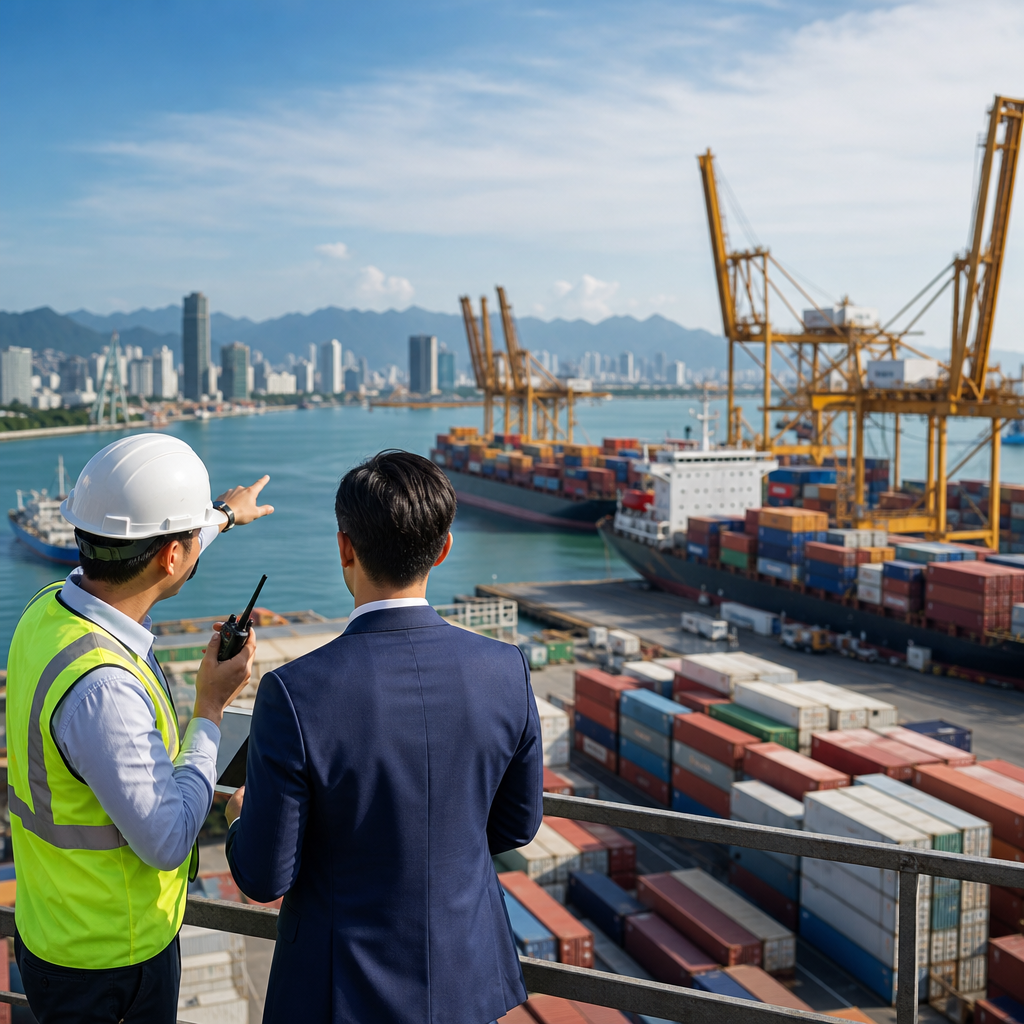
The Hidden Cost of Silent Miscommunication in Vietnam Supply Chains
Vietnam's manufacturing and logistics sector has become indispensable to global supply chains. According to the General Statistics Office of Vietnam, the country's export-oriented production contributes over $300 billion annually to global trade, making vendor relationships and supplier communication absolutely critical. Yet silent miscommunication lurks in the spaces between languages—and it costs foreign businesses millions.
A European logistics company discovered this painful truth when informal translation during supplier audits allowed critical quality failures to slip through undetected. What seemed like a routine operational expense—casual interpretation by bilingual staff—became a catastrophic blind spot. The resulting contract disputes and rework costs totaled $2.3 million.
Why Supply Chain Interpretation Vietnam Logistics Matters
Supply chains operate at the intersection of precision and relationship. In Vietnam's manufacturing heartland—Ho Chi Minh City, Hanoi, and the industrial zones of Dong Nai and Ba Ria-Vung Tau—communication shapes everything from quality standards to delivery timelines. When interpretation fails, so does operational visibility.
The Real-World Stakes of Miscommunication
This article traces one firm's journey through the consequences of vendor communication failures. By examining how professional interpretation protects operations, we reveal why supply chain interpretation in Vietnam logistics isn't a nice-to-have—it's a non-negotiable investment in supply chain resilience.
Question 1: What exactly went wrong in the supplier audit that triggered $2.3M in losses?
The company's bilingual operations manager missed a critical Japanese quality specification during a factory floor conversation because informal translation glossed over technical terminology—turning what should have been a "reject" signal into passive acceptance. The supplier interpreted silence as approval, proceeding with defective production runs.
The Audit Meeting That Changed Everything
The firm's procurement team arrived at a major electronics components supplier in Binh Duong Province to audit capacity for a new contract. Their operations manager, fluent in conversational Vietnamese but untrained in manufacturing logistics terminology, conducted the facility walkthrough with the factory director and quality lead. What seemed to be routine discussions about production timelines and material sourcing masked a fundamental misalignment on quality tolerances.
- The technical gap: The Japanese client's specifications required parts with a tolerance of ±0.05mm; the supplier's equipment delivered ±0.2mm consistently, but this variance wasn't explicitly discussed.
- The language barrier: When the operations manager asked about "quality standards," the Vietnamese supplier confirmed they met "international standards"—a phrase too vague to catch the mismatch.
- The false consensus: The informal conversation created a false impression of alignment, with both parties believing they had agreed on specifications.
The Manufacturing Miscommunication Unfolds
Three months later, the first shipment arrived. The Japanese client rejected 40% of the parts. The supplier felt blindsided, claiming they had never been informed of the tight tolerance requirement. The firm faced rework costs, replacement shipments, and—most damaging—a stalled production line at the Japanese facility. Contract disputes followed, with the supplier demanding additional payment for expedited corrections and the client threatening to cancel the order entirely.
Question 2: How do informal translations mask quality issues in Vietnam manufacturing?
Informal translators—usually bilingual staff without technical training—default to general vocabulary that obscures precision requirements; Vietnamese suppliers may interpret vague quality language as flexibility rather than specification, creating unspoken assumptions that derail production.
The Language Precision Problem
Manufacturing interpretation demands technical fluency that conversational bilingualism cannot provide. Terms like "tolerance," "specification," "deviation," and "non-conformance" have exact meanings in production environments. When an untrained translator says the English word "tolerance," they might use the Vietnamese term "độ chịu đựng" (literally "endurance capacity"), which to a factory manager sounds permissive—room to wiggle—rather than precise technical requirement. This semantic gap becomes a manufacturing disaster.
- Vocabulary ambiguity: Words like "quality" mean different things to procurement teams versus factory managers, and informal interpreters don't clarify context.
- Specification documentation loss: Bilingual staff rarely consult technical drawings or written specifications during conversations; they rely on memory and paraphrase.
- Assumption accumulation: Each informal conversation adds interpretive layers; by the time a supplier begins production, they're operating on assumptions, not facts.
Supply Chain Interpretation Failure in Real-Time
Vietnam's manufacturing sector processes roughly 200 million units annually in electronics, textiles, and automotive components, according to Vietnam Investment Review's 2023 manufacturing report. Across this vast ecosystem, informal translation failures happen daily—mostly undetected until goods reach quality inspection or the customer's assembly line. Supply chain interpretation in Vietnam logistics must bridge not just language, but technical culture and regulatory expectation.
Question 3: Why do supply chain interpretation failures escalate into contract disputes?
Misalignment over specifications, delivery terms, or quality standards—unresolved through informal communication—hardens into contradictory positions when one party discovers the other's actual expectation, making reconciliation legally and operationally difficult.
From Miscommunication to Legal Conflict
In Vietnam's business environment, contracts are signed after verbal negotiations. When those conversations are conducted informally or in translation too loose to capture commitment details, the written contract becomes a source of confusion rather than clarity. One party reads the contract and realizes the other party's understanding differs fundamentally from their own. Trust breaks down instantly. The supplier may feel accused of deception; the buyer feels betrayed by false assurance.
- Misaligned liability: Informal discussions about "who covers rework costs" end up as contradictory contract clauses, making dispute resolution expensive.
- Cultural negotiation styles: Vietnamese suppliers often avoid explicit "no" during meetings, preferring indirect language that foreign negotiators misinterpret as agreement.
- Documentation gaps: When conversations aren't formally documented with qualified interpretation, each party's written account differs; proving what was actually agreed becomes impossible.
The Escalation Pattern in Vietnam Logistics Disputes
According to Vietnam Investment Review, foreign companies report that 34% of supply chain conflicts originate in miscommunication during the initial vendor assessment or contract negotiation phase. Once both parties have signed and discovered misalignment, the dispute becomes adversarial. The supplier loses face and becomes defensive; the buyer escalates to legal review. What should have been a 30-minute clarification call with a professional interpreter becomes months of arbitration and tens of thousands in legal fees. Vendor communication failures transform easily preventable miscommunication into costly litigation.
Question 4: What role does cultural context play in logistics negotiations with Vietnamese suppliers?
Vietnamese business culture values indirect communication, relationship-building, and avoiding confrontation; informal interpreters miss these cultural cues, causing foreign negotiators to misread agreement, confidence, or concern in supplier responses.
Silent Agreement vs. Implied Reservation
In Vietnamese business practice, a supplier may silently accept a term they believe is unreasonable, planning to renegotiate later or hoping circumstances will change—a approach that shocks foreign partners when problems emerge. A factory manager might nod and confirm an aggressive delivery timeline during an informal meeting, then begin production at a sustainable pace, revealing the gap only when the first shipment misses the deadline. An untrained interpreter conveys the "yes" but misses the accompanying nonverbal hesitation or the context of relationship-building that frames the commitment.
- Face-saving communication: Direct disagreement is avoided; suppliers may agree verbally while signaling concerns through body language or indirect comments that informal interpreters miss entirely.
- Relationship-first negotiation: Vietnamese business prioritizes long-term partnership over transactional exactness; Western negotiators focused on specifications may miss that suppliers are signaling a need for closer collaboration or relationship investment.
- Implicit commitment hierarchy: What seems like a firm agreement might be conditional on unstated assumptions (stable material costs, no regulatory changes, stable currency) that get lost in informal translation.
Professional Interpretation as Cultural Bridge
Professional interpreters trained in supply chain negotiations understand that their role extends beyond word-for-word translation. They recognize when a supplier's response carries cultural meaning beyond vocabulary. They spot when a "yes" is conditional, when a delay signals systemic concern rather than simple scheduling conflict, and when a request for price adjustment reflects genuine hardship versus negotiation posturing. Supply chain interpretation in Vietnam logistics requires cultural fluency that informal translation cannot provide.
Question 5: How can foreign firms prevent interpretation failures before they damage relationships?
Firms must invest in professional interpreter-companions for all supplier audits, contract negotiations, and critical operational meetings; documentation of interpreted conversations, technical specification review, and cultural briefing protect both relationships and operational clarity.
Building Interpretation Into Supply Chain Process
Prevention starts with treating interpreter access as a supply chain control measure, not an optional convenience. When firms conduct supplier audits, quality assessments, or contract renegotiations, professional interpretation should be mandatory. This means budgeting for qualified interpreters who understand manufacturing terminology, logistics operations, and the business context of the negotiation. The cost—typically $150–300 per day for professional interpreters in Vietnam—is negligible compared to the cost of the miscommunication it prevents. ezgogo.app connects foreign businesses with professional interpreter-companions who specialize in manufacturing and logistics environments, ensuring that critical conversations translate not just words, but intent and technical accuracy.
- Pre-meeting briefing: Interpreters review technical specifications, contract terms, and negotiation objectives before meetings, ensuring they understand the business context.
- Real-time documentation: Interpreted conversations are recorded and summarized, creating a record of what was actually agreed rather than relying on memory or informal notes.
- Post-meeting clarification: After meetings, interpreters prepare written summaries of commitments, highlighting any areas where supplier understanding differed from buyer expectation—catching misalignment before production begins.
Specification Review and Technical Alignment
Many firms skip the step of formally reviewing technical specifications with suppliers through professional interpretation. Instead, they hand over drawings or specification sheets and assume the supplier understands them. Professional interpreters work with procurement teams to walk suppliers through specifications in detail, verifying understanding at every step. Quality standards, tolerance ranges, material sourcing, testing procedures—all are explicitly discussed, clarified, and documented. This single step eliminates the majority of manufacturing miscommunication scenarios that plague supply chains in Vietnam.
Conclusion
Silent miscommunication in Vietnam supply chains is not inevitable. The $2.3 million loss experienced by the European logistics firm was preventable—the cost of professional supply chain interpretation would have been less than 1% of the eventual damage. By treating interpretation as a supply chain control measure rather than a cost-saving afterthought, foreign firms protect vendor relationships, ensure specification alignment, and prevent the contract disputes that make supply chains fragile. Supply chain interpretation in Vietnam logistics is not a translation service; it is an operational safeguard.
Vietnam's manufacturing ecosystem is sophisticated, efficient, and increasingly strategic to global supply chains. But that sophistication depends on clear communication between foreign buyers and local suppliers. If you're navigating vendor relationships, auditing suppliers, or renegotiating contracts in Vietnam, professional interpretation isn't optional—it's essential. Explore how interpreter-companions can strengthen your supply chain operations and eliminate the costly miscommunication that silently damages margins and relationships.
Sources
- General Statistics Office of Vietnam — Manufacturing Export Data
- Vietnam Investment Review — Supply Chain Miscommunication and Vendor Dispute Analysis
- VnExpress Business — Vietnam Manufacturing Sector Performance 2023
- Reuters Asia-Pacific — Vietnam Supply Chain and Manufacturing Coverage
- FIDI Global Alliance — International Logistics and Supply Chain Standards
Frequently Asked Questions
Question 1: What exactly went wrong in the supplier audit that triggered $2.3M in losses?
The company's bilingual operations manager missed a critical Japanese quality specification during a factory floor conversation because informal translation glossed over technical terminology—turning what should have been a "reject" signal into passive acceptance. The supplier interpreted silence as approval, proceeding with defective production runs.
Question 2: How do informal translations mask quality issues in Vietnam manufacturing?
Informal translators—usually bilingual staff without technical training—default to general vocabulary that obscures precision requirements; Vietnamese suppliers may interpret vague quality language as flexibility rather than specification, creating unspoken assumptions that derail production.
Question 3: Why do supply chain interpretation failures escalate into contract disputes?
Misalignment over specifications, delivery terms, or quality standards—unresolved through informal communication—hardens into contradictory positions when one party discovers the other's actual expectation, making reconciliation legally and operationally difficult.
Question 4: What role does cultural context play in logistics negotiations with Vietnamese suppliers?
Vietnamese business culture values indirect communication, relationship-building, and avoiding confrontation; informal interpreters miss these cultural cues, causing foreign negotiators to misread agreement, confidence, or concern in supplier responses.
Question 5: How can foreign firms prevent interpretation failures before they damage relationships?
Firms must invest in professional interpreter-companions for all supplier audits, contract negotiations, and critical operational meetings; documentation of interpreted conversations, technical specification review, and cultural briefing protect both relationships and operational clarity.
Need a local companion or interpreter in Vietnam?
Browse verified companions for language support, factory visits, and authentic local experiences.
Find a Companion →