 EZGOGO
Vietnam Business Etiquette Meeting Protocol: Expat's Guide
Vietnam's business culture operates on unwritten rules that can make or break international deals. From respecting hierarchies to navigating gift-giving customs, Vietnam business etiquette meeting protocol requires careful attention to detail. This guide reveals the cultural nuances that shape successful boardroom interactions and explains how professional interpreter-companions anticipate and manage these expectations for foreign executives.
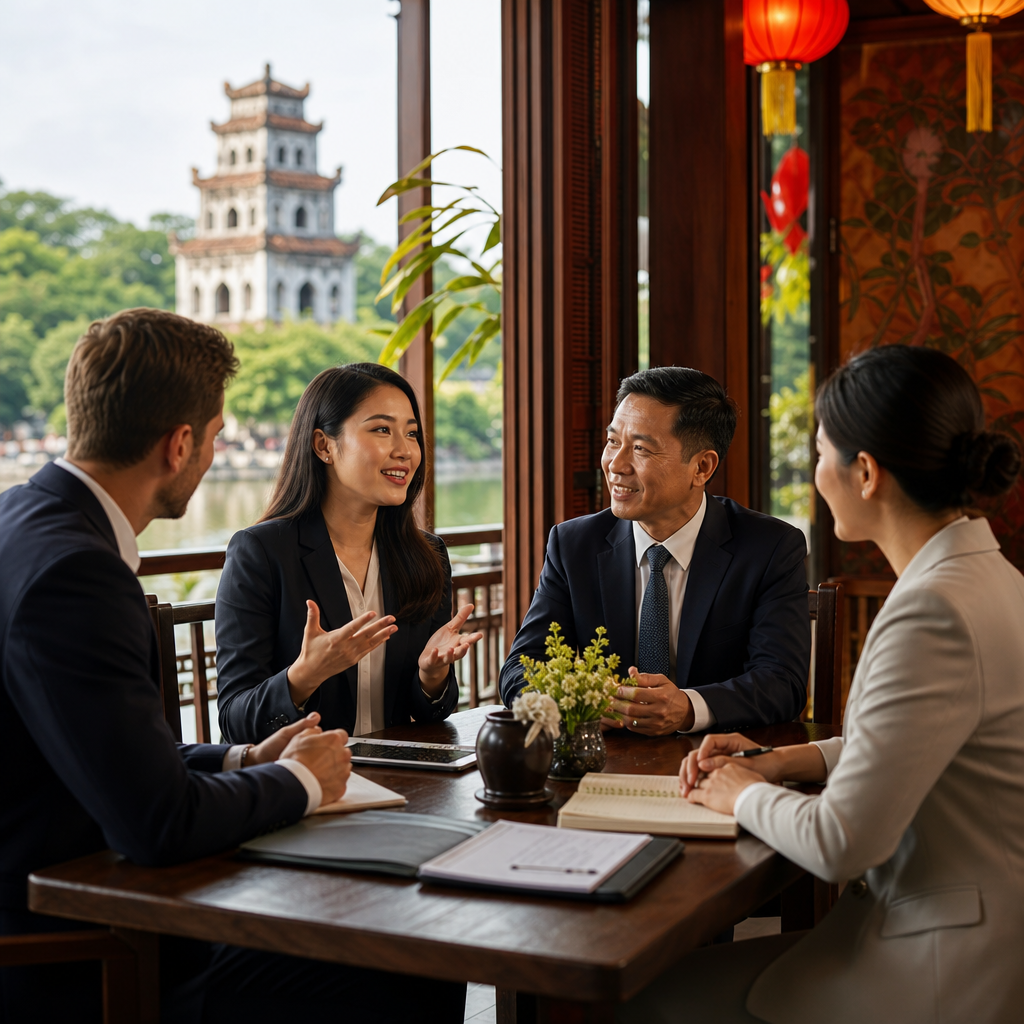
Understanding Vietnamese Boardroom Hierarchy
Vietnamese business culture is fundamentally shaped by Confucian principles that emphasize respect for authority, age, and position. According to research published by the Vietnam Investment Review, organizational hierarchy directly influences decision-making processes, communication patterns, and the flow of authority in corporate settings. Understanding these structural dynamics is essential for any foreign executive seeking to establish credibility and build lasting partnerships.
The concept of "mối quan hệ" (relationships) forms the backbone of Vietnamese commerce. Business success depends not just on contracts but on cultivating trust through proper protocol and demonstrating respect for established social order. Violating these unwritten rules—even unintentionally—can derail negotiations before substantive discussions begin.
The Role of Seniority and Position in Vietnamese Corporations
In Vietnamese companies, age and tenure carry significant weight in decision-making authority. The most senior person in the room typically leads discussions, and their opinion heavily influences outcomes. Junior staff members rarely speak unless directly addressed, creating a communication structure vastly different from Western boardroom norms where flat hierarchies encourage open debate.
Relationship Building as a Business Foundation
Vietnamese professionals invest considerable time in developing personal relationships before conducting business. This isn't superficial networking—it reflects a cultural belief that trust must precede transactions. Initial meetings often involve extensive conversation about family, background, and shared connections rather than jumping directly into commercial terms.
Question 1: How does hierarchical respect shape Vietnam business etiquette meeting protocol?
Hierarchical respect fundamentally structures all interactions in Vietnamese boardrooms. The most senior person should be greeted first, seated prominently, and addressed with appropriate titles—neglecting this protocol signals disrespect and undermines negotiations before discussions begin.
Addressing Senior Vietnamese Executives Correctly
The Vietnamese language contains multiple address forms that reflect relationship and hierarchy. Business titles like "Giám đốc" (Director) or "Phó Tổng Giám đốc" (Deputy General Director) are not optional formalities but essential markers of respect. Western executives accustomed to first-name informality must consciously adjust their approach to maintain professional standing.
- Title usage: Always use formal titles and family name until invited to do otherwise, even in subsequent meetings.
- Seating arrangements: The most senior Vietnamese executive should be seated across from the highest-ranking member of your delegation.
- Speaking order: Allow senior Vietnamese counterparts to speak first and avoid interrupting or contradicting them directly in front of colleagues.
Recognizing Decision-Making Authority in Meetings
Power dynamics in Vietnamese business differ significantly from Western models. A department head may attend a meeting but lack authority to make commitments; true decision-makers often remain in the background. Identifying who actually holds approval power requires careful observation and, often, discreet guidance from your interpreter about organizational structure.
Question 2: What are the essential greeting customs in Vietnamese business culture?
Vietnamese business greetings combine a slight bow with a two-handed handshake, and the right hand should never be placed in your pocket. Business cards must be presented and received with both hands, examined respectfully, and never written on—these gestures form the foundation of Vietnam business etiquette meeting protocol.
The Proper Business Card Exchange Ritual
Business cards hold ceremonial importance in Vietnamese culture that Western executives often underestimate. Presenting your card with both hands, card facing toward the recipient, demonstrates respect and proper upbringing. Receiving a card with one hand, failing to examine it carefully, or immediately placing it in your back pocket communicates disrespect and carelessness about the relationship.
- Two-handed presentation: Always offer and receive cards with both hands, never your left hand alone.
- Careful examination: Study the card for several seconds, comment on the person's title or company, then place it on the table in front of you during the meeting.
- Never deface cards: Writing on someone's business card in front of them is considered offensive and suggests their information is unimportant.
Eye Contact, Physical Proximity, and Body Language Norms
Western business culture encourages direct eye contact as a sign of honesty and confidence, but Vietnamese norms are more subtle. Excessive direct eye contact with someone significantly senior can appear aggressive or disrespectful. Similarly, physical distance should be slightly greater than in many Western boardrooms, as personal space boundaries differ across cultures.
Question 3: How should foreign executives navigate gift-giving in Vietnam business meetings?
Gift-giving in Vietnam business etiquette meeting protocol follows strict rules: avoid clocks (symbolizing death), knives (suggesting relationship severance), and white flowers. Present gifts with both hands, wrapped in red or gold paper, and never expect immediate opening—these customs demonstrate cultural awareness and respect for Vietnamese traditions.
Appropriate Gift Selection and Presentation
Gifts should reflect the relationship stage and hierarchy level. For initial meetings, modest gifts like premium office supplies, company-branded items, or high-quality spirits from your home country are appropriate. Expensive gifts in early negotiations can create discomfort or appear as attempted bribery, while insufficient thought signals carelessness. Gifts presented to a group should be distributed by seniority rank.
- Forbidden items: Avoid clocks, knives, handkerchiefs, umbrellas, or shoes—these carry negative cultural associations.
- Color symbolism: Choose red or gold wrapping paper; white and black carry funeral associations in Vietnamese culture.
- Presentation timing: Give gifts at the end of the meeting, not the beginning, to avoid appearing transactional or focused on gift rather than relationship.
Understanding the Refusal Ritual in Gift-Giving
Vietnamese professionals may initially decline a gift as a courtesy gesture, demonstrating proper humility and reluctance to accept favors. This refusal is typically ceremonial—persistence in offering, accompanied by gracious insistence, is expected and appreciated. Accepting a declined gift on the first refusal would be culturally inappropriate.
Question 4: What communication styles define effective Vietnamese business interactions?
Successful Vietnamese business communication prioritizes indirect expression, consensus-building, and avoiding confrontation. Direct criticism, blunt disagreement, or pressing for immediate decisions violates cultural norms; skilled interpreters navigate these communication preferences to reach agreements while preserving relationships and face.
Indirectness and Face-Saving Communication Patterns
Western business culture often values directness and explicit statement of positions. Vietnamese business communication prioritizes harmony and relies heavily on implied meaning, subtle suggestions, and reading between the lines. A Vietnamese partner saying "we will study this proposal" typically means they have concerns but are avoiding direct rejection to preserve the relationship. Interpreters from ezgogo.app understand these nuanced expressions and can translate both literal words and underlying intent.
- Implicit agreement patterns: "We will consider this" may indicate reluctance rather than genuine interest; direct questions help clarify actual positions.
- Avoiding "no": Vietnamese professionals rarely state outright refusal; instead they suggest obstacles, complications, or need for further discussion.
- Harmony maintenance: Aggressive negotiation tactics or public contradiction of a partner's statement creates shame and damages relationships permanently.
Building Consensus and Managing Group Decision-Making
Vietnamese organizations make decisions through consensus rather than individual authority. While a senior executive may hold formal approval power, they typically consult extensively with colleagues before committing. Pushing for rapid individual decisions frustrates this process. Patient, relationship-focused negotiation that allows time for internal Vietnamese discussion produces better outcomes than pressure tactics.
Question 5: How do interpreters prevent cultural missteps during formal negotiations?
Professional interpreters do far more than translate words—they serve as cultural guides who anticipate misunderstandings, explain unspoken expectations, and coach executives on appropriate responses. They understand Vietnamese business culture deeply enough to flag potential offense and suggest phrasing that achieves your objectives while respecting local norms and Vietnam business etiquette meeting protocol standards.
Pre-Meeting Briefings and Cultural Risk Assessment
Expert interpreters conduct pre-meeting preparation sessions reviewing your company's objectives, anticipated negotiation points, and cultural context about your Vietnamese counterparts. This preparation identifies potential friction points, appropriate gift selections, key decision-makers' backgrounds, and communication strategies most likely to succeed. According to business research highlighted in recent Vietnam Investment Review analyses, pre-negotiation cultural briefings significantly improve deal success rates and relationship durability.
- Background research: Learning about individual executives' roles, tenure, and known preferences allows personalized, respectful engagement.
- Communication strategy alignment: Interpreters advise on pacing, formality level, and appropriate topics for building rapport before commercial discussion.
- Red flag identification: Experienced interpreters recognize Vietnamese responses that signal concern despite polite surface agreement.
Real-Time Cultural Mediation During Negotiations
During meetings, skilled interpreters monitor not just words but tone, body language, and unspoken reactions. They recognize when a Vietnamese executive feels pressured, when an offer has created offense, or when translation alone misses cultural implications. Professional interpreter-companions intervene tactfully to clarify misunderstandings, suggest diplomatic reframing, and ensure negotiations progress without unnecessary tension or relationship damage.
Conclusion
Mastering Vietnam business etiquette meeting protocol requires understanding hierarchical structures, respecting indirect communication preferences, and recognizing the profound importance of relationship-building in Vietnamese corporate culture. These unwritten rules determine whether international negotiations succeed or falter, making cultural competence as important as product quality or pricing terms in closing deals.
Foreign executives navigating Vietnamese boardrooms benefit enormously from professional interpreter-companions who understand both language and culture at sophisticated levels. When you're ready to engage Vietnamese partners with full cultural confidence, consider connecting with experienced professionals through ezgogo.app who specialize in facilitating successful cross-cultural business interactions throughout Vietnam.
Sources
- Vietnam Investment Review — Vietnamese Business Culture and Corporate Hierarchy
- VnExpress Business — Cultural Norms in Vietnamese Corporations
- Reuters — Vietnam Business and Trade Analysis
- General Statistics Office of Vietnam — Economic and Social Data
- Bloomberg — Vietnam Market and Business Environment
Frequently Asked Questions
Question 1: How does hierarchical respect shape Vietnam business etiquette meeting protocol?
Hierarchical respect fundamentally structures all interactions in Vietnamese boardrooms. The most senior person should be greeted first, seated prominently, and addressed with appropriate titles—neglecting this protocol signals disrespect and undermines negotiations before discussions begin.
Question 2: What are the essential greeting customs in Vietnamese business culture?
Vietnamese business greetings combine a slight bow with a two-handed handshake, and the right hand should never be placed in your pocket. Business cards must be presented and received with both hands, examined respectfully, and never written on—these gestures form the foundation of Vietnam business etiquette meeting protocol.
Question 3: How should foreign executives navigate gift-giving in Vietnam business meetings?
Gift-giving in Vietnam business etiquette meeting protocol follows strict rules: avoid clocks (symbolizing death), knives (suggesting relationship severance), and white flowers. Present gifts with both hands, wrapped in red or gold paper, and never expect immediate opening—these customs demonstrate cultural awareness and respect for Vietnamese traditions.
Question 4: What communication styles define effective Vietnamese business interactions?
Successful Vietnamese business communication prioritizes indirect expression, consensus-building, and avoiding confrontation. Direct criticism, blunt disagreement, or pressing for immediate decisions violates cultural norms; skilled interpreters navigate these communication preferences to reach agreements while preserving relationships and face.
Question 5: How do interpreters prevent cultural missteps during formal negotiations?
Professional interpreters do far more than translate words—they serve as cultural guides who anticipate misunderstandings, explain unspoken expectations, and coach executives on appropriate responses. They understand Vietnamese business culture deeply enough to flag potential offense and suggest phrasing that achieves your objectives while respecting local norms and Vietnam business etiquette meeting protocol standards.
Need a local companion or interpreter in Vietnam?
Browse verified companions for language support, factory visits, and authentic local experiences.
Find a Companion →