 EZGOGO
Vietnam Business Travel Support for Smoother Meetings
Vietnam’s manufacturing growth, expanding trade links, and strong tourism recovery are bringing more international professionals to Hanoi, Ho Chi Minh City, and Da Nang. Yet a productive visit requires more than a packed calendar: travelers must manage language, transport, local etiquette, and last-minute changes across unfamiliar cities. This guide explains how Vietnam business travel support can turn those challenges into a coordinated plan. Readers will learn what assistance matters most, how to prepare for meetings and factory visits, and why one local partner can make each business trip more efficient.
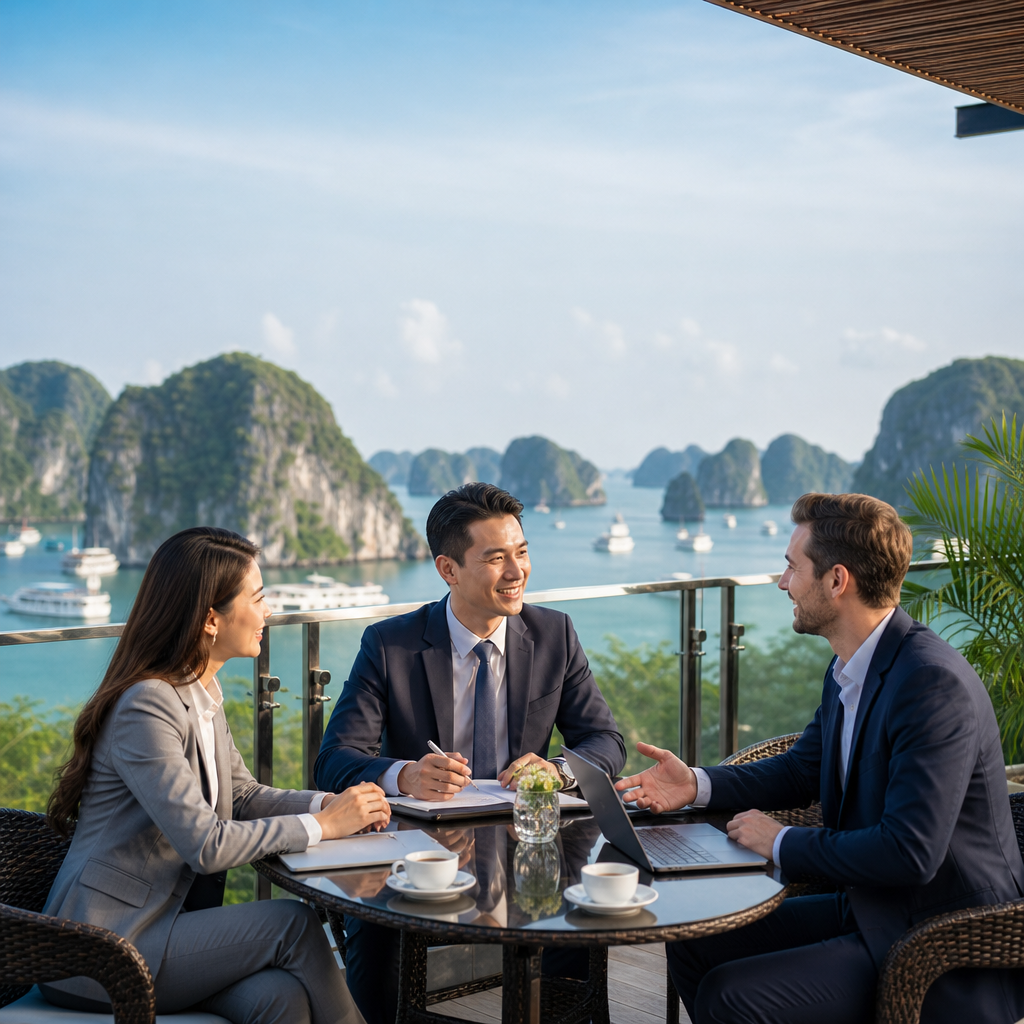
Vietnam’s Business Travel Moment
Vietnam is strengthening its position as a Southeast Asian destination for manufacturing, sourcing, technology, and tourism-related investment. The General Statistics Office reported GDP growth of 7.09% in 2024, while international visitor arrivals reached nearly 17.6 million. Those figures point to a busier commercial environment, with more overseas teams moving between meetings, industrial zones, suppliers, and hospitality venues.
A successful visit depends on more than reaching the right address. Language gaps, traffic, unfamiliar procedures, and cultural expectations can quickly consume time between appointments. A coordinated approach to Vietnam business travel support helps international companies keep schedules realistic while making space for the relationship-building that drives business in Vietnam.
From Market Interest to Practical Visits
Vietnam’s trade network gives business travelers many reasons to visit, from electronics and textiles to food processing, logistics, and renewable energy. The country is a member of the Comprehensive and Progressive Agreement for Trans-Pacific Partnership and the Regional Comprehensive Economic Partnership. These links support commercial interest, but travelers still need reliable local execution on the ground.
The Cost of Small Frictions
A delayed car, unclear meeting instructions, or an incorrectly understood phrase can affect an entire day. These problems are especially costly when a delegation has only a few days to evaluate suppliers or meet prospective partners. Practical Vietnam business travel support combines language, transportation, navigation, and cultural context instead of treating them as separate tasks.
Question 1: Why is Vietnam attracting more business travelers?
Vietnam is attracting business travelers because its economy combines manufacturing growth, expanding trade access, and a strategic location within Asia. International companies are visiting to meet suppliers, assess production, build partnerships, and explore investment opportunities.
Manufacturing and Supply-Chain Interest
Vietnam has become an important production base for global companies in sectors including electronics, garments, furniture, and machinery. Government data also shows the country’s continued dependence on trade, with exports and imports forming a large share of economic activity. That environment creates demand for factory visits, quality discussions, sourcing meetings, and supplier audits.
- Industrial clusters: Northern provinces support electronics and heavy industry, while southern areas host major manufacturing and logistics networks.
- Trade connectivity: Multiple free-trade agreements give companies reasons to evaluate Vietnam as part of regional supply chains.
- Relationship building: In-person meetings remain valuable for assessing communication, reliability, and long-term fit.
Tourism Recovery Supports Business Mobility
Vietnam’s tourism rebound is also improving the infrastructure used by business visitors. International arrivals in 2024 recovered strongly, supported by markets such as South Korea, China, Taiwan, the United States, and Europe. More frequent flights, hotels, restaurants, and destination services can make it easier for companies to combine commercial meetings with regional travel.
Question 2: What should a stress-free business trip include?
A stress-free business trip should include a realistic itinerary, dependable transportation, qualified interpretation, local navigation, and contingency planning. These services should work together so travelers can focus on meetings rather than solving operational problems.
Interpretation Beyond Word-for-Word Translation
Professional interpreting helps participants follow technical explanations, clarify responsibilities, and notice culturally sensitive wording. A capable interpreter can also brief a traveler on meeting etiquette before discussions begin. For companies arranging an interpreter booking Vietnam service, the right match should reflect the industry, meeting format, and required language pair.
- Meeting interpretation: Support can cover introductions, negotiations, presentations, and follow-up clarification.
- Industry familiarity: Background in manufacturing, trade, hospitality, or technology improves practical communication.
- Cultural guidance: Local context helps visitors understand indirect answers, formal greetings, and relationship-building expectations.
Transportation and Schedule Control
Traffic conditions can vary sharply by city, time, and route, particularly in Hanoi and Ho Chi Minh City. A local coordinator can build buffers between appointments, confirm pickup points, and adjust plans when meetings move. This is more efficient than relying on several disconnected bookings managed from another country.
Question 3: How can travelers prepare for meetings and site visits?
Travelers should prepare by sharing agendas, locations, technical vocabulary, participant details, and transport requirements before arrival. Early preparation allows local support to identify risks, match the right interpreter, and create a workable schedule.
Build a Briefing Pack
A concise briefing pack should include company names, meeting objectives, product terms, sensitive topics, and the expected outcome of each appointment. It should also identify whether the traveler needs consecutive interpreting, informal conversation support, or assistance during a factory tour. Clear information leads to better preparation and more relevant local business guides.
- Agenda: List meeting times, addresses, participants, and the decision needed from each session.
- Vocabulary: Share product names, certifications, measurements, and industry-specific terminology in advance.
- Protocol: Note introductions, gift expectations, dress requirements, and any formal presentation needs.
Leave Room for Local Reality
Schedules should allow time for traffic, security checks, registration, meals, and unexpected conversation. A plan that appears efficient on paper may be too tight once travel between districts or industrial parks is considered. Good Vietnam business travel support protects the most important appointments while leaving enough flexibility to respond to changes.
Question 4: Which cities need different travel strategies?
Hanoi, Ho Chi Minh City, and Da Nang require different travel strategies because their business districts, industries, traffic patterns, and visitor needs differ. A city-aware plan improves timing, local introductions, and the choice of support services.
Hanoi and Northern Industrial Access
Hanoi is a major center for government, finance, technology, and corporate meetings, while nearby provinces connect visitors to important industrial activity. Travelers may need Hanoi travel support for ministry-related appointments, office visits, or trips toward northern manufacturing zones. Route planning is essential because a meeting in the city center and a supplier visit outside the capital can require very different timing.
Ho Chi Minh City and Southern Networks
Ho Chi Minh City is a commercial hub with dense corporate, logistics, retail, and investment activity. Its metropolitan traffic can make district-to-district transfers unpredictable, especially when several appointments are scheduled in one day. Local business guides and transport coordination can help visitors choose practical meeting locations and avoid unnecessary cross-city travel.
Da Nang’s Regional Opportunity
Da Nang combines tourism infrastructure with growing interest in technology, services, logistics, and central Vietnam investment. It can be an efficient base for meetings that also involve Hoi An or nearby provinces, but coastal travel and regional transfers still require planning. Da Nang business assistance is useful when visitors need a balanced itinerary covering meetings, site visits, and local orientation.
Question 5: How can one local partner simplify the trip?
One local partner can simplify a trip by coordinating interpreting, transport, navigation, and cultural guidance through a single point of contact. This reduces duplicated communication and gives travelers a clearer way to handle schedule changes before and during the visit.
A Unified Service Model
Foreign companies often arrange flights, cars, interpreters, hotels, and meeting support separately. That approach can work for large teams, but it creates gaps when a driver cannot find the venue or an interpreter lacks the required business context. EZGOGO connects businesses with interpreter-companions who can support multiple parts of the day through one coordinated plan.
For a first visit or a multi-city itinerary, travelers can explore ezgogo.app to identify local support suited to their schedule. The goal is not to replace company planning, but to add a practical local layer that helps plans work in real conditions.
Measure Success by Business Outcomes
The value of support is measured by what it enables: arriving prepared, understanding discussions, reaching the next appointment, and leaving with clear follow-up actions. Companies should brief their companion on priorities and evaluate whether the service reduced delays or improved communication. This outcome-focused approach makes each trip easier to improve.
Conclusion
Vietnam’s strong economic performance, manufacturing role, and tourism recovery are creating more reasons for international teams to visit. The key lesson is that Vietnam business travel support should be planned as one connected experience, combining interpretation, transport, navigation, and cultural understanding across Hanoi, Ho Chi Minh City, and Da Nang.
With realistic schedules and informed local assistance, visitors can spend less time managing friction and more time building useful relationships. Before your next Vietnam business trip, explore the interpreter-companions available through ezgogo.app and choose support that matches your meetings, city, and goals.
Sources
- General Statistics Office of Vietnam — Socio-economic situation in the fourth quarter and 2024
- General Statistics Office of Vietnam — International arrivals to Viet Nam in December and 2024
- Reuters — Vietnam’s economy grew 7.09% in 2024
- World Bank — The World Bank in Vietnam
- Ministry of Foreign Affairs of Vietnam — Regional and international economic integration
Frequently Asked Questions
Question 1: Why is Vietnam attracting more business travelers?
Vietnam is attracting business travelers because its economy combines manufacturing growth, expanding trade access, and a strategic location within Asia. International companies are visiting to meet suppliers, assess production, build partnerships, and explore investment opportunities.
Question 2: What should a stress-free business trip include?
A stress-free business trip should include a realistic itinerary, dependable transportation, qualified interpretation, local navigation, and contingency planning. These services should work together so travelers can focus on meetings rather than solving operational problems.
Question 3: How can travelers prepare for meetings and site visits?
Travelers should prepare by sharing agendas, locations, technical vocabulary, participant details, and transport requirements before arrival. Early preparation allows local support to identify risks, match the right interpreter, and create a workable schedule.
Question 4: Which cities need different travel strategies?
Hanoi, Ho Chi Minh City, and Da Nang require different travel strategies because their business districts, industries, traffic patterns, and visitor needs differ. A city-aware plan improves timing, local introductions, and the choice of support services.
Question 5: How can one local partner simplify the trip?
One local partner can simplify a trip by coordinating interpreting, transport, navigation, and cultural guidance through a single point of contact. This reduces duplicated communication and gives travelers a clearer way to handle schedule changes before and during the visit.
Need a local companion or interpreter in Vietnam?
Browse verified companions for language support, factory visits, and authentic local experiences.
Find a Companion →