 EZGOGO
Vietnam Business Travel Support: A Three-Day Plan
A three-day Vietnam itinerary can combine productive meetings with meaningful cultural experiences—if transport, interpretation, and timing are coordinated from arrival. Vietnam business travel support helps overseas visitors move confidently between Hanoi, Ho Chi Minh City, or Da Nang while managing language and local logistics. This guide explains how to structure airport arrival, business appointments, cultural visits, and practical assistance in one connected plan. It also shows where an interpreter-companion can add value before, during, and after each meeting, helping foreign businesses turn a short Vietnam trip into a more focused and rewarding visit.
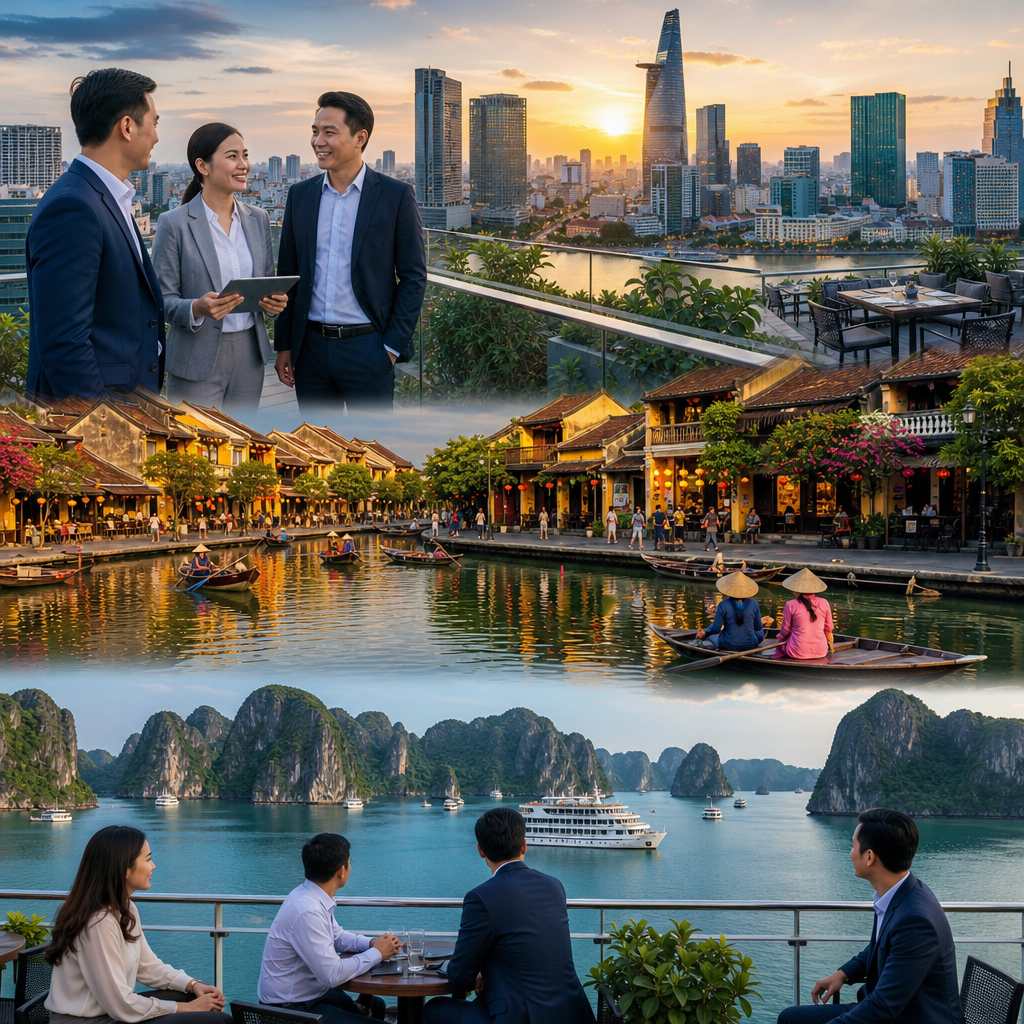
Building a Three-Day Vietnam Visit
Vietnam’s economy has become increasingly connected to global manufacturing, trade, technology, and tourism. For visiting executives, however, a short schedule can quickly become difficult when airport transfers, meeting locations, interpretation, and cultural plans are arranged separately.
A coordinated Vietnam business travel support plan connects those details from the moment a visitor lands. With an interpreter and guide Vietnam service, foreign guests can prepare for meetings, navigate local transport, and use limited free time more effectively.
Why coordination matters
Vietnam’s major commercial centers are geographically distinct. Hanoi is a government and northern business hub, Ho Chi Minh City is the country’s largest commercial center, and Da Nang serves central Vietnam with strengths in tourism, services, logistics, and emerging technology.
A practical three-day framework
The most efficient itinerary usually assigns one clear purpose to each day: arrival and orientation, focused business appointments, then cultural follow-up and departure preparation. This approach leaves room for traffic delays, meeting overruns, and the informal conversations that often shape business relationships.
Question 1: How should the first day be organized?
The first day should prioritize airport pickup, hotel check-in, schedule confirmation, and a short local orientation rather than a tightly packed meeting program.
Arrival and transfer support
International arrivals may involve immigration, baggage collection, currency exchange, and unfamiliar transport procedures. A local companion can help confirm the destination, communicate with drivers, check hotel details, and keep the visitor’s schedule intact after a long flight.
- Airport coordination: Confirm flight details, meeting points, luggage, and the correct vehicle before arrival.
- Hotel assistance: Help with check-in, address verification, and communication about early arrival or late departure.
- Schedule review: Recheck meeting times, locations, dress expectations, and required documents.
A useful orientation session
The first evening is an opportunity to explain local etiquette, traffic patterns, payment options, and the next day’s route. Rather than treating this as sightseeing alone, travelers can use a short neighborhood walk or meal to ask practical questions and adjust the itinerary before meetings begin.
Question 2: How can business meetings run smoothly?
Meetings run more smoothly when an interpreter is briefed in advance, understands the business context, and supports communication without replacing the visitor’s decision-making.
Preparation before the appointment
Meeting materials should be shared early, including company profiles, product terms, technical vocabulary, agendas, and the names of participants. This allows an interpreter to identify ambiguous language and prepare accurate explanations for manufacturing, sourcing, distribution, or investment discussions.
- Terminology: Clarify industry-specific words, measurements, prices, certifications, and delivery conditions.
- Roles: Agree whether the interpreter will translate consecutively, assist with introductions, or help summarize next steps.
- Objectives: Define the decisions, documents, samples, or follow-up actions expected from the meeting.
Beyond word-for-word translation
Business communication also depends on tone, pacing, and context. An experienced local professional can explain when a response signals hesitation, when a proposal needs more detail, or when a formal meeting should transition into a relationship-building meal. Visitors can arrange this support through ezgogo.app while keeping commercial decisions in their own hands.
Question 3: Which cultural activities fit a short trip?
The best cultural activities are close to the business route, limited in duration, and chosen to match the visitor’s interests and energy level.
Culture as part of the itinerary
A cultural visit can provide context for the city where meetings take place. In Hanoi, travelers might explore the Old Quarter, the Temple of Literature, or the Vietnam Museum of Ethnology; in Ho Chi Minh City, the War Remnants Museum, Central Post Office, and historic downtown offer accessible options.
Choosing experiences responsibly
Time, weather, traffic, and opening hours should shape the plan. In Da Nang, a visitor may combine a coastal dinner with a nearby heritage excursion, while a longer cultural trip to Hoi An requires realistic transfer time and should not be placed immediately before an important morning appointment.
Question 4: How do Hanoi, Ho Chi Minh City, and Da Nang differ?
Hanoi suits northern government, trade, and industrial visits; Ho Chi Minh City suits broad commercial activity; and Da Nang works well for central Vietnam, tourism, services, and selected technology or logistics meetings.
Selecting the right city
Hanoi’s location is useful for visits connected with northern industrial provinces and national institutions. Ho Chi Minh City offers dense networks of companies, banks, distributors, and service providers. Da Nang is smaller and often easier to navigate, though visitors should confirm that target partners and facilities are located nearby.
- Hanoi: Plan around government districts, industrial corridors, and northern supplier routes.
- Ho Chi Minh City: Allow extra time for urban traffic between offices, ports, hotels, and industrial areas.
- Da Nang: Combine meetings with coastal, cultural, or regional travel only after checking distances.
Avoiding an overloaded multi-city plan
Trying to cover Hanoi, Ho Chi Minh City, and Da Nang in three days can reduce the value of the trip because domestic flights, airport transfers, and check-in time consume valuable hours. For most visitors, one primary city with a carefully selected day trip is more productive than a rushed national tour.
Question 5: What should travelers prepare before departure?
Travelers should confirm visas, flights, meeting documents, local contacts, payment methods, insurance, and a realistic transport plan before leaving home.
Documents and business materials
Vietnam’s official immigration guidance should be checked for current entry requirements, including any applicable e-visa rules. Visitors should also carry passport copies, invitation letters where relevant, company introductions, product information, and digital backups of meeting materials.
- Entry requirements: Verify passport validity, visa status, permitted stay, and entry details through official channels.
- Meeting pack: Prepare bilingual names, agendas, business cards, samples, and key technical documents.
- Connectivity: Arrange mobile data, essential contact numbers, and access to maps and translation tools.
Building flexibility into business trip planning
Business trip planning should include buffer time because urban traffic, weather, flight changes, and extended discussions can affect every later appointment. A local interpreter-companion can help adjust routes, communicate changes, and preserve the most important parts of the schedule when conditions change.
Conclusion
A successful three-day visit is not simply a list of meetings and attractions. Vietnam business travel support is most valuable when it connects airport arrival, interpretation, transport, commercial appointments, and cultural discovery into one realistic itinerary tailored to the city and business objective.
Foreign businesses can start with one priority city, prepare materials early, and leave enough flexibility for relationship-building. To make the next Vietnam visit easier to manage, explore interpreter-companions and local assistance through ezgogo.app.
Sources
Frequently Asked Questions
Question 1: How should the first day be organized?
The first day should prioritize airport pickup, hotel check-in, schedule confirmation, and a short local orientation rather than a tightly packed meeting program.
Question 2: How can business meetings run smoothly?
Meetings run more smoothly when an interpreter is briefed in advance, understands the business context, and supports communication without replacing the visitor’s decision-making.
Question 3: Which cultural activities fit a short trip?
The best cultural activities are close to the business route, limited in duration, and chosen to match the visitor’s interests and energy level.
Question 4: How do Hanoi, Ho Chi Minh City, and Da Nang differ?
Hanoi suits northern government, trade, and industrial visits; Ho Chi Minh City suits broad commercial activity; and Da Nang works well for central Vietnam, tourism, services, and selected technology or logistics meetings.
Question 5: What should travelers prepare before departure?
Travelers should confirm visas, flights, meeting documents, local contacts, payment methods, insurance, and a realistic transport plan before leaving home.
Need a local companion or interpreter in Vietnam?
Browse verified companions for language support, factory visits, and authentic local experiences.
Find a Companion →