 EZGOGO
Vietnam Factory Visit Interpreter: Essential Planning Guide
A factory visit in Vietnam can reveal valuable insights into suppliers, production capacity, and quality systems—but only when the schedule and communication are carefully prepared. This guide explains how an international team can arrange a Vietnam factory visit interpreter, coordinate transport, manage safety requirements, and prepare technical vocabulary before entering a manufacturing site. It also covers practical questions about interpreter selection, briefing materials, confidentiality, and on-site etiquette. Use these steps to reduce misunderstandings and make every supplier meeting, production-floor walk-through, and follow-up discussion more productive.
Preparing for a Successful Factory Visit
Vietnam has become an important manufacturing base for electronics, garments, footwear, furniture, machinery, and consumer products. The General Statistics Office reported that the country’s industrial production continued to expand in 2024, while foreign-invested manufacturers remained central to export activity. For international buyers, an organized factory visit can turn a supplier introduction into a clearer assessment of capability, quality, and production controls.
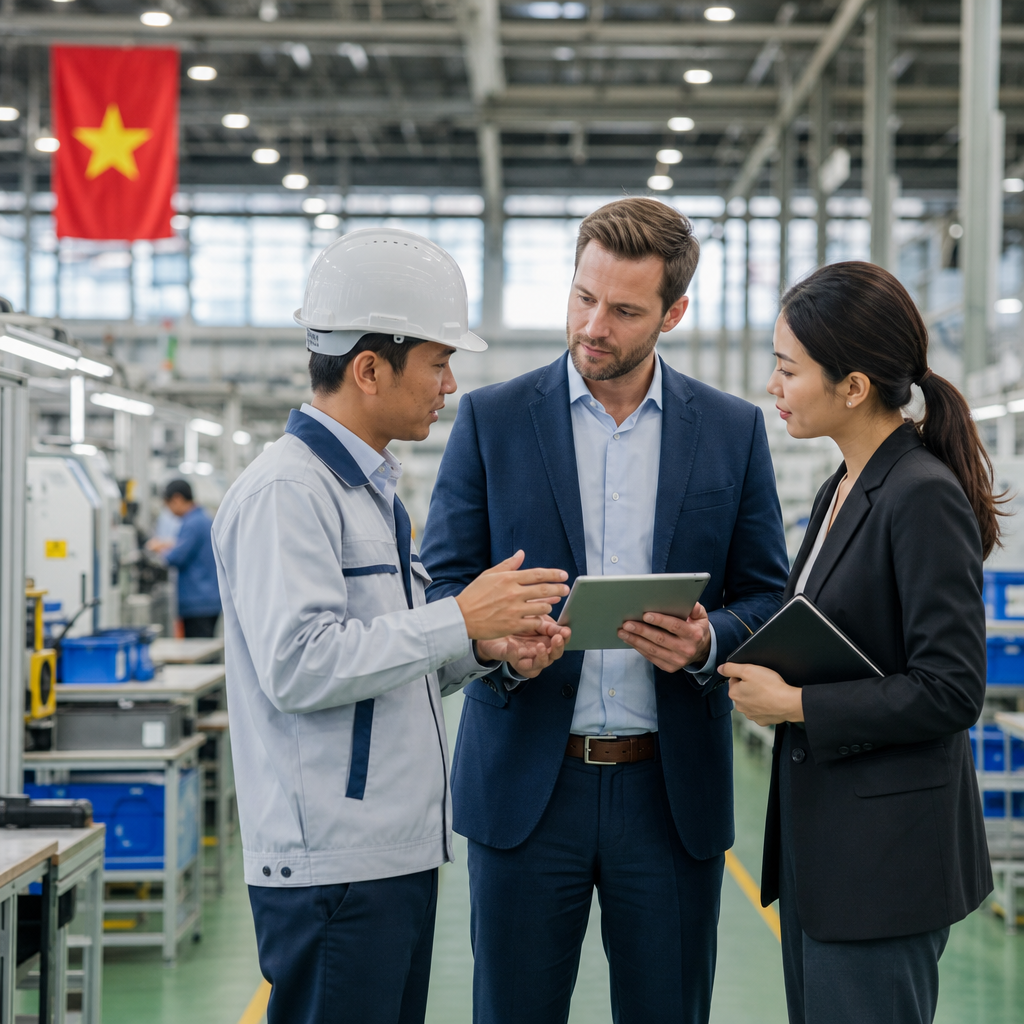
Preparation matters because factories often combine Vietnamese management, local production teams, and overseas customers. Language gaps can affect discussions about tolerances, defects, delivery schedules, and compliance. A Vietnam factory visit interpreter helps international visitors connect meeting-room discussions with what they see on the production floor.
Start with a Clear Visit Brief
Before contacting a factory, define the purpose of the visit in writing. The brief should identify the products, production stages, target volumes, quality concerns, certifications, and decisions expected from the meeting. This information allows the host factory and interpreter to prepare relevant personnel, documents, and terminology.
Build a Realistic Factory Tour Plan
A manufacturing site visit usually includes an introduction, factory walk-through, equipment review, quality-control discussion, and closing meeting. Avoid scheduling too many sites in one day, especially when facilities are located outside major cities. Allow time for security checks, traffic, unexpected production delays, and private discussions after the tour.
Question 1: Why is an interpreter important during a Vietnam factory visit?
A professional interpreter helps both sides understand technical, commercial, and operational details accurately. This is especially important when decisions depend on production capacity, quality procedures, lead times, or corrective actions.
Connect Factory Language with Business Decisions
Factory conversations frequently move between general Vietnamese, industry terms, English acronyms, and company-specific vocabulary. A business interpreter can clarify whether a supplier is describing available capacity, planned capacity, or capacity that depends on new equipment. They can also help distinguish confirmed commitments from tentative estimates.
- Technical accuracy: Clarify measurements, materials, machine functions, and quality standards.
- Commercial precision: Confirm prices, minimum order quantities, payment terms, and delivery expectations.
- Operational context: Explain staffing, production flow, subcontracting, and inspection procedures.
Support Two-Way Communication
Interpretation should not become a one-sided translation of the visitor’s questions. The interpreter should also help the factory explain constraints, propose alternatives, and respond to follow-up questions. Teams can find local support through ezgogo.app, where foreign businesses can connect with interpreter-companions in Vietnam for meetings and site visits.
Question 2: How should teams prepare technical translation materials?
Teams should send an agenda, product information, drawings, audit questions, and glossary to the interpreter and factory before arrival. Early preparation makes technical translation Vietnam discussions more consistent and reduces avoidable confusion.
Create a Shared Glossary
List the words that are likely to affect decisions, including component names, finishes, defects, testing methods, production stages, and packaging requirements. Include photographs or diagrams where a word may have several meanings. Ask the interpreter to flag terms that require confirmation with an engineer or quality manager.
- Product terms: Record model numbers, materials, dimensions, colors, and approved alternatives.
- Quality terms: Define acceptable defect levels, inspection points, sampling plans, and test results.
- Process terms: Explain assembly, tooling, calibration, rework, packing, and shipment stages.
Use Documents Instead of Improvisation
Printed agendas, marked-up drawings, sample products, and question lists give everyone a common reference. Numbering questions helps the team record answers and identify unresolved issues. If confidential information is involved, share only what is necessary and confirm how documents and photographs may be handled on site.
Question 3: What logistics should be arranged before the visit?
Arrange transport, meeting times, visitor registration, accommodation, contact details, and a weather-aware schedule before the factory visit. Confirm the exact factory address because industrial zones can be far from city centers and difficult to reach during peak traffic.
Coordinate Transport and Timing
Vietnam’s manufacturing clusters are spread across regions, including areas around Ho Chi Minh City, Hanoi, Hai Phong, Da Nang, and Binh Duong. A map pin alone may not be sufficient, so request the host’s preferred entrance, driver instructions, and local contact. Build a buffer for road conditions and allow the interpreter to arrive before the visitors.
Confirm the Site Agenda
Ask the factory to confirm who will attend each session and whether photography, video, personal protective equipment, or mobile-phone use is restricted. Share the expected number of visitors and dietary or accessibility needs in advance. A detailed agenda also prevents the interpreter from being asked to cover several simultaneous conversations.
Question 4: How can visitors manage safety and cultural expectations?
Visitors should follow the factory’s safety briefing, wear required protective equipment, stay with their host, and avoid entering restricted areas. They should also show respect for local business etiquette, hierarchy, and the factory’s operational priorities.
Treat Safety as Part of the Visit
Production floors may include moving machinery, forklifts, chemicals, heat, noise, or elevated walkways. Do not assume that business attire is suitable for a factory tour; confirm footwear and clothing requirements beforehand. The interpreter can translate warnings and procedures, but each visitor remains responsible for following them.
- Before entry: Complete registration and understand emergency routes and assembly points.
- During the tour: Stay within marked paths and ask before touching equipment or products.
- For records: Obtain permission before taking photographs, videos, or copies of documents.
Respect the Working Environment
Vietnamese factories may prioritize introductions and relationship-building before detailed negotiation. A short greeting, clear introductions, and patience during formal presentations can improve cooperation. Avoid publicly criticizing individual workers or processes; raise concerns privately and focus on evidence, standards, and corrective solutions.
Question 5: What should teams do after the manufacturing site visit?
After the visit, teams should document commitments, open questions, risks, and deadlines while details are still fresh. A structured follow-up helps convert observations into supplier decisions, audit actions, or a clear next step.
Record Decisions and Unresolved Issues
Hold a short internal debrief immediately after leaving the facility. Compare notes from the production floor, quality meeting, and commercial discussion. Mark each item as confirmed, pending evidence, or requiring a written response, then assign an owner and deadline for follow-up.
- Evidence: Save approved samples, documents, test reports, and permitted photographs.
- Risks: Note concerns involving capacity, quality variation, compliance, labor, or delivery.
- Actions: Request corrective plans, quotations, timelines, or additional certifications.
Review the Interpreter’s Contribution
Ask whether any terms, answers, or cultural signals need clarification after the meeting. A professional interpreter can help explain ambiguous statements without changing the factory’s position. For future visits, update the glossary and briefing based on the questions that caused the most discussion.
Conclusion
A successful Vietnam factory visit depends on more than reaching the correct industrial park. Clear objectives, technical preparation, reliable transport, safety awareness, and accurate interpretation help international teams evaluate suppliers with greater confidence. The right Vietnam factory visit interpreter can make complex production and commercial conversations easier to understand while preserving the meaning of both sides.
Plan the agenda early, share the relevant materials, and leave enough time for questions and follow-up. When your next Vietnam business trip includes supplier meetings or factory tours, explore interpreter-companions through ezgogo.app for practical support on the ground.
Sources
Frequently Asked Questions
Question 1: Why is an interpreter important during a Vietnam factory visit?
A professional interpreter helps both sides understand technical, commercial, and operational details accurately. This is especially important when decisions depend on production capacity, quality procedures, lead times, or corrective actions.
Question 2: How should teams prepare technical translation materials?
Teams should send an agenda, product information, drawings, audit questions, and glossary to the interpreter and factory before arrival. Early preparation makes technical translation Vietnam discussions more consistent and reduces avoidable confusion.
Question 3: What logistics should be arranged before the visit?
Arrange transport, meeting times, visitor registration, accommodation, contact details, and a weather-aware schedule before the factory visit. Confirm the exact factory address because industrial zones can be far from city centers and difficult to reach during peak traffic.
Question 4: How can visitors manage safety and cultural expectations?
Visitors should follow the factory’s safety briefing, wear required protective equipment, stay with their host, and avoid entering restricted areas. They should also show respect for local business etiquette, hierarchy, and the factory’s operational priorities.
Question 5: What should teams do after the manufacturing site visit?
After the visit, teams should document commitments, open questions, risks, and deadlines while details are still fresh. A structured follow-up helps convert observations into supplier decisions, audit actions, or a clear next step.
Need a local companion or interpreter in Vietnam?
Browse verified companions for language support, factory visits, and authentic local experiences.
Find a Companion →