 EZGOGO
Vietnam Factory Visit Preparation: Essential Site Checklist
Vietnam factory visit preparation can determine whether a site tour produces useful answers or costly misunderstandings. International buyers, engineers and sourcing teams must coordinate travel, factory agendas, technical documents, safety requirements and communication before arriving. Vietnam’s expanding manufacturing base makes these visits increasingly important, but language and operational differences can slow decisions on the ground. This guide explains how to prepare a practical site visit checklist, what to confirm with suppliers, when to arrange a factory interpreter Vietnam service, and how professional interpreter-companions can help overseas teams move from introductions to clear, documented next steps.
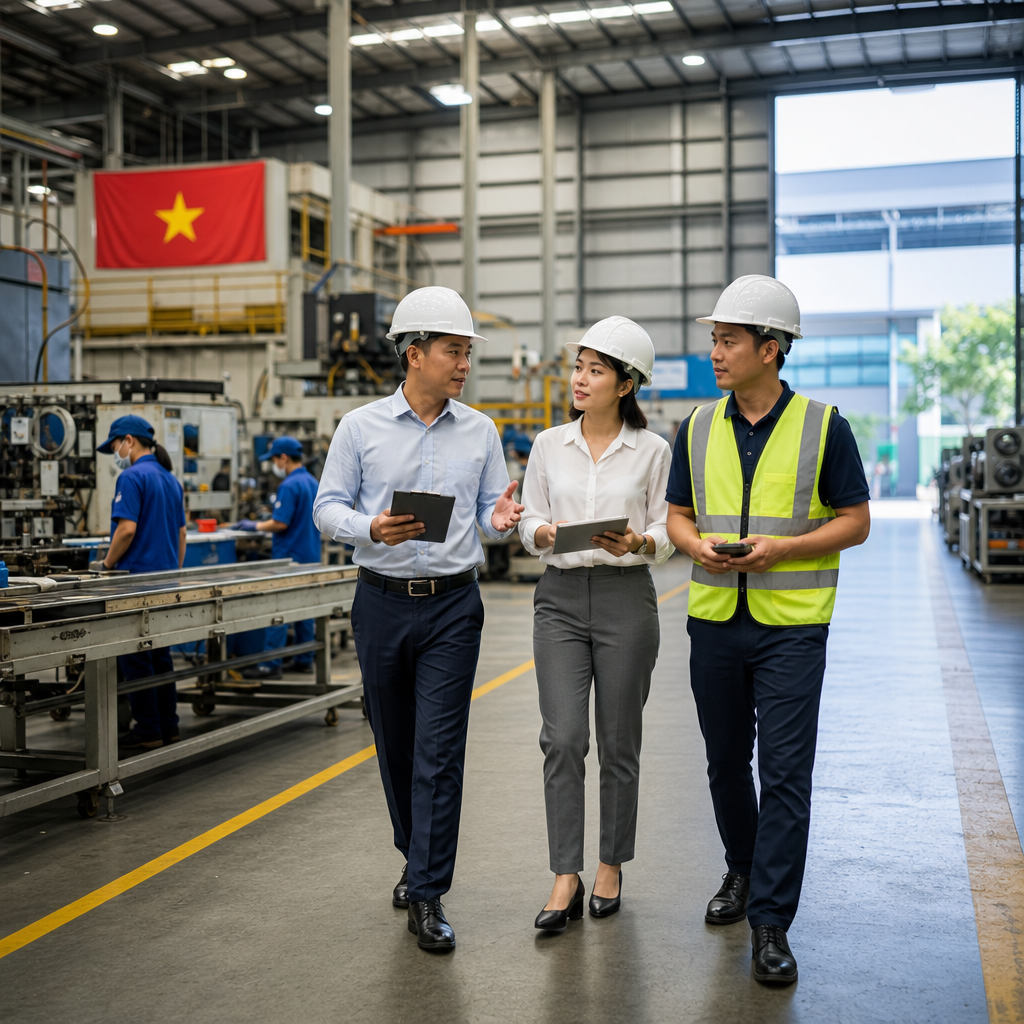
Preparing for Vietnam’s Manufacturing Landscape
Vietnam has become an important manufacturing and export base in Southeast Asia, supporting sectors ranging from electronics and machinery to textiles, furniture and footwear. For international buyers, a factory visit can reveal production capacity, quality systems and working practices that are difficult to evaluate remotely. Strong Vietnam factory visit preparation helps turn a tour into evidence for a commercial decision.
Recent investment and trade trends also make supplier verification more significant. The General Statistics Office reported that Vietnam’s 2024 goods exports reached approximately US$405.5 billion, while foreign-invested companies continued to account for a major share of trade. A well-planned visit should therefore test both the supplier’s claims and its ability to meet the visitor’s specific requirements.
Why preparation matters on site
Factory meetings often move quickly between production floors, sample rooms, warehouses and management offices. Visitors may need to discuss machinery, tolerances, certifications, delivery terms and corrective actions in a single day. Preparing questions and terminology in advance reduces confusion and gives the host a fair opportunity to provide relevant records.
A practical approach for international teams
Effective business travel planning combines commercial priorities with local logistics. Teams should agree on decision-makers, share an agenda with the factory, confirm transport and check visitor requirements before departure. The ezgogo.app marketplace can help foreign businesses arrange interpreter-companions for meetings, factory tours and related travel in Vietnam.
Question 1: What should teams confirm before booking a factory visit?
Confirm the factory’s legal identity, location, available production dates, visitor rules and meeting objectives before finalizing travel. These checks prevent teams from arriving at the wrong facility or discovering that key personnel and production areas are unavailable.
Verify the supplier and site
Ask for the company’s full legal name, registered address, factory address and primary contact. Some manufacturers operate several plants, while sales offices may be located far from production. Compare the address with business records, maps and previous documentation, and request clarification if the site shown online differs from the proposed tour.
- Corporate identity: Match the supplier’s legal name with contracts, invoices and registration information.
- Factory scope: Confirm which products and processes are performed at the specific site.
- Visitor access: Ask about identification, photography, protective equipment and restricted areas.
Align people and timing
Send the proposed visitor list and objectives early, including the roles of engineers, buyers and quality managers. Request attendance from people who can answer technical, production and commercial questions rather than relying only on a sales representative. Build time for traffic, security procedures and unexpected discussion into the schedule.
Question 2: Which documents and technical details should visitors prepare?
Prepare a concise supplier briefing containing product specifications, drawings, quality requirements, forecast volumes, compliance needs and a prioritized question list. Share only the information appropriate for the visit, while clearly marking confidential material.
Create a site visit checklist
A useful site visit checklist should cover production lines, incoming materials, in-process controls, final inspection, packaging, storage and shipment. Include questions about capacity by shift, equipment ownership, maintenance records, subcontracting and traceability. The goal is not merely to see a clean facility, but to understand whether processes can reliably support the proposed order.
- Quality: Request relevant certifications, inspection procedures and records of corrective action.
- Capacity: Compare stated output with equipment, labor, shifts and current utilization.
- Supply chain: Identify critical raw materials, approved vendors and subcontracted operations.
Prepare terminology in advance
Technical misunderstandings can arise even when participants use English, particularly with abbreviations, tolerances and manufacturing terms. Create a bilingual glossary for product names, defects, measurements, processes and acceptance criteria. Sending key terms before arrival allows the factory and any factory interpreter Vietnam provider to prepare accurate vocabulary.
Question 3: How should teams structure the factory agenda?
Use a timed agenda that begins with introductions and objectives, continues through the production tour and document review, and ends with a written action plan. Prioritize the highest-risk questions before less critical hospitality or sightseeing activities.
Sequence the visit logically
A practical agenda often starts with a short management meeting, followed by a floor tour, quality review, sample discussion and commercial negotiation. This sequence lets visitors compare what they hear in the conference room with what they observe in production. Keep the group small enough to move safely and communicate effectively.
- Opening: Confirm objectives, confidentiality boundaries and the day’s schedule.
- Observation: Follow materials and work orders through the relevant production stages.
- Review: Discuss records, samples, nonconformities and proposed improvements.
Build in time for evidence
Do not allow the tour to become a series of unrecorded impressions. Assign one visitor to take notes, another to track open questions and a technical lead to compare observations with specifications. If photography is permitted, label images by area and date so they remain useful during later supplier evaluation.
Question 4: When is an interpreter needed during a site visit?
An interpreter is needed when technical, legal, quality or safety discussions could affect purchasing decisions, especially if factory personnel are not comfortable communicating in the visitors’ working language. Professional support is most valuable during floor tours, inspections and negotiations—not only during formal presentations.
Go beyond literal translation
Factory communication includes local terminology, implied context and practical explanations of how work is actually performed. A skilled interpreter-companion helps visitors ask follow-up questions, understand answers and maintain the pace of a moving tour. They can also clarify cultural expectations around hierarchy, disagreement and decision-making without taking control of the business discussion.
- Technical accuracy: Review the glossary, product documents and process vocabulary beforehand.
- Neutrality: Translate questions and answers faithfully while avoiding unsupported conclusions.
- Continuity: Support transport, meals, meetings and follow-up conversations when needed.
Prepare the interpreter properly
Share the agenda, company background, names, drawings and priority questions before the visit. Explain which information is confidential and identify the people authorized to make commitments. This preparation enables the interpreter to anticipate difficult terms and helps the visiting team receive consistent support from the first meeting through the final action review.
Question 5: What should visitors do after leaving the factory?
Complete a same-day debrief, separate verified facts from impressions, and send the factory a written list of agreed actions, owners and deadlines. Post-visit discipline is essential because useful observations can quickly become ambiguous once the team returns home.
Turn observations into decisions
Within 24 hours, compare notes against the original requirements and classify findings as confirmed, unresolved or requiring evidence. Record missing documents, sample changes, capacity questions and quality risks. If several visitors attended, reconcile differences before contacting the supplier so the factory receives one clear position.
- Evidence: Link each important conclusion to a document, sample, observation or stated commitment.
- Ownership: Assign a named person to every follow-up item on both sides.
- Deadlines: Set dates for quotations, samples, audits, corrective actions and contract review.
Use the visit to manage risk
A site visit does not replace formal due diligence, independent testing or contractual protection. It should instead improve the questions asked in those processes. Teams can use the findings to refine supplier scorecards, request targeted audits and decide whether a pilot order is appropriate before committing to larger volumes.
Conclusion
Vietnam factory visit preparation is most effective when commercial goals, technical evidence, travel logistics and communication support are planned together. Confirm the correct site, prepare a focused site visit checklist, structure the agenda around risk and document every commitment. These steps help international teams evaluate suppliers more consistently and make better-informed sourcing decisions.
Local context and language support can make the day more productive, particularly when discussions involve quality systems, production constraints or negotiation. For your next Vietnam business trip, explore interpreter-companions through ezgogo.app and give your team a clearer path from factory tour to follow-through.
Sources
Frequently Asked Questions
Question 1: What should teams confirm before booking a factory visit?
Confirm the factory’s legal identity, location, available production dates, visitor rules and meeting objectives before finalizing travel. These checks prevent teams from arriving at the wrong facility or discovering that key personnel and production areas are unavailable.
Question 2: Which documents and technical details should visitors prepare?
Prepare a concise supplier briefing containing product specifications, drawings, quality requirements, forecast volumes, compliance needs and a prioritized question list. Share only the information appropriate for the visit, while clearly marking confidential material.
Question 3: How should teams structure the factory agenda?
Use a timed agenda that begins with introductions and objectives, continues through the production tour and document review, and ends with a written action plan. Prioritize the highest-risk questions before less critical hospitality or sightseeing activities.
Question 4: When is an interpreter needed during a site visit?
An interpreter is needed when technical, legal, quality or safety discussions could affect purchasing decisions, especially if factory personnel are not comfortable communicating in the visitors’ working language. Professional support is most valuable during floor tours, inspections and negotiations—not only during formal presentations.
Question 5: What should visitors do after leaving the factory?
Complete a same-day debrief, separate verified facts from impressions, and send the factory a written list of agreed actions, owners and deadlines. Post-visit discipline is essential because useful observations can quickly become ambiguous once the team returns home.
Need a local companion or interpreter in Vietnam?
Browse verified companions for language support, factory visits, and authentic local experiences.
Find a Companion →