 EZGOGO
Vietnam Market Research Guide: Choose the Right Local Expert
Choosing a Vietnam market research guide can shape the quality of every interview, site visit, and supplier meeting. Vietnam’s expanding manufacturing, trade, and tourism sectors offer valuable opportunities, but foreign teams still need local context to interpret what they see and hear. This guide explains how to evaluate local knowledge, industry familiarity, communication skills, and professional reliability before a research trip. It also covers practical planning for Hanoi market visits, Ho Chi Minh City sourcing, and meetings in Da Nang, helping international businesses turn fieldwork into clearer, more actionable decisions.
Why Local Expertise Matters in Vietnam Research
Vietnam has become an important base for manufacturing, trade, and regional investment, with activity spanning electronics, textiles, furniture, food processing, and services. Official statistics from the General Statistics Office show how strongly foreign-invested enterprises contribute to the country’s exports. For overseas teams, field research is therefore most useful when local observations are connected to business realities.
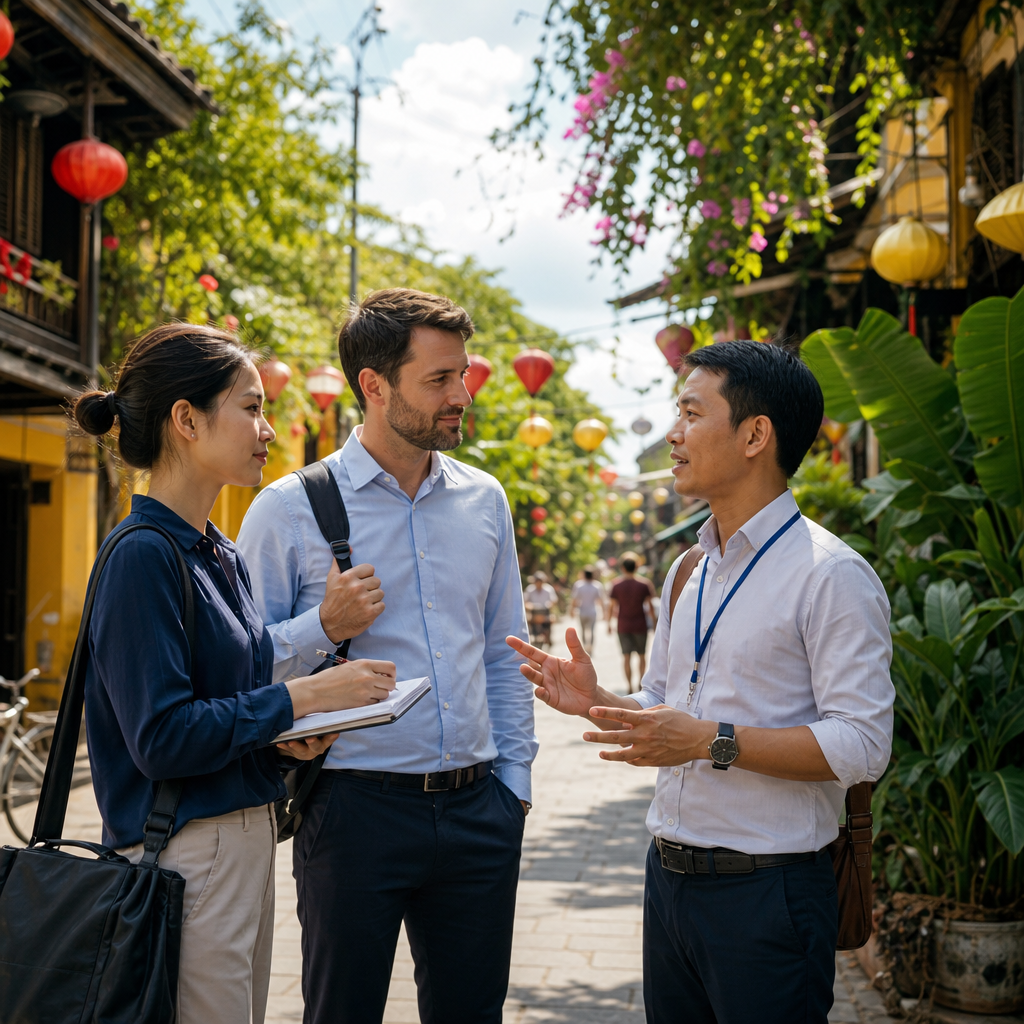
A capable Vietnam market research guide does more than translate words. The right professional can explain how a market operates, identify relevant neighborhoods or industrial areas, and help visitors interpret indirect answers, business etiquette, and purchasing behavior. That combination gives foreign decision-makers stronger context before they commit time or capital.
From Translation to Local Business Insights
Research conversations often contain details that disappear in literal translation, including hesitation, hierarchy, and implied conditions. A locally experienced companion can flag these signals while keeping the discussion respectful. This is especially valuable when teams compare distributors, visit retail channels, or assess whether a supplier’s capabilities match its presentation.
Cities Serve Different Research Purposes
Hanoi is a major center for government, diplomacy, northern manufacturing, and services, while Ho Chi Minh City is a commercial hub with broad sourcing and consumer-market activity. Da Nang adds a growing technology, tourism, and logistics profile. A guide should understand these differences and help match the itinerary to the research question.
Question 1: What should a local guide know about the target market?
A local guide should understand the relevant industry, customer segments, business geography, and basic regulatory context. They should also know how to identify credible contacts and explain local practices without presenting assumptions as facts.
Look for Relevant Market Familiarity
Start by describing the exact research objective rather than asking for a general city tour. A team investigating packaging, for example, may need factory zones, distributors, trade events, and retail observations. A strong Vietnam market research guide can discuss comparable assignments or explain how they would build a practical route around the sector.
- Industry vocabulary: The guide should recognize common terms and know when specialist interpretation is required.
- Business geography: They should distinguish commercial districts, wholesale areas, industrial parks, and logistics corridors.
- Source discipline: They should separate direct observations, verified information, and personal opinion.
Assess the Quality of Their Questions
The guide’s questions before the trip can reveal their level of understanding. They should ask about target customers, product specifications, competitor benchmarks, meeting goals, and confidentiality. Detailed preparation suggests they can support cultural research rather than simply provide transport or ad hoc translation.
Question 2: How can foreign teams test a guide’s industry experience?
Foreign teams should request a short profile, relevant examples, references where available, and a proposed research plan. They can then test the guide with a brief paid consultation or planning call before scheduling multiple meetings.
Request Evidence, Not Broad Claims
Industry familiarity does not require the guide to be a consultant or lawyer, but it should be specific enough to support the assignment. Ask whether they have worked with factories, retailers, importers, hospitality businesses, or technology firms relevant to the project. Clear answers are more useful than vague claims of knowing “many companies.”
- Past exposure: Look for experience connected to the product category or buyer type.
- Research method: Ask how they would compare interviews, site observations, and public information.
- Limits: A trustworthy guide explains what they cannot verify or advise on.
Use a Practical Trial Assignment
A short trial can involve mapping three possible meeting locations, preparing questions for one supplier, or summarizing a public company profile. This reveals writing quality, speed, accuracy, and initiative before the main trip. It also helps teams decide whether they need one guide or separate specialists for different cities.
Question 3: Which communication skills are essential during fieldwork?
The most important skills are accurate bilingual communication, active listening, cultural sensitivity, concise reporting, and the confidence to clarify ambiguous statements. A guide should facilitate conversations without taking control of the business decision.
Protect Meaning in Meetings
Interpreting a supplier meeting requires more than converting sentences between languages. The guide may need to explain a technical term, recognize when a response is incomplete, or ask a neutral follow-up question. They should preserve the speaker’s meaning and tone while making sure the visiting team can participate directly.
Good communication also includes briefing both sides before a meeting. Foreign visitors may need advice about introductions, seniority, gift customs, or realistic response times. These details reduce avoidable friction and create better conditions for candid local business insights.
Turn Conversations into Usable Notes
Agree in advance on how findings will be captured. Some teams need a same-day summary of prices, lead times, certifications, and next steps; others need a structured interview record. A guide who can distinguish confirmed facts from impressions makes the final research report more reliable.
Question 4: How should teams plan city visits and supplier meetings?
Teams should group meetings by geography, reserve time for delays and follow-up questions, and define what evidence they need at each stop. Planning should reflect whether the trip focuses on Hanoi market visits, Ho Chi Minh City sourcing, Da Nang services, or a combination.
Build a Research-First Itinerary
Vietnam’s cities and industrial areas can involve substantial travel time, especially when visits extend beyond central districts. A local professional can help sequence appointments, estimate realistic transfer times, and identify backup activities. The itinerary should leave space to revisit a promising contact or investigate an unexpected market signal.
- Cluster appointments: Group nearby meetings to reduce lost time and fatigue.
- Define outputs: Decide whether each visit must produce samples, quotations, contacts, or observations.
- Plan contingencies: Keep alternatives for cancellations, traffic, weather, or restricted access.
Match the Guide to the Destination
A guide based in or deeply familiar with the destination can add practical value through neighborhood knowledge and local networks. For example, Ho Chi Minh City sourcing may require factory or wholesale-area coordination, while Hanoi market visits may combine institutional meetings with northern production research. Da Nang assignments may emphasize tourism, services, technology, or central-region access.
Question 5: What professional standards should businesses expect?
Businesses should expect punctuality, transparent pricing, confidentiality, clear availability, respectful conduct, and accurate communication about contacts and capabilities. They should also agree on cancellation terms, expenses, deliverables, and the boundaries of the guide’s role.
Clarify Scope and Costs
Before confirming, write down the dates, working hours, locations, transport arrangements, interpretation needs, and reporting expectations. Separate the professional fee from entrance tickets, meals, accommodation, or local transport. A clear scope protects both sides when meetings change or the research expands.
- Confidentiality: Discuss how sensitive product, pricing, and supplier information will be handled.
- Availability: Confirm response times during the trip and who handles urgent changes.
- Neutrality: Ask whether the guide receives commissions from suppliers or venues.
Choose Trustworthy Local Support
Professional standards matter because fieldwork can influence investment, sourcing, and partnership decisions. EZGOGO helps foreign businesses find interpreter-companions who can support meetings, navigation, and culturally informed communication in Hanoi, Ho Chi Minh City, and Da Nang. Teams can use the platform to discuss requirements and identify a suitable local professional before arrival.
Conclusion
Selecting a Vietnam market research guide should begin with the assignment, not a generic request for sightseeing or translation. Prioritize relevant industry exposure, strong preparation, careful interpretation, transparent boundaries, and the ability to turn local observations into organized findings. The right match can make research faster, clearer, and more culturally grounded.
Foreign teams planning supplier visits, interviews, or market discovery can use ezgogo.app to explore interpreter-companions for their next Vietnam business trip. A well-matched local professional can help connect the itinerary to the people, places, and context that matter most.
Sources
- General Statistics Office of Vietnam — Socio-economic situation in the fourth quarter and 2023
- Reuters — Vietnam’s exports rise, driven by electronics demand
- World Bank — Vietnam Overview
- Vietnam Briefing — Vietnam’s Manufacturing Sector: Key Industries and Investment Opportunities
- Vietnam National Authority of Tourism — Official Tourism Information
Frequently Asked Questions
Question 1: What should a local guide know about the target market?
A local guide should understand the relevant industry, customer segments, business geography, and basic regulatory context. They should also know how to identify credible contacts and explain local practices without presenting assumptions as facts.
Question 2: How can foreign teams test a guide’s industry experience?
Foreign teams should request a short profile, relevant examples, references where available, and a proposed research plan. They can then test the guide with a brief paid consultation or planning call before scheduling multiple meetings.
Question 3: Which communication skills are essential during fieldwork?
The most important skills are accurate bilingual communication, active listening, cultural sensitivity, concise reporting, and the confidence to clarify ambiguous statements. A guide should facilitate conversations without taking control of the business decision.
Question 4: How should teams plan city visits and supplier meetings?
Teams should group meetings by geography, reserve time for delays and follow-up questions, and define what evidence they need at each stop. Planning should reflect whether the trip focuses on Hanoi market visits, Ho Chi Minh City sourcing, Da Nang services, or a combination.
Question 5: What professional standards should businesses expect?
Businesses should expect punctuality, transparent pricing, confidentiality, clear availability, respectful conduct, and accurate communication about contacts and capabilities. They should also agree on cancellation terms, expenses, deliverables, and the boundaries of the guide’s role.
Need a local companion or interpreter in Vietnam?
Browse verified companions for language support, factory visits, and authentic local experiences.
Find a Companion →