 EZGOGO
Vietnam Trade Show Interpreter: Practical Exhibitor Guide
Vietnam’s trade-show calendar is expanding alongside manufacturing, tourism, and foreign investment, creating more opportunities for international exhibitors and buyers. Yet a successful event depends on more than a well-designed booth: visitors need accurate product explanations, culturally aware introductions, and disciplined follow-up. This guide explains how to arrange a Vietnam trade show interpreter, prepare exhibition translation support, manage multilingual trade meetings, and evaluate interpreters before the doors open. It also shows how businesses can use EZGOGO to connect with interpreter-companions who understand both local business etiquette and the practical demands of a busy exhibition floor.
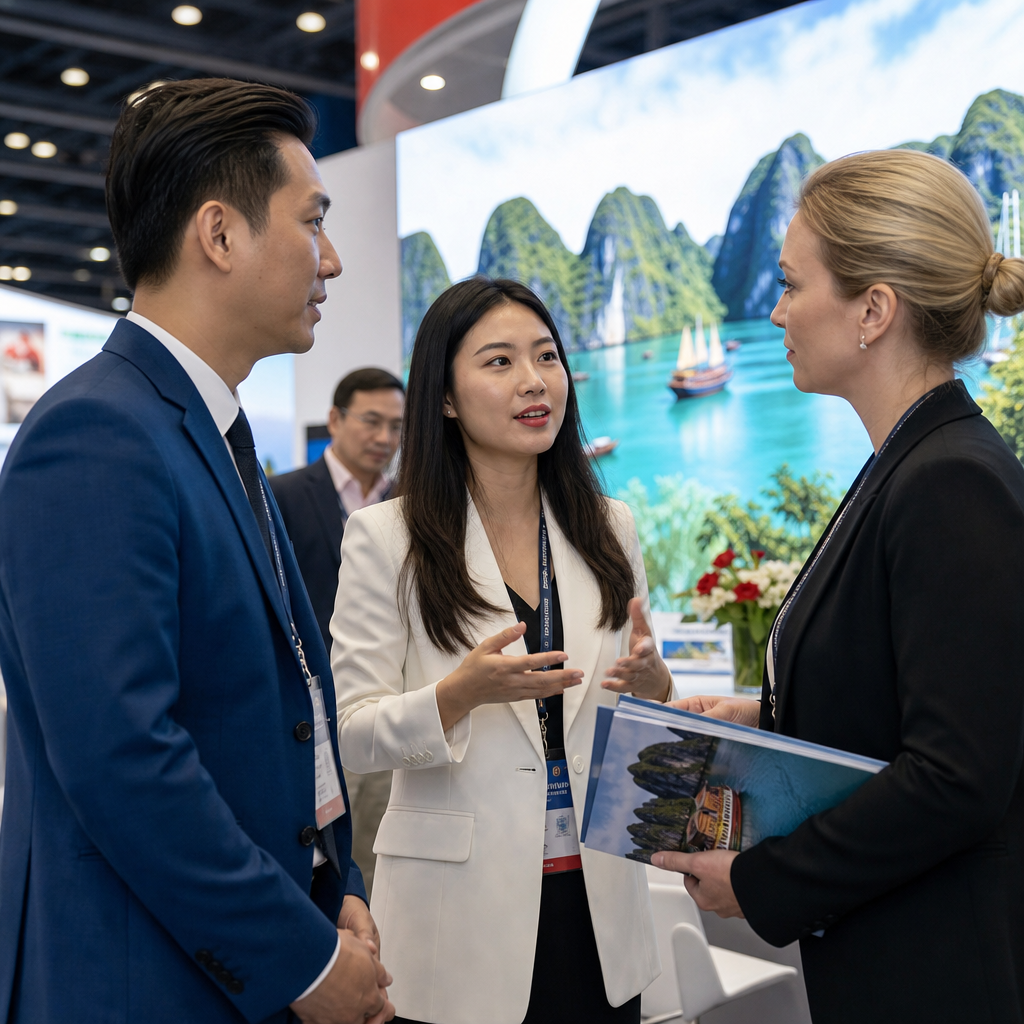
Vietnam’s Trade-Show Opportunity
Vietnam has become an important base for electronics, machinery, textiles, furniture, food processing, and other export-oriented industries. Its major cities host exhibitions that bring together manufacturers, distributors, investors, and service providers from across Asia. For overseas participants, the opportunity is substantial, but communication can become difficult when technical terms, negotiations, and introductions move quickly.
A Vietnam trade show interpreter can support more than word-for-word translation. The right professional helps a visitor understand who is making a decision, explains local business expectations, and keeps conversations focused while the exhibition floor remains noisy and crowded. Planning this role before arrival makes booth visits, supplier meetings, and follow-up more productive.
Why exhibitions matter to foreign businesses
Trade shows offer a concentrated way to compare suppliers and assess market demand. Vietnam’s General Statistics Office reported strong merchandise trade activity in 2023, while government data also shows manufacturing remains central to the country’s economic structure. Exhibitions allow foreign companies to complement online research with factory introductions, product demonstrations, and face-to-face trust building.
Communication is part of the business plan
Exhibitors often budget for stand design, freight, registration, and travel but overlook language support. That gap can affect product explanations, lead qualification, and meeting notes. Exhibition translation support should therefore be treated as an operational resource, with clear objectives, schedules, and terminology prepared before the first visitor arrives.
Question 1: What should businesses define before hiring an interpreter?
Businesses should define the event schedule, language pair, industry vocabulary, expected tasks, and desired level of business involvement before hiring support. A written brief helps the interpreter prepare and allows the company to compare suitable professionals rather than choosing on language ability alone.
Start with the event workflow
List every situation in which communication support may be needed, including booth reception, scheduled buyer meetings, site visits, dinners, and transport between venues. A visitor attending for one day may need a different arrangement from an exhibitor staffing a booth for four days. Include start and end times, locations, dress expectations, and whether evening networking is required.
- Language pair: Specify Vietnamese and the required foreign language, including whether additional languages are needed.
- Industry: Identify sectors such as electronics, construction, logistics, food, or textiles so terminology can be reviewed.
- Responsibilities: Clarify whether the role includes introductions, note-taking, scheduling, or only spoken interpretation.
Separate language needs from commercial goals
Some companies need accurate technical interpretation, while others mainly need help qualifying leads and arranging appointments. A professional brief should state the commercial objective, such as finding distributors, checking production capacity, or meeting procurement managers. This lets the interpreter adapt questions and recognize when a casual conversation should become a formal business discussion.
Question 2: How can exhibitors prepare booth communication?
Exhibitors should prepare a concise product glossary, company introduction, qualification questions, and approved pricing language before the show. A Vietnam trade show interpreter can then deliver consistent explanations and identify when a visitor needs technical, commercial, or management-level follow-up.
Build a practical booth briefing
Give the interpreter a digital or printed briefing that includes product names, specifications, certifications, customer profiles, and common objections. Add phonetic guidance for brand names and a list of terms that should remain in English. Short product videos, catalogs, and previous sales questions can provide useful context without requiring a long training session.
- Core message: Prepare a 30-second explanation of what the company makes and who it serves.
- Qualification questions: Define how to ask about order volume, destination market, timeline, and purchasing authority.
- Escalation points: Mark topics that require a senior representative, such as contracts, warranties, or customized specifications.
Protect accuracy in a crowded environment
Exhibition halls create background noise, interruptions, and overlapping conversations. Use printed diagrams, samples, and screens to reinforce spoken explanations, and move sensitive discussions to a quieter meeting area. The interpreter should be able to ask for repetition when necessary rather than guessing at numbers, dimensions, delivery terms, or compliance requirements.
Question 3: How should multilingual meetings be managed?
Multilingual trade meetings work best when participants use a clear agenda, short speaking turns, and written confirmation of key points. A booth interpreter should translate meaning and business intent while keeping all parties aware of who is responsible for each next step.
Use a structured meeting format
Begin with introductions and confirm each participant’s role before discussing products or prices. Break the conversation into company background, requirements, solution fit, commercial terms, and next actions. Short sections reduce memory pressure and make it easier to correct misunderstandings before they affect a potential order or partnership.
- Speak in manageable units: Avoid long speeches, idioms, and unexplained abbreviations.
- Confirm numbers: Repeat quantities, currencies, dates, and delivery terms in writing.
- Keep eye contact: Address the business counterpart directly while allowing the interpreter to manage the language exchange.
Support business networking Vietnam goals
Networking is not only about collecting the largest number of business cards. The interpreter can help identify whether a contact is a manufacturer, agent, buyer, consultant, or government-linked organization, then suggest an appropriate follow-up tone. Cultural context is especially useful when a visitor is unsure whether an indirect response signals interest, uncertainty, or a need for more information.
Question 4: What should businesses check when selecting support?
Businesses should check language fluency, relevant sector experience, availability, communication style, and references or demonstrated work. They should also confirm whether the professional can handle booth conversations, formal meetings, and practical coordination without overstating their role.
Assess business and sector familiarity
A general bilingual speaker may be capable in everyday conversation but unfamiliar with manufacturing processes, shipping documents, or procurement language. Ask candidates to describe comparable assignments and explain how they prepare for technical events. A short test using product terms, a sample introduction, or a mock buyer question can reveal whether the fit is appropriate.
- Relevant experience: Prior work at exhibitions or in the target industry can shorten preparation time.
- Professional judgment: The interpreter should know when to translate literally and when to request clarification.
- Reliability: Confirm arrival time, contact method, backup plans, and cancellation terms in writing.
Choose support that fits the trip
Some foreign businesses need a specialist for scheduled negotiations, while others benefit from a flexible companion who can support meetings, meals, and local navigation. Matching the assignment to the traveler’s itinerary avoids paying for unnecessary hours while preventing gaps during important conversations. EZGOGO helps connect travelers with interpreter-companions who can be evaluated against the practical needs of a Vietnam business trip.
Question 5: How can exhibitors improve post-show follow-up?
Exhibitors should record each contact’s needs, authority, timeline, and promised next action before leaving the event. A Vietnam trade show interpreter can help review notes, translate follow-up messages, and distinguish high-potential leads from general contacts.
Capture useful information immediately
Use a simple lead form or customer relationship management system rather than relying on business cards alone. Record the product discussed, estimated volume, required certifications, decision process, and agreed date for contact. Ask the interpreter to flag ambiguous statements, especially where a polite response may not represent a firm purchasing commitment.
- Prioritize leads: Separate active opportunities from contacts requiring market education or later nurturing.
- Assign ownership: Name the internal person responsible for each follow-up action.
- Set deadlines: Send catalogs, samples, quotations, or meeting summaries within the agreed timeframe.
Continue communication after departure
Follow-up may involve Vietnamese email, messaging applications, quotations, factory visits, or additional calls. Clear translation can preserve the original tone while avoiding promises that were not approved internally. If the relationship develops, the same interpreter may provide continuity for supplier audits, negotiations, and future visits.
Conclusion
Successful trade-show participation in Vietnam depends on preparation as much as booth design or visitor traffic. Define the interpreter’s role, prepare terminology, structure meetings, and record follow-up commitments while information is fresh. The best support combines language accuracy with awareness of business context, helping international participants turn short exhibition conversations into credible opportunities.
For an upcoming exhibition, consider arranging support around the complete itinerary rather than a single booth shift. Explore ezgogo.app to find interpreter-companions who can assist with meetings, networking, and practical coordination during your next Vietnam business trip.
Sources
- General Statistics Office of Vietnam — Socio-economic situation in the fourth quarter and 2023
- Reuters — Vietnam’s 2023 exports, imports fall for first time since 2009
- World Bank — The World Bank in Vietnam
- U.S. International Trade Administration — Vietnam Market Overview
- Vietnam Briefing — Vietnam Manufacturing Trends and Opportunities
Frequently Asked Questions
Question 1: What should businesses define before hiring an interpreter?
Businesses should define the event schedule, language pair, industry vocabulary, expected tasks, and desired level of business involvement before hiring support. A written brief helps the interpreter prepare and allows the company to compare suitable professionals rather than choosing on language ability alone.
Question 2: How can exhibitors prepare booth communication?
Exhibitors should prepare a concise product glossary, company introduction, qualification questions, and approved pricing language before the show. A Vietnam trade show interpreter can then deliver consistent explanations and identify when a visitor needs technical, commercial, or management-level follow-up.
Question 3: How should multilingual meetings be managed?
Multilingual trade meetings work best when participants use a clear agenda, short speaking turns, and written confirmation of key points. A booth interpreter should translate meaning and business intent while keeping all parties aware of who is responsible for each next step.
Question 4: What should businesses check when selecting support?
Businesses should check language fluency, relevant sector experience, availability, communication style, and references or demonstrated work. They should also confirm whether the professional can handle booth conversations, formal meetings, and practical coordination without overstating their role.
Question 5: How can exhibitors improve post-show follow-up?
Exhibitors should record each contact’s needs, authority, timeline, and promised next action before leaving the event. A Vietnam trade show interpreter can help review notes, translate follow-up messages, and distinguish high-potential leads from general contacts.
Need a local companion or interpreter in Vietnam?
Browse verified companions for language support, factory visits, and authentic local experiences.
Find a Companion →